
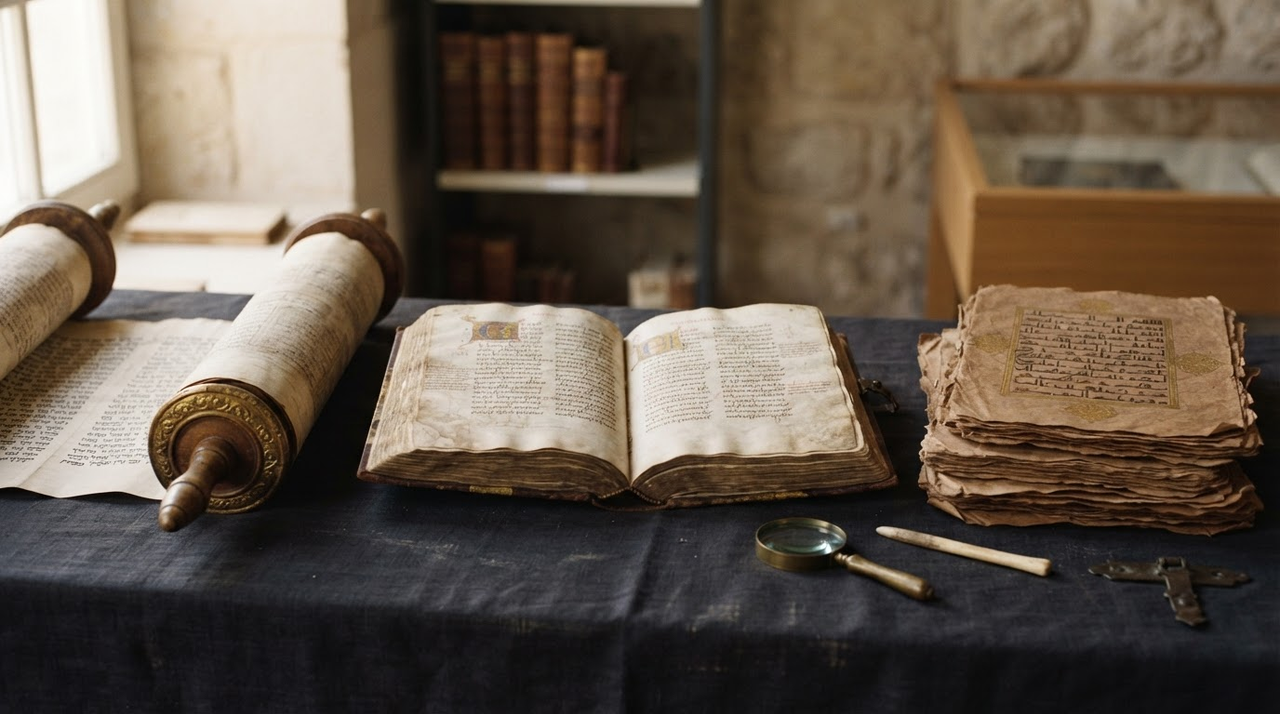
Canon Formation Unveiled: Debunking Nicaea Myths and Tracing Sacred Texts from Tanakh to Hadith
Picture this: a grand hall in Nicaea, 325 CE, where robed bishops dramatically vote to seal the Bible's contents, banishing "heretical" gospels to oblivion. It's a scene ripe for Hollywood—except it's pure myth. Canon formation, the painstaking process shaping sacred texts like the Tanakh canon, Biblical canon, and Hadith authentication, unfolded over centuries through scribal hands, communal debates, and rigorous scrutiny. No single vote decided fates; instead, communities of faith sifted manuscripts, weighed traditions, and let reception refine what endured.
This journey spans Judaism's Soferim, Christianity's Alexandrian scriptoria, and Islam's early Abbasid muhaddithun. We'll trace manuscript evidence, dismantle Nicaea simplifications, and reveal internal diversities—armed with historical specifics, not conspiracy shadows.
The Myth of Nicaea: No Bible Council Here
The Council of Nicaea, convened by Emperor Constantine, zeroed in on christological disputes—Arianism versus Nicene orthodoxy—not a biblical hit list. Surviving records, like Eusebius's accounts, mention no canon vote. The "suppressed gospels" trope? Nag Hammadi codices, unearthed in 1945, are 4th-century copies blending Valentinian, Sethian, and Thomasine texts—esoteric philosophies, not a rival New Testament vying for inclusion. These weren't hidden treasures but marginal manuscripts from monastic libraries, copied long after core gospels circulated widely.
Modern esoteric narratives recycle this fiction, ignoring manuscript evidence: over 5,700 Greek New Testament fragments predate Nicaea, showing proto-orthodox preferences in use-lists like the 2nd-century Muratorian Fragment.
Tanakh Canon: Scribal Guardians and Yavneh Echoes
From Mikra to Ketuvim
Jewish canon formation brewed slowly. By the 2nd century BCE, the Torah (Pentateuch) stood firm, echoed in Qumran scrolls as mikra—readings for synagogue. Prophets followed, but the Writings (ketuvim) lingered in flux. Post-70 CE Temple destruction, rabbis at Yavneh (Jamnia) didn't decree a canon but reminisced debates over books like Esther and Song of Songs, per later Talmudic memory.
Soferim—meticulous scribes—ensured fidelity, counting letters in Torah scrolls. Dead Sea Scrolls reveal diversity: sectarian texts alongside proto-Tanakh, resolved through communal reception, not fiat. The 90 CE Megillot discussions highlight ongoing discernment.
Biblical Canon: Manuscripts, Lists, and Proto-Orthodox Streams
Alexandrian Scriptoria and Festal Guidance
Christianity's diatheke (covenant scriptures) emerged from diverse house churches. Codex Sinaiticus and Vaticanus, 4th-century luxuries from Alexandrian scriptoria, pack 27 New Testament books amid Septuagint Old Testaments—manuscript evidence of stabilizing canons.
- Muratorian Fragment (c. 170 CE): Early use-list favoring four gospels, excluding Gnostics.
- Athanasius's Festal Letter 39 (367 CE): First full 27-book New Testament roster, reflecting Egyptian consensus.
Proto-orthodox labels capture majority streams amid Valentinians or Marcionites; councils like Hippo (393) and Carthage (397) ratified local practices.
Hadith Authentication: Isnad Chains in Abbasid Crucibles
Islam's sacred texts bifurcate: Qur'an as mushaf (codex), compiled under Uthman (c. 650 CE) from oral/written witnesses. Hadith—Prophet's sayings—demanded fiercer scrutiny. Early Abbasid muhaddithun (8th-9th centuries), like Bukhari and Muslim, forged isnad criticism: tracing narration chains back to Muhammad, discarding weak links.
Sahih collections emerged from vast pools—Bukhari vetted 600,000 reports, authenticating 7,000. This process mirrored scribal rigor elsewhere, thriving in Baghdad's scholarly circles amid Shia-Sunni divides.
Reflections: Canons as Living Legacies
Canon formation whispers of human striving: scribes bent over parchments, scholars debating by lamplight, communities reciting what resonated.
Each tradition—diverse, contested—birthed enduring cores through reception, not suppression. Conspiracy lenses distort; source-aware eyes reveal continuity.
Next, explore how writing preserved memory in Writing & Memory, or unlock historical gateways via History Doors. What sacred thread calls to you?