
Contested Memorials in South Africa: Rhodes Must Fall, TRC Legacies, and Battles for Public Memory
A Statue Topples, Echoes Resound
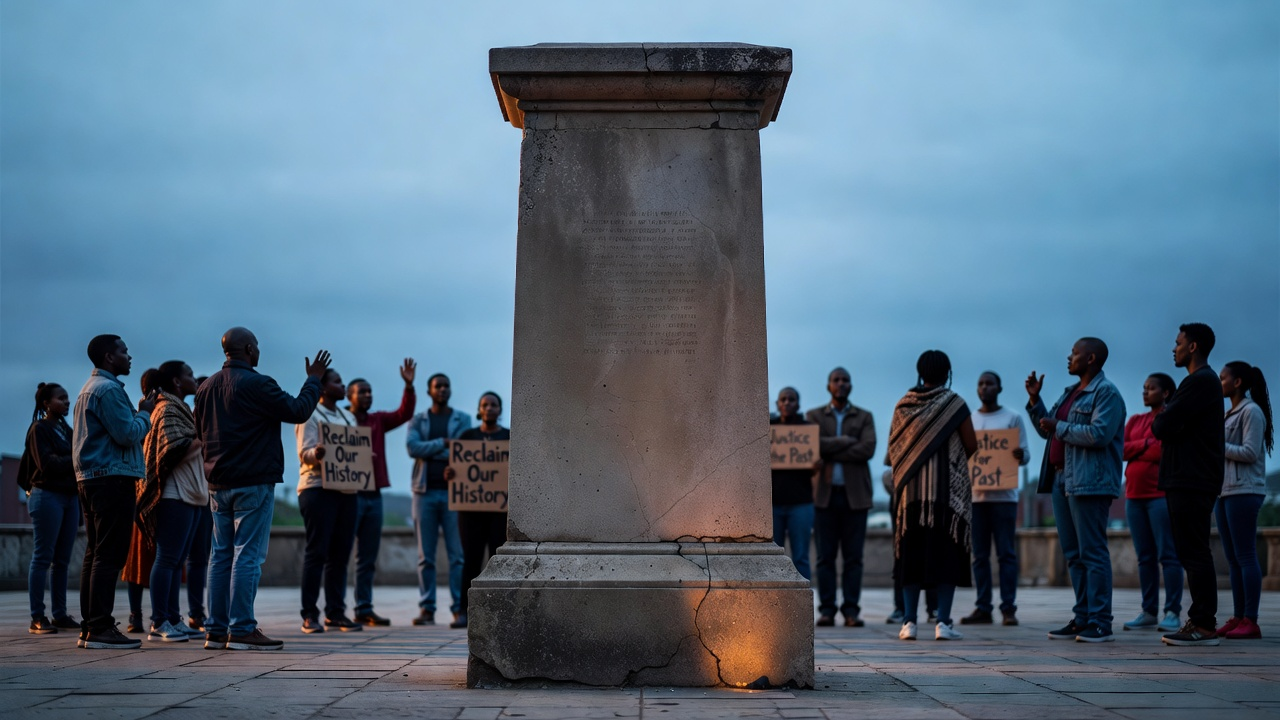
In the crisp April air of 2015, a crane hoisted the bronze figure of Cecil John Rhodes from its pedestal at the University of Cape Town. The crowd erupted—chants of "Rhodes Must Fall" mingling with the grind of machinery. This wasn't mere vandalism; it was a seismic rupture in South Africa's contested memorials, a direct challenge to the statues and symbols that had long dictated public memory in a post-apartheid nation. From Cape Town's university lawns to Pretoria's monumental precincts, these battles reveal how memory isn't passive stone but a living arena where power, pain, and possibility collide.
Post-1994 South Africa promised a new dawn, yet its public spaces brim with reminders of colonial and apartheid legacies. The RhodesMustFall movement ignited a firestorm, demanding not just removal but restitution—of land, dignity, and narrative control. Why does a fallen statue still provoke fury? Because it exposes the unfinished work of translation: turning historical wounds into shared futures.
Rhodes Must Fall: Igniting the Fire in Cape Town
From Protest to Policy
Born on UCT's Jagger Library steps, RhodesMustFall spread like wildfire across campuses, targeting symbols of white supremacy. Rhodes, the mining magnate whose imperial ambitions scarred southern Africa, embodied extractive violence. Student activists, led by voices like Chumani Maxwele—who dumped human waste at the statue's base—framed it as decolonizing education itself. By December 2015, the statue was gone, but the movement morphed into Fees Must Fall, linking memory to economic justice.
Cape Town's contested memorials extend beyond UCT. The 2019 relocation of a Queen Victoria statue from the Company's Garden sparked debates over British colonialism's lingering gaze. Community consultations, mandated by heritage laws, revealed fractures: heritage bodies like SAHRA weighed in, but black residents invoked TRC-era testimonies of dispossession, demanding memorials reflect slave routes and forced removals, not imperial benefactors.
TRC Legacies: Healing or Haunting?
Pretoria's Monuments Under Siege
In Pretoria, the Voortrekker Monument looms as apartheid's granite hymn to Afrikaner triumph. Post-TRC, calls to transform it intensified. The Truth and Reconciliation Commission (1995-2002) unearthed atrocities through survivor testimonies—over 7,000 statements archived in transcripts that now fuel contested memorials South Africa. Yet, Freedom Park, built nearby as a "multi-cultural" counter-memorial, struggles with incomplete Wall of Names, symbolizing stalled reconciliation.
Church Square's statues of Paul Kruger and Andries Pretorius face ongoing protests. Community hearings in Tshwane, documented in municipal reports, pit Afrikaner groups defending "heritage" against township residents citing TRC evidence of baas-knecht dynamics. These clashes make public memory tangible: who authors the past?
Theories of Public Memory: Models and Fault Lines
Scholars like Maurice Halbwachs posit collective memory as socially framed, ever-shifting. In South Africa, this manifests in "counter-memories"—activists repurposing spaces, as in RhodesMustFall's occupation tactics. John Bodnar's view of public memory as elite-popular contestation fits Pretoria's standoffs, where state heritage agencies negotiate with grassroots fury.
Critiques abound: Halbwachs overlooks power asymmetries, flattening diverse voices from isiXhosa elders to coloured communities. Pierre Nora's lieux de mémoire illuminates statues as crystallized history, but in SA, they remain battlegrounds. These models reveal translation's crux—converting TRC pain into policy—yet falter without centering living perspectives, like Soweto poets reimagining monuments.
Unfinished Arenas: Power in the Public Square
South Africa's contested memorials post-1994—from Cape Town's fallen Rhodes to Pretoria's defiant monoliths—expose Truth and Reconciliation's dual legacy: amnesty's grace, accountability's absence. Memory here is muscular, wielded by students storming statues and officials parsing consultations. It demands we see power not as abstract but embodied—in the crane's swing, the transcript's page.
What memorials would you erect? How might TRC archives reshape your campus quad? Dive into these questions; the battles for South Africa's public memory invite your voice.