
Enuma Elish: Unveiling Babylon's Ancient Creation Myth and Marduk's Rise to Power
Picture this: vast primordial waters churning in eternal chaos, where the first divine whispers stir conflict among gods. From this abyss emerges the Enuma Elish, Babylon's gripping creation myth, etched in cuneiform on clay tablets. Not just a tale of cosmic birth, but a bold declaration of power in the heart of ancient Mesopotamia. For students of Mesopotamian mythology, this Akkadian epic unlocks the political soul of Babylonian identity.
Composed during the Old Babylonian period (18th–12th centuries BCE), the Babylonian creation myth centers on Marduk, Babylon's patron god, whose victory reshapes the universe. Written in Akkadian, it served as a sacred script recited at the New Year's Akitu festival, blending myth with realpolitik.
The World of Ancient Babylon: Context for the Enuma Elish
Babylon, rising along the Euphrates in southern Mesopotamia, wasn't always the empire's jewel. By the Old Babylonian era, under kings like Hammurabi, it became a cultural powerhouse. Here, Akkadian mythology flourished, weaving local pride into divine narratives. The Enuma Elish—meaning "When on high"—is no neutral cosmogony. It's a targeted epic, elevating Marduk over older Sumerian deities like Enlil, to legitimize Babylonian supremacy.
This wasn't universal lore but a Babylonian insider's story, recited to affirm the city's cosmic mandate. Its political edge sharpened during festivals, where kings reenacted Marduk's triumph, symbolically renewing their rule.
Discovery and the Seven Marduk Tablets
Unearthing the Marduk Tablet Legacy
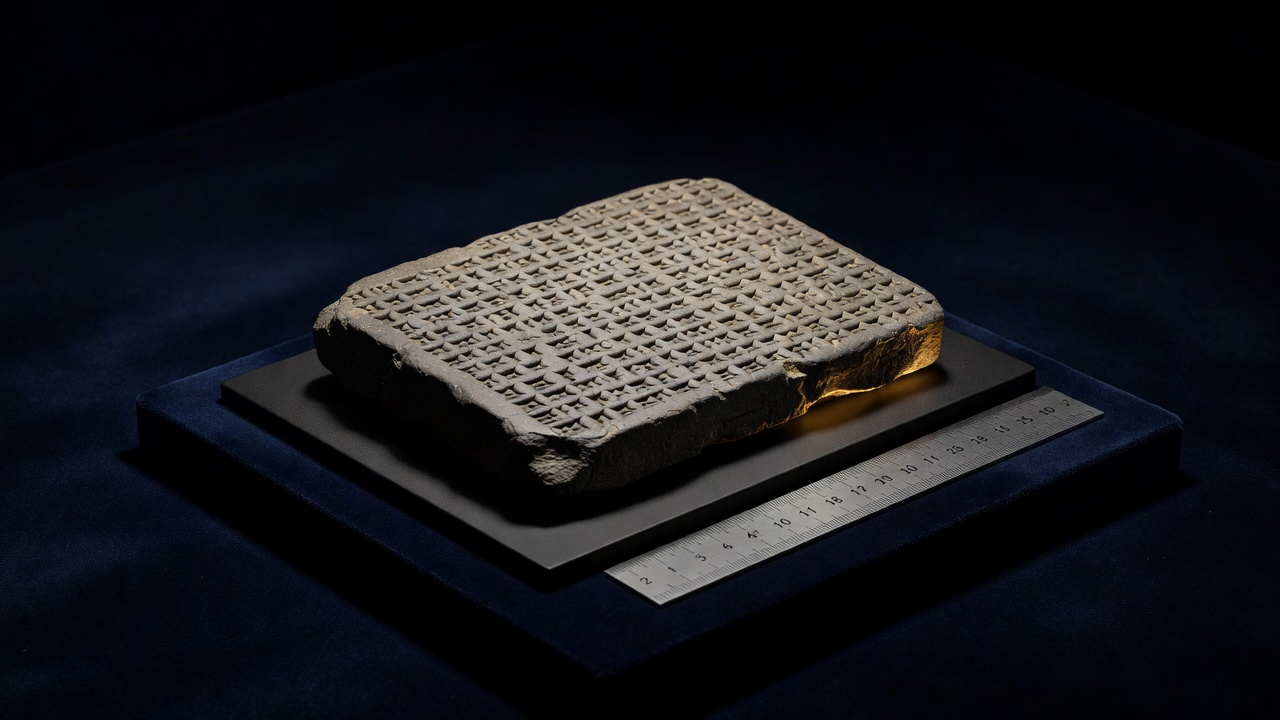
The Enuma Elish survives on seven clay tablets, each a chapter in the divine drama. First pieced together in the 19th century from the library of Ashurbanipal in Nineveh, additional fragments hail from Assur. These Marduk tablets—totaling over 1,000 lines—reveal meticulous scribal work, with colophons marking their sacred status.
Transmission spanned centuries: copied in scribal schools, buried in royal archives. No originals from Babylon itself survive intact, but duplicates confirm its centrality to Akkadian mythology. Imagine scholars in dim lamplight, incising wet clay to capture eternity.
The Epic Unfolds: A Summary of the Babylonian Creation Myth
Tablet I plunges us into formlessness: Apsu (freshwater) and Tiamat (saltwater) mingle, birthing Lahmu and Lahamu, then Anshar and Kishar. Younger gods—Ea (Enki), Anu—emerge, their clamor enraging Apsu. Ea slays him with cunning, but Tiamat rages, spawning monsters led by Kingu.
Enter Marduk, son of Ea, young and ambitious. The gods offer him kingship if he vanquishes Tiamat. Armed with winds and a net, Marduk battles the chaos dragon in a storm of arrows and tempests. Victory! He splits Tiamat's corpse: sky from upper half, earth from lower. From her eyes flow the Tigris and Euphrates; Kingu's blood births humankind to serve the gods.
Tablets V–VII detail Marduk's 50 names, cosmic order, and Babylon's founding. Short sentences hammer the drama: Marduk slays. He creates. He rules.
Marduk's Ascendancy: From Upstart to Supreme God
In Sumerian tales, Enlil or Enki dominated. But the Enuma Elish flips the script. Marduk, once minor, becomes "King of the Gods," his Esagila temple in Babylon the universe's navel. This rise mirrors Babylon's own: from city-state to hegemon.
Rhetorically brilliant, the epic builds tension through divine assembly scenes, callbacks to primordial unity shattered by war. Metaphors abound—Tiamat as raging sea—evoking the floods Babylonians feared and mastered.
Kingship Legitimation: The Political Heart of the Myth
Beyond poetry, the Babylonian creation myth was propaganda clay. At Akitu, the king humbled himself before Marduk's statue, then emerged renewed—echoing Marduk's defeat of chaos. This ritual bound throne to temple, city to cosmos. Nebuchadnezzar II later invoked it to justify conquests.
Local to Babylon, it sidelined rivals like Nippur's Enlil, funneling devotion cityward. A masterclass in myth as statecraft.
Echoes in Broader Mythology
The Enuma Elish resonates with our Creation and First Gods explorations. Compare Tiamat's slaying to Yahweh's Leviathan or Vedic Indra's dragon—chaoskampf motifs. Yet Babylon keeps it grounded: Marduk builds their world, for their king.
Dive deeper into primordial deities in our First Gods door, or cosmic origins in Creation. What threads connect these ancient voices?
"He who made the gods and mankind... Marduk, the king."
—Enuma Elish Tablet VI (paraphrased essence)
Step Through the Mythology Door
The Enuma Elish isn't dusty relic—it's alive, whispering of order from chaos. Ready to chase more shadows in Akkadian mythology? Join us in the Creation and First Gods doors. What myth calls to you next?