
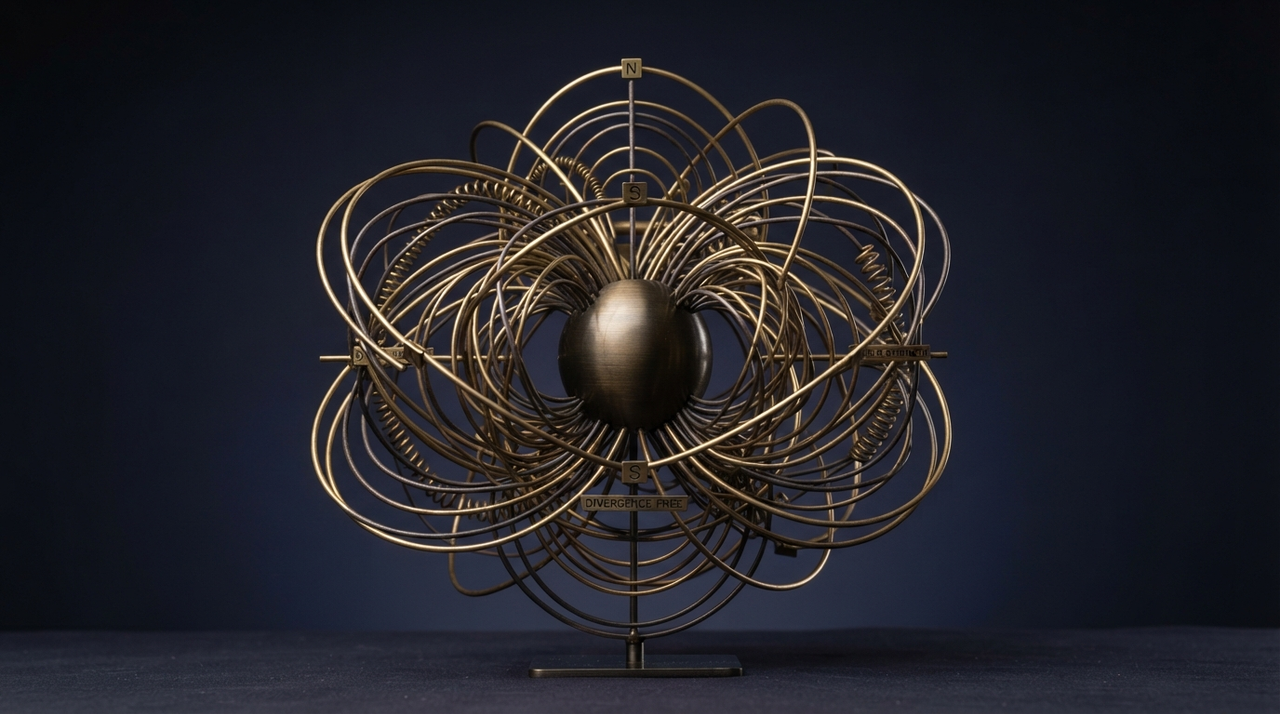
Evolution of Physics Fields and Forces: From Newton to Standard Model Gauge Theories
Picture Isaac Newton in 1666, pondering a falling apple beneath an English orchard tree. That seemingly simple observation birthed a revolutionary idea: gravity as an invisible force pulling masses together instantaneously across vast distances. This was the dawn of our quest to understand the physics fields and forces that weave the fabric of reality. Yet Newton's vision, elegant as it was, hinted at deeper mysteries—mysteries that would unfold over centuries, from electromagnetic waves rippling through space to the quantum dance of gauge theories in the Standard Model.
This journey isn't a straight line of triumphs but a winding path marked by bold leaps, stubborn dead ends, and paradigm-shifting revelations. We'll trace the evolution of forces from classical mechanics to the quantum realm, distinguishing hard-won evidence—like precise field measurements and particle scattering experiments—from the abstract models that interpret them. Along the way, we'll confront historical pitfalls, such as the elusive 19th-century luminiferous aether, and glimpse connections to mathematics' symmetries and science's experimental frontiers.
Newton's Gravitational Force: The Classical Foundation
Newton's law of universal gravitation, published in 1687's Principia, posited gravity as a force acting at a distance: F = G(m₁m₂)/r². No mediating medium, just pure attraction. Astronomers verified it spectacularly—predicting planetary orbits, the Moon's path, even comet trajectories. Cavendish's 1798 torsion balance measured G directly, confirming the force's inverse-square decay.
But cracks appeared. Gravity was instantaneous, clashing with relativity's speed limit. And it unified nothing; it stood alone amid electricity and magnetism's chaotic behaviors. Enter the 19th century, where forces began to reveal their field nature.
Maxwell's Triumph: Unifying Electricity, Magnetism, and Fields
From Action at a Distance to Continuous Fields
By the mid-1800s, Michael Faraday envisioned electric and magnetic effects propagating through invisible physics fields—lines of force curving space like iron filings around a magnet. James Clerk Maxwell mathematized this in 1865, his equations merging electricity and magnetism into electromagnetism. Light itself emerged as an electromagnetic wave, traveling at c, the cosmic speed limit.
Evidence poured in: Hertz's 1887 spark-gap experiments detected radio waves, fulfilling Maxwell's predictions. Field measurements—via voltmeters, galvanometers—mapped E and B vectors directly. Yet a ghost haunted the theory: the luminiferous aether, an all-pervading medium for wave propagation, much like water for ocean swells. It promised to explain everything, but Michelson-Morley’s 1887 null result shattered it, paving the way for Einstein's special relativity in 1905.
Here, models diverged from data. Fields were real—measurable tensions in space—but their ontology? Continuous substances or mathematical conveniences? Relativity reframed them as spacetime geometry for gravity, but electromagnetism clung to flat-space fields.
The Quantum Leap: Nuclear Forces and Quantum Fields
The atomic era exposed gravity's weakness. Protons should repel in nuclei, yet strong nuclear forces bind them. Hideki Yukawa proposed in 1935 a pion-exchange force, short-ranged, saturating at close quarters. Quantum electrodynamics (QED), formalized by Feynman, Schwinger, and Tomonaga in the 1940s, treated electromagnetism as photon exchanges between charged particles.
Scattering experiments at accelerators like SLAC confirmed this: electron-proton collisions matched QED predictions to parts per billion. Fields became operators in Hilbert space, quantized vibrations carrying force via virtual particles. Weak and strong forces followed suit, demanding a unified framework.
The Standard Model: Gauge Theories and Modern Physics Fields
Symmetry's Deep Role in Gauge Theory
The Standard Model crystallized in the 1970s as a quantum field theory governed by gauge theory. Local symmetries—phases shifting imperceptibly across spacetime—demand force-carrying gauge bosons: photons for electromagnetism (U(1)), W/Z for weak (SU(2)), gluons for strong (SU(3)). The Higgs field breaks symmetry, granting mass.
Triumphs abound: UA1/UA2 at CERN discovered W/Z in 1983; the Higgs at LHC in 2012. Deep inelastic scattering revealed quarks; jet events confirmed gluons. These aren't mere models; scattering cross-sections, decay rates match gauge theory calculations exquisitely.
Yet limits persist. Gravity defies gauge unification; neutrinos oscillate beyond original predictions. Fields remain abstract: are they fundamental, or emergent from strings, loops, or something undreamt?
Evidence vs. Ontology: What Do Physics Fields Truly Mean?
Throughout, evidence grounds us—torsion balances, Hertzian waves, collider debris—while models evolve. Newton's force yielded to fields; classical fields to quantum gauge fields. Comparisons clarify: gravity's long-range, always attractive versus electromagnetism's charges; nuclear forces' residuum versus gauge bosons' spin-1 mediation.
Mathematics Doors reveal gauge theory's group-theoretic elegance; Science Doors showcase experiments' rigor. No oversimplification: each era's limits—like aether's demise—fuel progress.
In the end, what is a field? A vibration in the quantum vacuum? A symmetry's shadow? Or the universe's code, waiting for Aetheria AI to decode further?
Dive deeper into these Physics Doors—what questions burn for you about forces, fields, and the Standard Model?