
Exoplanets Uncovered: Transit Method, Kepler's Legacy, and the Hunt for Habitable Worlds
A Cosmic Revolution in Modern Astronomy
Imagine staring at a single star, unremarkable among billions, only to realize it cradles alien worlds—planets beyond our solar system, whispering secrets of distant suns. This isn't science fiction; it's the reality of exoplanets, those elusive orbs reshaping modern astronomy. Since the first confirmed detection in 1992, over 5,500 exoplanets have been uncovered, challenging our cosmic loneliness. Yet amid the thrill, humility reigns: each find is a data point, not destiny.
Enter the transit method, a cornerstone of exoplanet hunting. By watching stars flicker as planets silhouette across their faces, astronomers measure worlds invisible to the naked eye. NASA's Kepler Space Telescope, launched in 2009, turned this technique into a legend, cataloging thousands of candidates. Today, as we chase habitable zones—those Goldilocks orbits where liquid water might flow—these discoveries fuel astrobiology's quiet fire.
Decoding the Transit Method: A Stellar Eclipse
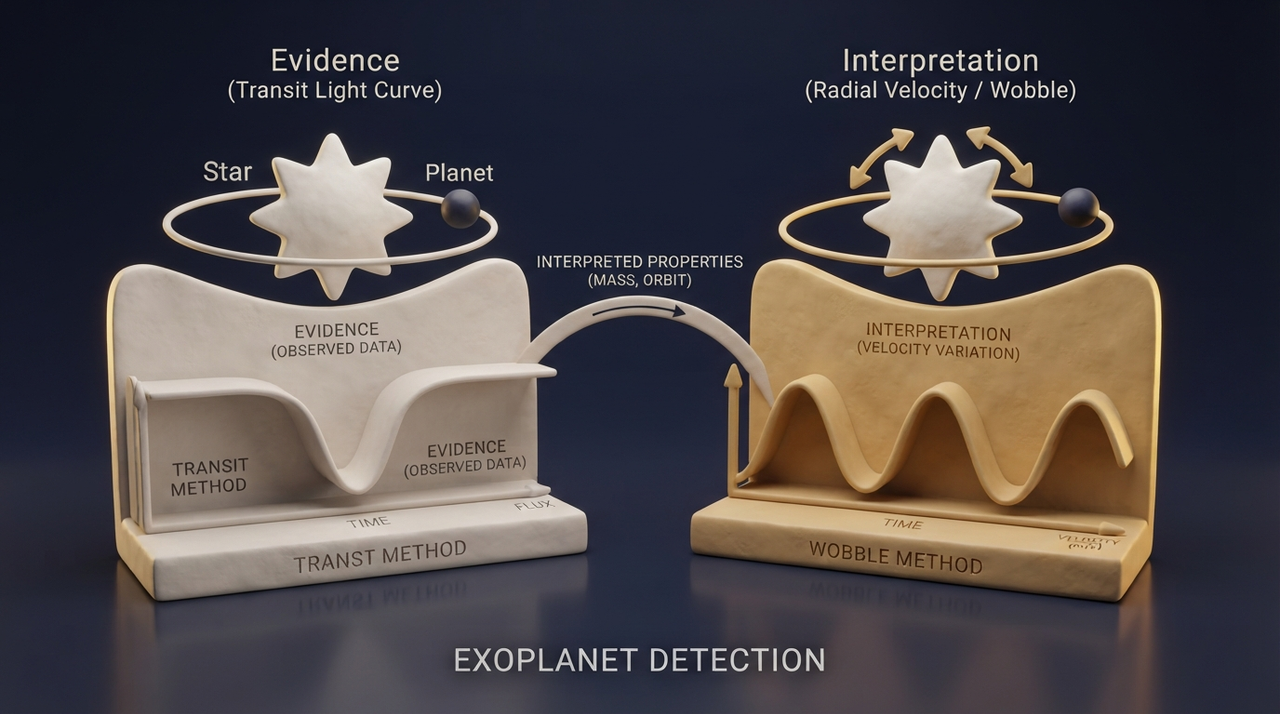
Picture a star as a vast spotlight. When an exoplanet crosses its path, it dims the light ever so slightly—like a moth briefly blotting the moon. The transit method captures this dip, precise to parts per million, revealing the planet's size, orbit, and even atmosphere hints through spectroscopy.
It's elegant detective work. Multiple transits confirm periodicity, ruling out stellar spots or eclipsing binaries. Size matters: Jupiter-sized giants cause bigger dips, easier to spot, while Earth twins demand exquisite precision. Success hinges on alignment—only 1% of systems offer the perfect edge-on view—yet this selectivity yields pure data.
Kepler's Legacy: From Dream to Data Flood
Kepler stared at 150,000 stars in Cygnus and Lyra for nearly a decade, detecting 2,600 confirmed exoplanets before fuel ran dry in 2018. Its field of view, a postage stamp on the sky, overflowed with variety: scorching hot Jupiters, mini-Neptunes, and super-Earths. Kepler-452b, a near-Earth analog, ignited headlines—but Kepler's true gift was statistics, proving small, cool worlds are common.
Now, TESS extends the torch, scanning the full sky for brighter transits. Kepler's algorithms, refined by machine learning, sift signals from noise, blending human ingenuity with computational might.
Beyond Transit: Radial Velocity and the Multi-Method Arsenal
No single tool conquers exoplanets. Radial velocity complements transit by tracking stellar wobbles—gravitational tugs from orbiting planets Doppler-shifting starlight red and blue. Pioneered in the 1990s, it nailed the first exoplanets around sun-like stars, like 51 Pegasi b.
- Transit excels at size and multiplicity; radial velocity at mass.
- Together, they yield density, hinting at rock or gas.
- Direct imaging and microlensing fill gaps for wide orbits or faint stars.
Yet biases persist: transit favors large, close-in planets; radial velocity, massive ones. Small, temperate worlds like ours remain ghosts, demanding next-gen scopes like the James Webb Space Telescope for atmospheric biosignatures—methane, oxygen, water vapor.
Habitable Zones and Astrobiology's Frontier
Defining Habitability: Water, Stars, and Wild Cards
The habitable zone orbits where stellar heat sustains liquid water, Earth's lifeblood. For sun-like stars, it's 0.95 to 1.67 AU; red dwarfs shrink it closer in. But habitability transcends distance: stellar flares, planetary geology, magnetic fields all factor in. Astrobiology probes these—TOI-700 d, a habitable-zone Earth-sized world from TESS, exemplifies the tease.
Evidence is circumstantial: rocky composition, right flux. Interpretation leaps to life require caution. No confirmed biosignatures yet; false positives lurk in abiotic chemistry. Claims of ancient alien megastructures or universal civilizations demand ironclad attribution—like SETI's scans—and counterevidence tempers hype.
Challenges, Uncertainties, and Humanity's Next Horizon
Limits abound. Earth's bias clouds judgment: silicon-based life? Exotic solvents? Most exoplanets circle red dwarfs, flare-prone hosts questioning stability. Detection thresholds miss true Earth analogs—eta-Earth remains elusive.
Future gleams with JWST's gaze, PLATO's precision, and AI-driven analysis sifting petabytes. This hunt bridges astronomy's cold facts to humanity's warm wonder: are we alone? Data builds the case; humility honors the void. As Kepler's stars fade in memory, their echoes propel us toward habitable worlds—and perhaps, ourselves anew.