
History of Quarantine: Venetian Lazarettos, Contagion vs Miasma, and Public Health Isolation Institutions
Standing at the Gate: The Birth of Quarantine
Picture a ship slipping into the lagoon under a heavy autumn sky. Its sails furled, it drifts toward a low island fringed with stone walls. Guards in rowboats circle, calling out questions in Venetian dialect. No one steps ashore yet. Forty days must pass. This scene, repeated for centuries, marks the heart of the history of quarantine. The word itself derives from the Italian quaranta giorni, those forty days of enforced separation for travelers and vessels suspected of carrying plague.
Quarantine emerged not as a single invention but as a patchwork of local practices, shaped by trade routes, city walls, and waves of epidemic fear. In the 14th century, as Black Death receded, Mediterranean ports codified isolation. Venice decreed in 1377 that incoming ships wait thirty days offshore; by 1403, this stretched to forty. Why forty? Biblical echoes, perhaps, from Noah's flood or Lent's duration. Yet practices varied. Ragusa (now Dubrovnik) mandated thirty days in 1377. Genoa and Marseille tweaked terms. These were political tools first, health measures second, balancing commerce against invisible threats.
This essay explores quarantine as an institution of public health isolation, tracing its evolution through competing theories of disease and the structures that enforced them. Note that this historical discussion offers no personal medical guidance; it illuminates past models without prescribing modern action.
Threads of Separation: Distinguishing Quarantine's Forms
Quarantine never stood alone. It wove into broader traditions of exclusion. Religious impurity demanded separation: lepers rang bells outside Jewish or Christian communities; Hindu untouchability isolated castes. These blurred into epidemic responses. A cordon sanitaire sealed land borders with troops, as France did against Austria in the 18th century. Maritime bills of health certified clean voyages, precursors to today's health declarations.
Hospital isolation refined the practice. Pesthouses dotted Europe, holding suspects apart from general wards. Modern public health isolation laws, like those in 19th-century Britain, empowered officials to detain individuals by decree. Each form carried political weight: who drew the line between clean and tainted?
Early Institutions: Plague Stations on the Water
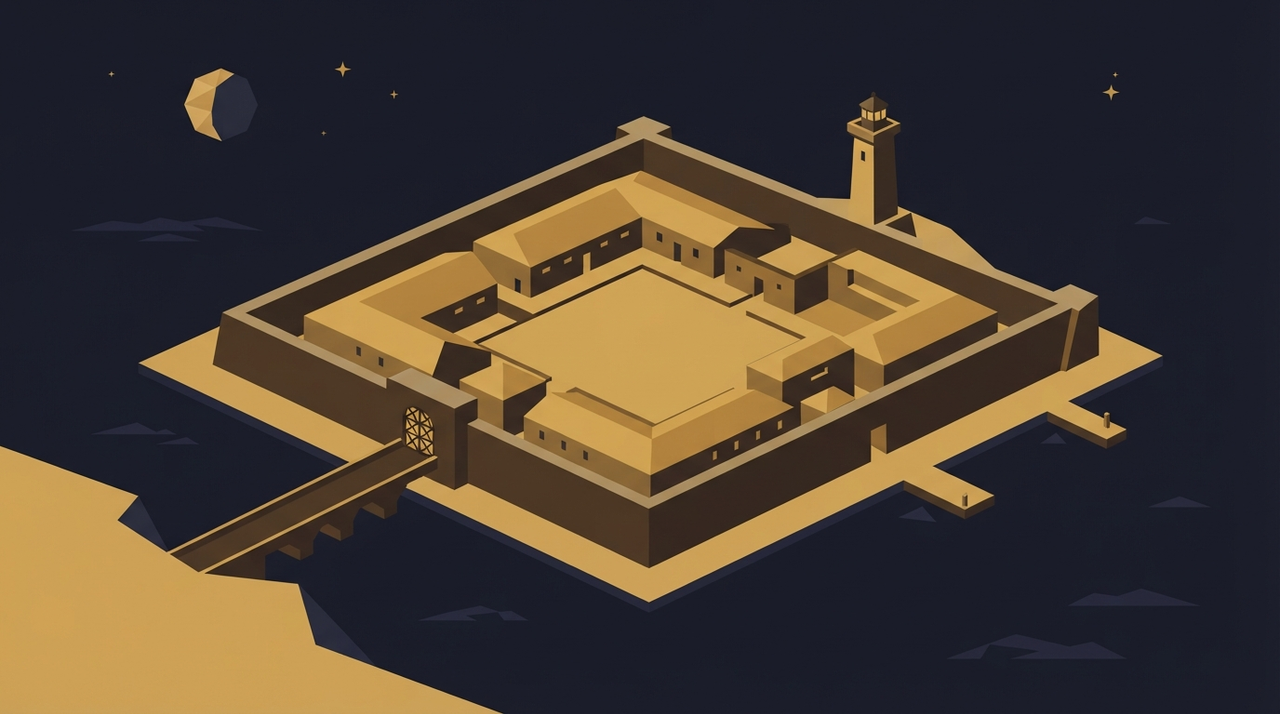
Lazaretto Venice became the archetype. In 1423, Venice opened Santa Maria di Nazareth on an island near the Lido. Ships unloaded goods here for airing; crews waited in barracks. By 1468, Lazzaretto Vecchio handled the sick, while Lazzaretto Nuovo, built in 1461, stored fumigated cargo. These plague stations hummed with bureaucracy: magistrates oversaw disinfection with vinegar, fires, and gunpowder smoke.
Ragusa's 1377 ordinance predated Venice's full system. Ships anchored at Lokrum Island for thirty days; observers watched for illness. Sources from the era are sparse, city chronicles mostly, yet they reveal a republic prioritizing trade. Parallel developments unfolded in Islamic lands. Medieval plague treatises by scholars like Ibn Sina described isolating the ill, while bimaristans (charity hospitals) in Cairo and Damascus segregated patients. These were not Venetian imports but indigenous responses, rooted in prophetic traditions advising flight from plague.
Global Echoes: Isolation Across Continents
Kalaupapa: Dignity and Coercion in Hawaii
Far from Europe, Hawaii's Kalaupapa settlement on Molokai island embodied quarantine's ethical tensions. From 1866 to 1969, over 8,000 people with Hansen's disease (leprosy) were exiled there. The kingdom's Board of Health enforced isolation to protect the population, shipping patients to a remote peninsula with cliffs on three sides. Father Damien arrived in 1873, building a community with churches, schools, and farms. Yet coercion lingered: families torn apart, dignity traded for survival. When sulfone drugs ended the need in 1969, residents chose to stay, transforming exile into home.
Cholera Cordons: Class and 19th-Century Europe
The 1830s cholera pandemics tested quarantine anew. Russia erected cordons along borders; Austria sealed Galicia. France debated fiercely: liberals favored sanitation, conservatives quarantine. In Naples, troops shot quarantine breakers. Class shaped outcomes. The poor crowded into urban pesthouses; elites retreated to country estates or paid for private observation on islands. Migrants bore stigma, accused of importing filth.
- Prussia's 1831 cordon collapsed under troop desertions.
- Spain's combined quarantine with cleanliness drives.
- England rejected continental models for local boards of health.
These cases highlight quarantine as political health: institutions reflecting power, not just epidemiology.
Contagion vs Miasma: Theories Shaping Isolation
Debates over disease mechanisms drove quarantine's design. Contagion vs miasma framed centuries of policy. Miasma theory, dominant from antiquity, blamed foul airs from decaying matter, swamps, or overcrowding. Florence Nightingale championed it in the 1850s, urging ventilation over isolation. Cities widened streets, drained marshes. Contagion countered: disease jumped person to person, demanding separation.
Venetian lazarettos embodied contagion thinking. Ships aired linens to kill seeds of plague. Islamic treatises split: some urged fleeing miasmas, others isolating contacts. The 18th century saw synthesis. Britain's John Pringle argued contagion spread via effluvia, blending theories.
Germ Theory's Turning Point
Robert Koch and Louis Pasteur shifted paradigms in the 1880s. Koch isolated anthrax and tuberculosis bacilli; Pasteur vaccinated against rabies. Germs, visible under microscopes, validated contagion. Yet transition lagged. Miasma lingered in sanitation reforms; quarantine persisted for smallpox variolation holdouts.
Each model worked in its context: miasma spurred urban renewal, contagion built walls, germs refined both.
No theory triumphed as moral victor; they layered into public health isolation.
Power at the Gate: Who Was Locked In?
Institutions revealed inequities. In Venice, nobles bought dispensation, sending servants to lazarettos. The poor entered en masse, emerging stigmatized. Rumors swirled: goods stolen, patients mistreated. Migrants from the Levant or Dalmatia faced extra scrutiny; religious minorities, like Jews in 15th-century Frankfurt, segregated in Judengassen during outbreaks.
Class cordons amplified divides. 19th-century cholera hit slums; cordons trapped the immobile poor while the wealthy fled. In Hawaii, Kalaupapa housed native Hawaiians disproportionately, echoing colonial burdens. Stigma endured: lepers as moral failures, cholera victims as dirty foreigners.
Who paid for better islands? Merchants with influence skirted rules. Public health isolation became social control, gatekeepers wielding rumors as weapons.
Cross-Doors: Quarantine's Ripples
Politics and Ethics
Quarantine tested sovereignty. Cities defied empires; republics enforced via lotteries for guard duty. Ethically, isolation weighed liberty against collective safety. Kalaupapa raised consent: forced exile or humane haven?
Environment and Business
Miasma eyed stagnant waters, spurring canals and sewers. Trade suffered: Venetian galleys delayed, Ragusa's port idle. Merchants lobbied for shorter terms, birthing insurance for quarantined goods.
Historical Threads
From lazaretto Venice to Ellis Island inspections, quarantine echoed. Today, it informs airport screenings, a lineage of gates.
Who Decides the Gate?
Quarantine's history unfolds not in plagues alone, but in choices: forty days or thirty, island or slum, poor or privileged. Venetian magistrates, Hawaiian kings, European cordon generals, each held the key. These institutions of public health isolation mirrored societies, their plague stations as much fortresses as hospitals.
Carry this question forward: who decides the gate today? Join the Aetheria community to explore politics, ethics, and existence through open inquiry.