
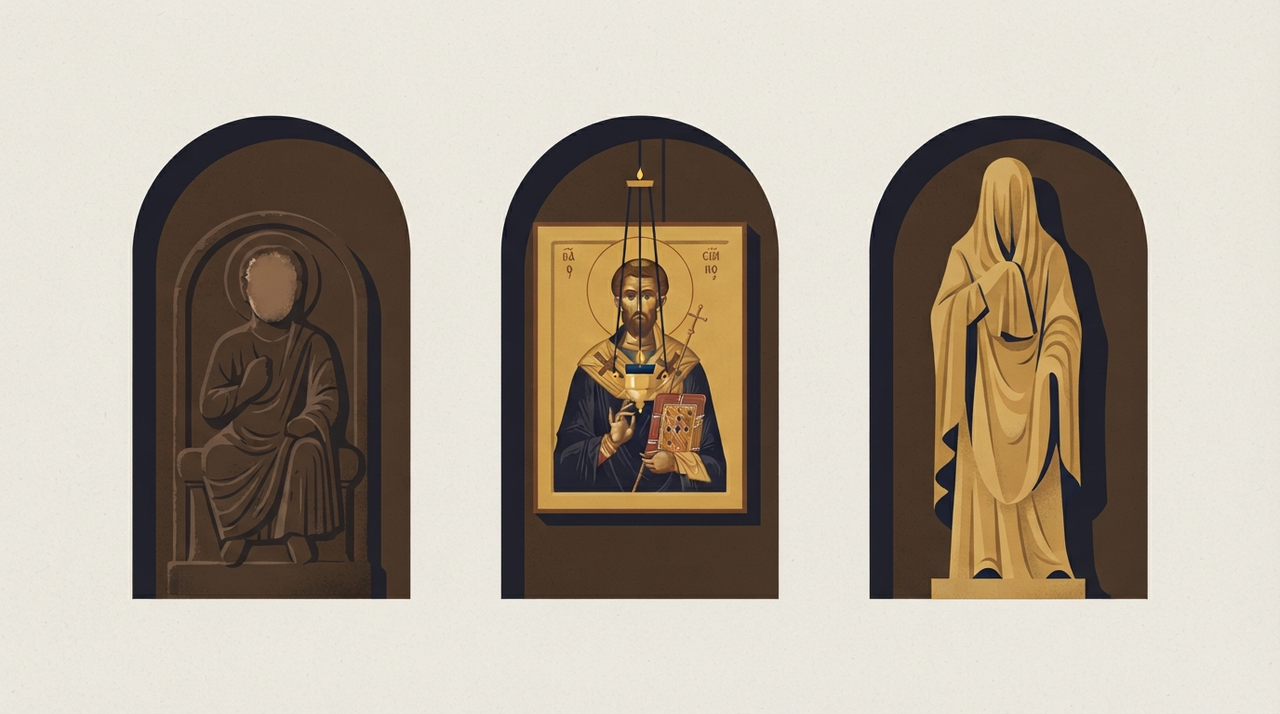
Iconoclasm History: Why Images Are Made, Covered, Broken, or Refused in Byzantine, Reformation, and Islamic Traditions
Picture a golden icon in a dim Byzantine church, kissed by pilgrims seeking divine intercession. Now envision that same image shattered under imperial decree, its fragments scattered like broken promises. This tension over sacred pictures pulses through iconoclasm history, not as mindless destruction, but as profound debates about mediation, presence, and power. In Aetheria's Art Door, we trace these stories across Byzantine icon controversy, Reformation images, and Islamic image debates, respecting their unique theological soils and political winds.
Images invite touch, gaze, prayer. Yet they risk becoming idols, veiling the divine they mean to reveal. Why craft them at all? Why veil, smash, or shun? These acts emerge from distinct traditions, each wrestling evidence from texts, damaged relics, and living practices.
The Byzantine Icon Controversy: Windows or Idols?
From 726 to 843, the Byzantine Empire convulsed over icons. Emperor Leo III launched the assault, ordering holy images whitewashed or burned. His son Constantine V convened the Council of Hieria in 754, condemning icons as idolatrous simulations of Christ's body, unfit for worship. Why break them? Iconoclasts saw pictures as material barriers, tempting superstition amid military defeats and Arab conquests that whispered of divine disfavor.
Opponents, iconodules like John of Damascus, defended images as incarnational logic made visible. Christ's enfleshment sanctified depiction; icons channeled reverence without confusion. The Second Council of Nicaea in 787 restored them, mandating veneration but not worship. Surviving icons bear scars: overpainting, defaced faces. Some were covered with cloths during Lent, a ritual deactivation honoring their potency, not denying it.
Here, images were made for pedagogy and prayer, broken to purge perceived heresy, defended as theological necessities. Politics intertwined: emperors sought uniformity, monks guarded monastic traditions.
Reformation Images: Purging the Visible Church
Protestant Critiques and Catholic Responses
Sixteenth-century Europe saw churches stripped bare. Ulrich Zwingli in Zurich ordered crucifixes smashed in 1524, deeming them prompts to idolatry. John Calvin echoed this in Geneva, insisting Scripture alone sufficed; images distracted from Word-centered faith. Reformers broke statues, whitewashed frescoes, viewing medieval abundance as corrupt accretions fueling pilgrim frauds and relic cults.
Martin Luther parted ways, tolerating crucifixes for consolation, though wary of excess. Catholics at Trent in 1563 reaffirmed images as aids to devotion, banning only abuses. Damaged altarpieces survive: beheaded saints, charred Madonnas from iconoclastic riots amid religious wars.
Creation stemmed from didactic zeal; breakage purified worship; coverings appeared in processions, veiling mysteries. Political stakes soared: princely allegiances fueled violence, yet pockets of restraint endured.
Islamic Image Debates: Aniconism as Disciplined Restraint
Aniconism in Islam defies simple bans. Core texts like hadith warn against images rivaling God's creation, fearing animation or emulation of the divine. Yet no monolithic prohibition exists. Early mosques favored geometric tiles, arabesques, calligraphy; figural art thrived in secular spheres.
Sunni jurists like al-Ghazali cautioned religious figuration, while Shi'a traditions embraced saint portraits. Ottoman miniatures depicted rulers lavishly, Umayyad frescoes showed figures. Regional variation reigns: Afghan Taliban destruction contrasts Persian illuminated manuscripts. Images were refused in sacred spaces to prioritize tawhid, God's oneness, but crafted exuberantly elsewhere.
No widespread breaking; rather, deliberate absence or veiling in prayer niches. Living communities navigate this: Sufi icons exist, debated but tolerated.
Tracing the Gaps: Made, Covered, Broken, Refused
Across these iconoclasm history threads, patterns emerge without fusion. Byzantines made icons as incarnational bridges, broke them over Christological precision. Reformers crafted sparingly, purging to recenter grace through faith. Islamic traditions refused religious figures, channeling artistry abstractly.
Coverings recur ritually: Byzantine veils, Reformation procession cloths, Islamic modesty screens. Evidence varies: primary councils, damaged panels, juridical fatwas. Each honors images' allure while curbing peril.
In Aetheria's Art Door, spanning Religion, Ethics, Politics, History, pause before a scarred fresco or empty niche. Was it iconoclasm's fervor, aniconism's quiet discipline, or time's neglect? These voids invite questions, not verdicts on beauty, but curiosity about human-divine encounters.