
Journeys of Artifacts: Provenance Research, Museum Collecting, and Cultural Heritage Repatriation Debates
The Restless Paths of Ancient Objects
Imagine a bronze plaque, once adorning the walls of a royal palace in the Kingdom of Benin, now encased in glass under museum spotlights half a world away. These artifacts do not rest; they journey—from sacred sites to shadowy markets, private vaults, and public galleries. In the world of museum history collecting, every object carries a biography etched in time, trade, and turmoil. This tale explores those paths, delving into art provenance research, the ethics of cultural heritage ownership, and the heated debates over repatriation and stewardship.
What happens when an object's story fractures? Gaps in records invite questions: Who truly owns this piece of humanity's past? For seekers pondering the ethics of display and belonging, these journeys reveal not just history, but living connections to communities still shaped by loss.
From Sacred Site to Institutional Storage: An Object's Biography
Artifacts begin in context—buried in tombs, displayed in temples, or worn in rituals. A Cycladic marble figure from the early 3rd millennium BCE might have stood in a gravesite on a sun-baked Aegean island, embodying the spirit of the deceased. But excavation, legal or otherwise, uproots it. The path twists through findspots, often unrecorded; dealers who polish away patina and provenance; collectors chasing prestige; and finally, museum accession, where curators catalog it amid stacks of crates in climate-controlled storage.
This biography is rarely linear. Wars, auctions, and inheritances intervene, turning a village heirloom into a billionaire's trophy before it lands in a vitrine. Storage vaults, dim and vast, hold most objects—90% unseen, their stories paused until research revives them.
Peeling Back the Layers of Provenance
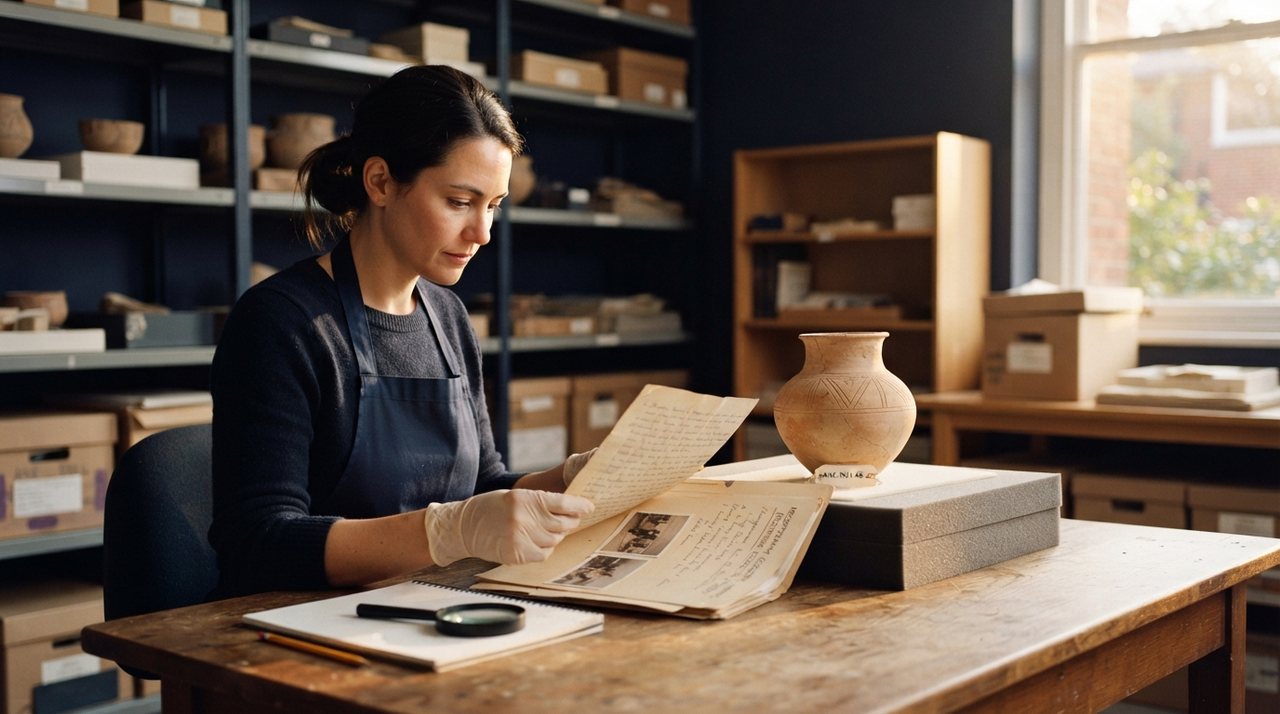
Art provenance research dissects these layers like an archaeologist's trowel. Start with the findspot: Was it looted from a tell or gifted by a diplomat? Dealers obscure trails with forged labels. Collectors' ledgers might note a Paris salon purchase in 1925, but gaps yawn—decades unaccounted for. Accession records seal the museum's claim, yet forgeries and omissions persist.
Trajectories in Time: Benin Bronzes and Cycladic Figures
Consider the Benin Bronzes, crafted in the 16th to 19th centuries for the Oba's palace in West Africa's Kingdom of Benin. In 1897, British forces sacked the city, seizing thousands of plaques, heads, and bells. Today, they scatter across institutions like the British Museum, Metropolitan Museum of Art, and smaller holdings worldwide—symbols of colonial plunder.
Contrast a Cycladic figure: Carved around 2500 BCE, likely for funerary use, it enters the market stripped of context. Dealers in Athens or Switzerland sell it to European collectors; by the 20th century, it's in a New York gallery, its island origins erased. Such losses hobble understanding—was it male or female? Ritual or portrait?
Distinguishing Evidence from Narrative and Claim
Historical evidence—shipping manifests, eyewitness accounts—clashes with institutional narratives polished for catalogs. Museums tout Enlightenment-era collecting as cultural exchange; communities counter with theft's trauma. Nigerian voices on the Bronzes evoke ancestral rights; scholars parse legal titles under colonial law. No side owns unassailable truth; uncertainty lingers in incomplete archives.
Cultural heritage ownership defies simple verdicts. Artifacts bind to source communities, yet museums argue stewardship preserves them for global edification.
Authorities in Contention: Communities, States, Museums, and Scholars
Who decides? Source communities assert moral primacy, invoking oral traditions. Nation-states like Nigeria claim sovereignty over Benin legacies. Museum boards weigh public trust and budgets; scholars demand empirical rigor. Recent loans and digital repatriation hint at hybrids, but tensions simmer—Germany returns some Bronzes, others resist.
How Display Reshapes Meaning
In the art display context, a Bronze head under harsh LED gleams as "art," divorced from palace echoes. Soft lighting and sparse labels evoke universality; crowded cases with community loans whisper specificity. Access matters—online scans democratize, but vitrines gatekeep touch and scent. Display doesn't just show; it re-authors the object's life.
Echoes Across Doors: Sacred Places, Ancestors, and Memory
These journeys link to sacred realms—palaces as ancestor abodes, Cycladic graves as spirit portals. They evoke writing's role in memory, from palace inscriptions to modern ledgers. Detached from communities, artifacts fade; reunited, they pulse with vitality.
Stewardship's Open Horizon
Amid repatriation and stewardship debates, questions linger: Return all? Share custody? Co-curate? Pause here, journal seeker: What does belonging mean for this artifact in your life? In uncertainty lies curiosity's gift—urging humane paths forward, honoring all voices in the object's endless journey.