
Living Masks in Motion: Performance, Masquerade, and Museum Limits in Ephemeral Arts
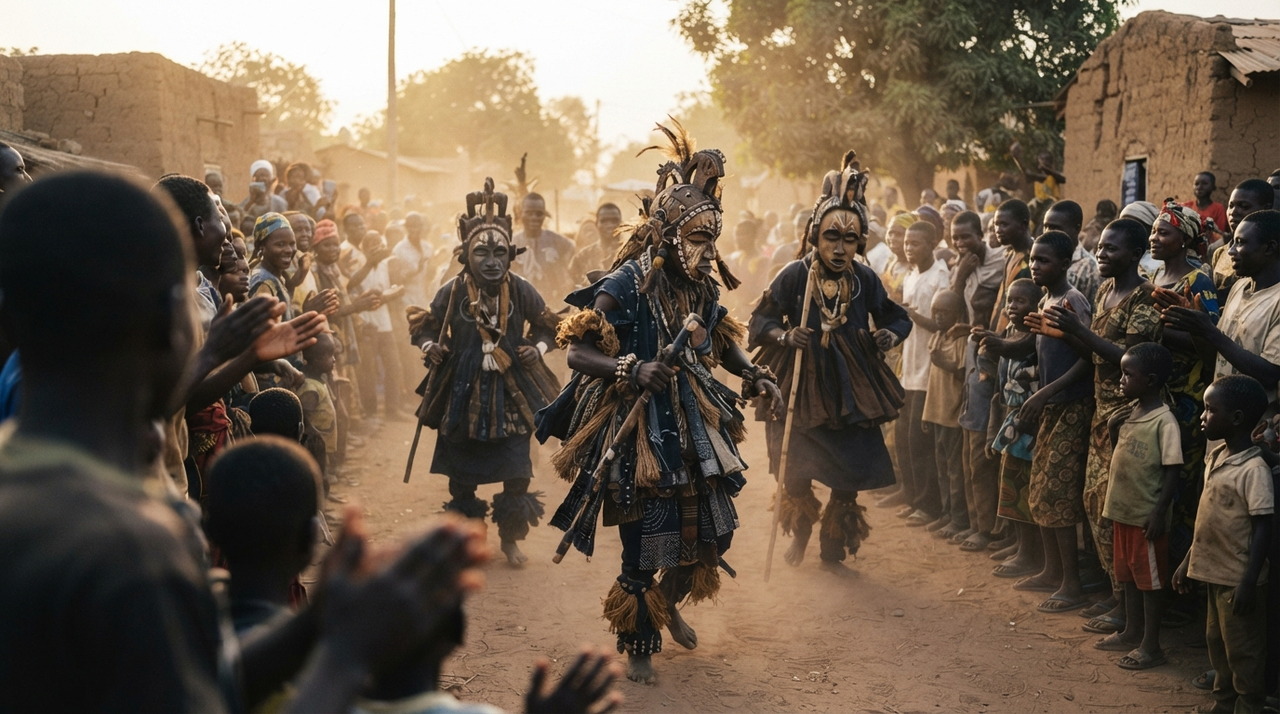
Imagine a torchlit procession winding through a crowded square at dusk. Drums throb like a shared heartbeat. A colossal mask emerges from the shadows, its carved features twisting with each sway of the hidden performers beneath. Laughter erupts, warnings ripple through the crowd, and for those breathless moments, the mask lives - not as inert wood or raffia, but as a force woven from dance, song, and collective gaze. This is the pulse of performance and masquerade, the heart of ephemeral arts that dissolve once the night fades.
Yet step into a museum, and that same mask hangs silent on a wall, spotlit and labeled. Its story reduced to craftsmanship, provenance, age. Here lie the stark museum limits: a living mask stripped of motion, music, and meaning. For makers of festivals, dancers, and masqueraders, this gap aches. Festival arts demand embodiment, not enclosure. They thrive in time, in permission granted by communities who guard their rites.
The Layers of Living Masks: Beyond the Object
A mask never stands alone. Peel back its surface, and layers reveal themselves: the carved or woven object, the enveloping costume, the rhythmic dance that animates it, the enveloping music that calls it forth, and the sacred or festive occasion that permits its presence. Sever one layer, as collectors often did, and the whole unravels.
Ethnographic expeditions in the nineteenth and twentieth centuries plucked masks from their contexts. A dancer's heirloom, vital to a village initiation or harvest rite, ended up in vitrines from London to New York. The performance halted mid-stride. No drumbeat echoes there. No audience enforces the boundaries of who may approach, who must flee. These acts of preservation inflicted a quiet loss, freezing festival arts into specimens.
Separable Elements, Indivisible Spirit
Consider the distinctions. The object endures; the costume drapes and frays; the dance transmits through bodies over generations; music shifts with each telling; the occasion binds them, often veiled in community knowledge outsiders cannot claim. Greek tragic masks, worn by actors to amplify voice across amphitheaters, shared this logic - projection through exaggeration, alive only in chorus and catharsis. Medieval European pageants paraded giants and beasts through streets, their papier-mache heads mere vessels for communal revelry.
In living traditions worldwide, from Caribbean carnivals to Japanese Noh, these layers interlock under strictures. Descendant communities hold initiation secrets close. Performers train in seclusion. Audiences know the rules: reverence here, terror there. Outsiders witness edges, not essences. Photography and early films capture glimpses - a whirl of fabric, a stamped foot - but frame them through foreign lenses, flattening the temporal depth.
Navigating Museum Limits in Ephemeral Arts
Museums excel at permanence, but ephemeral arts resist it. A carnival float dismantled post-parade, a procession mask dismantled for storage - these practices reject stasis. The museum's gaze objectifies, turning performer into artifact. Festival arts, by contrast, insist on renewal. Each enactment rekindles the mask, adapting to new dancers, altered rhythms, fresh permissions.
Bounded Comparisons, Not Origins
- European theater traditions, from commedia dell'arte to modern ballet, echo masquerade's mobility without claiming primacy.
- West African egungun ensembles, Caribbean jonkonnu, or Himalayan devil dances persist in descendant hands, their profundity intact despite diaspora.
- No single thread weaves them; each pulses in its locale, defying reduction to "primitive" types.
Respect demands we name these limits without appropriation. What meanings stay restricted? Plenty. What performances evade the camera? Most. This humility opens doors to genuine curiosity.
Festival Arts Alive: Invitations Across Doors
What does a still image withhold? The electric consent of the crowd, the dancer's sweat-slicked exertion, the moment permission shifts from invitation to imperative. Ephemeral arts bridge anthropology's fieldwork, religion's rites, creativity's spark, mythology's echoes. A mask in motion evokes ancestors not as dusty tales, but as presences felt in the bones.
In the swirl of performance and masquerade, we glimpse what endures precisely because it flees capture.
At the Aetheria Art Door, these threads converge. Explore festival arts not as relics, but as calls to create. Choreograph your own procession. Carve a mask for motion, not mantle. Honor living masks by letting them dance.
A Call to Embodied Practice
The museum preserves fragments; communities renew wholes. As festival makers, reject the wall. Infuse your events with layers: summon drummers, train dancers, set occasions that breathe. Performance and masquerade demand participation. In their wake, ephemeral arts remind us: true vitality slips through fingers, lingers in memory, urges the next step forward.
Step into the street. Let the masks move.