
Middens and Made Landscapes: Waste Archaeology Reveals Human Environments
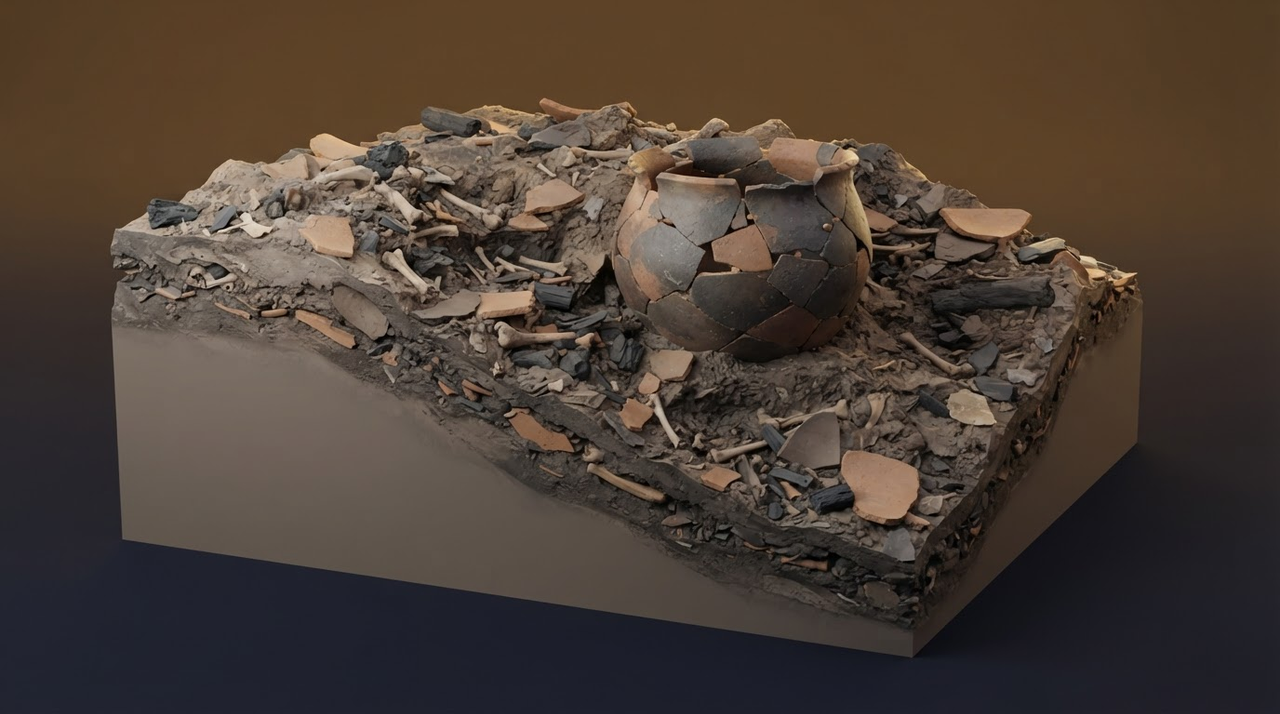
Imagine slicing vertically through a low hill on the edge of an ancient settlement. The spade reveals layers of crushed shell, charred bone fragments, and shattered pottery. Ash beds alternate with dense concentrations of fish scales and mammal teeth. This is a midden, a rubbish heap transformed into stratified soil, a made landscape bearing witness to human lives. Waste archaeology begins here, in these deposits, where what people discarded shapes the ground beneath our feet.
Waste is not mere refuse. It names a practice: sorting, burning, burying, or reusing. Middens emerge from these choices, recording environmental history through material reuse, soils altered by accumulation, and the afterlife of objects. This refuse history reveals human environments without moral lessons or modern sermons. It shows ordinary labor, unequal exposures, and landscapes crafted over centuries.
Deposits of Daily Life: From Shell Mounds to Dung Heaps
Shell middens dot coastlines worldwide, towering accumulations from hunter-gatherer communities. In places like Denmark's Ertebølle culture or California's Channel Islands, these heaps reach meters high, mixing oyster shells with tools and hearths. They signal seasonal gatherings, marine diets, and soils enriched for later cultivation. Scale matters: some span millennia, others mere generations.
Urban rubbish mounds tell different stories. In medieval York or Viking Dublin, layers of leather scraps, glass beads, and animal bones build artificial hills. These reflect dense populations, craft waste from tanneries, and market discards. Chronology emerges in thin annual bands, like tree rings of city life.
Farmyard Accumulations
Farmyard dung heaps blend waste with fertilizer. In Iron Age Britain or medieval villages, manure mixed with straw, bedding, and spilled grain forms deep, humus-rich layers. These deposits, spread on fields, remake soils for arable land. Nonhuman life thrives here: worms, bacteria, insects process the mass into fertile earth. Human agency drives it all, from herding to hauling.
The Afterlife of Objects: Reuse as Common Practice
Objects rarely vanish. Pottery sherds find new roles: prehistoric peoples crushed them for temper in fresh pots or laid them as floor paving. Metal recasting turns broken tools into ingots, evident in Roman workshops from slag heaps. Textile rags stuff walls or serve as kindling, while building-stone spoliation reworks Roman temples into medieval churches. Material reuse threads through refuse history, an ordinary response to scarcity, not a virtue.
These practices shape environments. Sherds in walls stabilize soil; recast metal reduces mining scars. Infrastructure like kilns and forges anchors this cycle, labor-intensive and skilled.
Soils Made by Waste: Dark Earths and Night Soil
Waste archaeology uncovers soils born of refuse. Dark earths, black loams in Roman and medieval cities like London or Paris, arise from decomposed organics, ash, and bone meal. Centuries of trampling and dumping create these anthropic horizons, fertile yet laced with hazards from lead-glazed pots or cess deposits.
Night Soil and Labor
Night soil, human waste carted from privies, enriches urban fringes or fields. In Edo Japan or 18th-century Europe, this trade builds soils while exposing carriers to risks. Living communities today interpret these layers, their authority grounding archaeological readings. Uncertainty lingers: was salt buildup from irrigation a minor afterlife here, quickly overshadowed by organic influx?
Diet, Inequality, and the Limits of Environmental Archaeology
Middens yield diet snapshots: fish bones for coastal poor, beef ribs near elite halls. Inequality appears in deposit scale or quality, poorer zones with more shellfish middens, richer with imported wares. Yet limits abound. Waste archaeology reconstructs resource use and landscape change but cannot recover intentions, smells of rot, or who shouldered the carrying. Cultural interpretations vary; nonhuman agencies like rats reshape heaps.
- Evidence: Bones preserve, pots shatter predictably.
- Interpretation: Diet infers status, soils track labor.
- Living authority: Indigenous voices on shell middens refine readings.
Threads to Broader Human Worlds
Refuse history links realms. In archaeology, middens date sacred places nearby. Economics sees resource loops in reuse. Technology traces infrastructure in slag and kilns. Health histories note unequal hazard exposure in soils, without prescribing remedies.
Next time you pass a weedy mound or probe garden soil, ask: What was kept? What dumped? Who lived beside the heap? Waste archaeology invites such inquiries, revealing environments as human handiwork, layer by patient layer.