
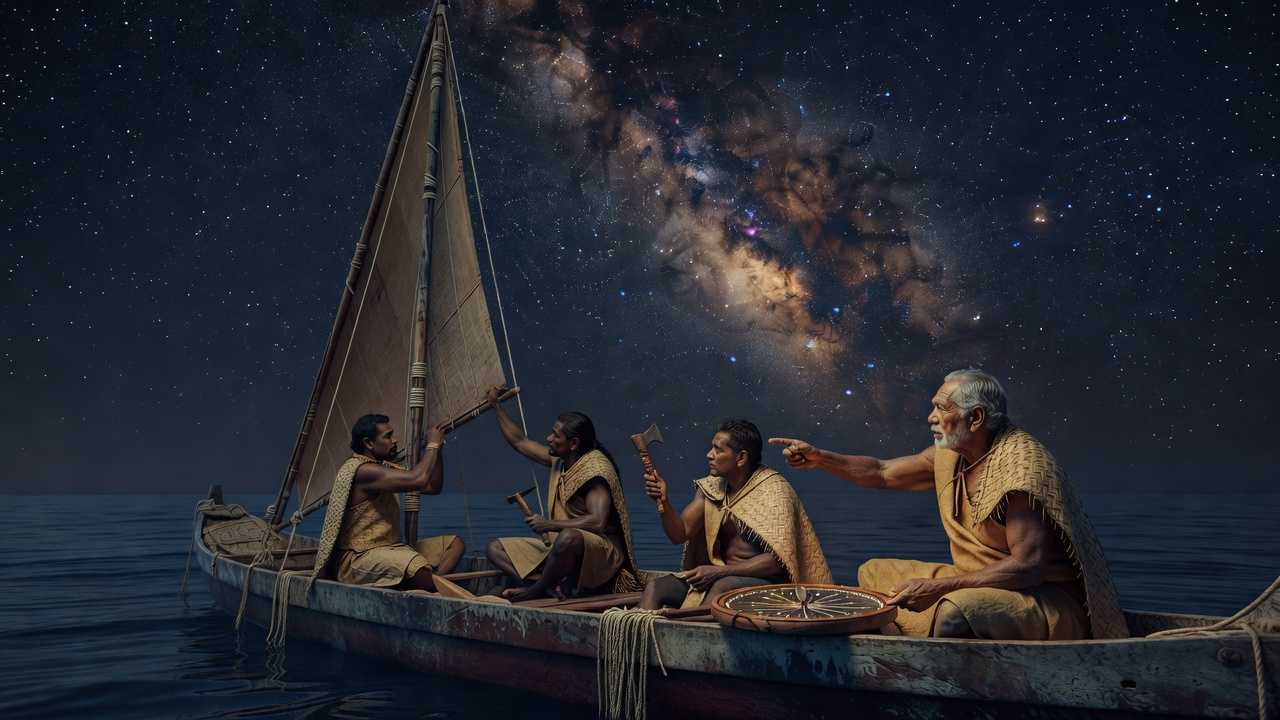
Milky Way in Indigenous Skies: Navajo Star Paths, Polynesian Voyages, Maya Maize, and Andean Wisdom
Imagine standing on a desert plateau under a sky so clear the Milky Way unfurls like a river of diamonds, pulsing with ancient stories. For countless generations, Indigenous peoples have gazed at this cosmic band—not as distant stars, but as a living guide woven into their daily lives, ceremonies, and voyages. This is Indigenous astronomy at its heart: the Milky Way as a bridge between earth and eternity, a map for the soul and the sea.
In a world of telescopes and apps, these traditions remind us of living sky knowledge—dynamic, passed down orally, adapting yet enduring. From Navajo healers charting star paths to Polynesian wayfinders crossing oceans, the Milky Way whispers secrets of creation, sustenance, and survival. Let’s trace its glow through four vibrant traditions, separating raw observation from mythic narrative and modern practice.
The Milky Way Observed: A Universal Celestial River
To the naked eye, the Milky Way appears as a hazy, glowing arch spanning the night sky from horizon to horizon in dark sites. In Indigenous astronomy, it’s no mere backdrop. Observed year-round but brightest in summer hemispheres, its dark lanes and bright core reveal intricate patterns—rifts like rivers, clusters like campsites. These visuals ignite stories: a path for spirits, a watery highway, a backbone of maize.
Unlike Western views of a static galaxy, here the sky breathes. Seasonal tilts signal planting times; its arc aligns with solstices. This intimate observation fuels living sky knowledge, where the Milky Way isn’t studied—it’s conversed with.
Navajo Star Paths: Guidance from the Black God
Observation and Story
In Navajo (Diné) skies over the Southwest U.S., the Milky Way stretches as a white road flanked by dark twins—visible rifts that resemble parallel paths. Traditional stories recount how Black God (Saʼah Naaghái) and Talking God placed the stars, with the Milky Way as the Diyin Dineʼé’s highway, trod by Holy People during creation.
Interpretation and Living Practice
Navajo astronomy interprets this as a moral compass: stay on the white path of harmony (hózhó), avoid the dark edges of chaos. Healers (hatááłii) still use it for Blessingway ceremonies, aligning chants with its rise. Today, Navajo astronomers like Samuel Yazza blend tradition with science at sites like Lowell Observatory, preserving star lore amid light pollution.
Polynesian Voyages: Navigating the Ocean by Starlight
Observation and Story
From Hawaiʻi to Aotearoa, Polynesians track the Milky Way as a starry backbone arcing low over the Pacific. Voyaging canoes like Hōkūleʻa follow its curve to gauge latitude; dark patches mark “sky anchors” for wayfinding. Myths cast it as the path of Māui, who fished islands from the sea, or a bridge for souls to the afterlife (Po).
Interpretation and Living Practice
Polynesian navigation sees the Milky Way as a vast compass rose. Master navigators (pwo) memorize its tilt with hundreds of stars, rising and setting cues for swells and birds. Revived by the Polynesian Voyaging Society since 1976, this knowledge sails modern voyages, linking ancestors to climate-threatened atolls.
Maya Maize: The Milky Way as Cosmic Tortilla
Observation and Story
In Yucatán nights, the Maya view the Milky Way’s white band split by the Great Rift, resembling a curling serpent or world tree (Wacah Chan). Popol Vuh tales describe Hero Twins ascending it to defeat underworld lords, birthing maize from their victory—the Milky Way as the “white-pebble road” to Xibalba.
Interpretation and Living Practice
Symbolizing fertile rains and harvest, its zenith marks rainy season starts. Contemporary Maya farmers in Guatemala time milpa cycles by its position, while astronomers at Chichén Itzá note equinox shadows echoing its path. This binds sky to sustenance in daily rituals.
Andean Wisdom: Mayu, the Celestial River
Observation and Story
High in the Andes, Quechua and Aymara see the Milky Way (Mayu or Chakana) as a frothy river teeming with dark constellations: Llama, Fox, Yacana toad. Legends tell of Sky River flooding earth with stars, or animals quenching thirst there during drought.
Interpretation and Living Practice
It foretells rains—llamas drinking signals bounty. Festivals like Inti Raymi align with its crossings. Today, Andean observatories like Qillqatamaya revive ceque lines tied to Mayu, merging archaeology and astronomy for cultural preservation.
Echoes of the Living Sky
Across continents, the Milky Way binds Indigenous astronomy in threads of resilience. Navajo paths guide ethics, Polynesian stars propel canoes, Maya bands yield maize, Andean rivers promise rain. This living sky knowledge endures, challenging us to dim our lights and listen.
Explore deeper in our Mythology Door for creation epics or Anthropology Door for fieldwork insights. The universe awaits your gaze.