
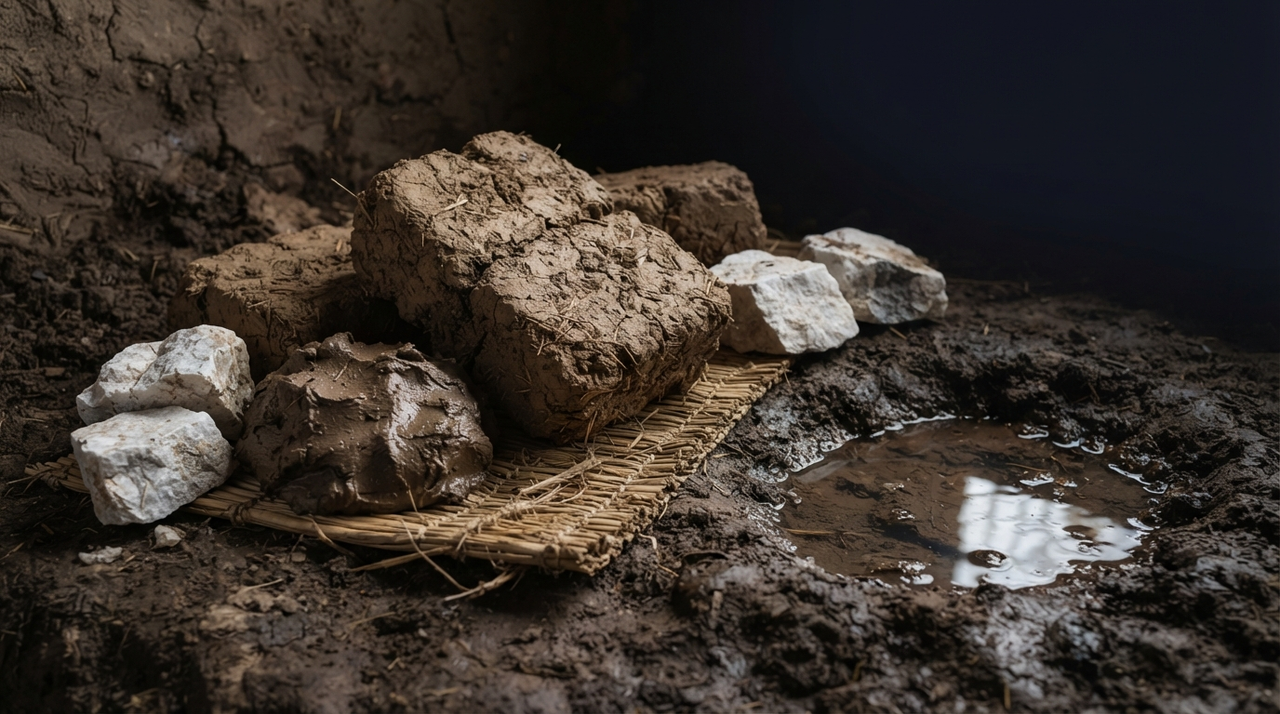
Mudbrick Genius: Ancient Civilizations' Sophisticated Response to Nile, Euphrates, and Andean Environments
Picture a sun-baked plain where floodwaters recede, leaving behind a gift of fertile silt. From this alluvial bounty, ancient builders didn't scramble for stone; they molded empires from mud. Far from primitive improvisation, mudbrick emerged as a sophisticated ancient material, perfectly attuned to the volatile environments of the Nile, Euphrates, and Andean coasts. In these riverine and desert-edge worlds, mudbrick wasn't just expedient—it was genius, harnessing local clay, climate rhythms, and ecology to forge enduring material culture.
Archaeology reveals how these societies transformed environmental constraints into architectural triumphs. Through soil micromorphology, standardized brick dimensions, and tool marks on ancient structures, we glimpse a calculated mastery. This isn't inference; it's etched in the earth itself.
Euphrates Alluvium: Mudbrick in Early Dynastic Mesopotamia
On the southern Mesopotamian plain, where the Euphrates deposited fine clays amid scorching summers and sudden floods, mudbrick defined the urban revolution around 2900–2350 BCE. Availability drove innovation: abundant silt mixed with reeds for tensile strength and bitumen for waterproofing. At sites like Ur and Uruk, archaeologists uncover bricks measuring roughly 30x15x7 cm—standardized sizes indicating organized production, not ad hoc labor.
Archaeological Evidence and Experimental Insights
Soil micromorphology from collapsed walls shows reed tempering, preventing cracking during dry-season shrinkage. Tool marks on brick edges suggest wooden molds and levers, while cuneiform tablets detail labor lists: corvée workers kneading clay in pits, hauling molds under overseers. Experimental reconstructions by archaeologists confirm these bricks rivaled stone in compression strength when layered properly, enduring for millennia despite erosion.
Inference fills gaps: reed-bitumen mixes likely sealed against Euphrates inundations, shaping a social rhythm of flood-prep molding in winter, baking in summer heat.
Nile Valley: Mudbrick Amid Limestone and Desert
Further west, the Nile's annual flood blanketed the valley in black silt from Old Kingdom (c. 2686–2181 BCE) through New Kingdom (c. 1550–1070 BCE) times. Here, mudbrick complemented scarce limestone, thriving in the floodplain's humid cycle. Bricks, often 35x17x12 cm, formed vast complexes like Lahun pyramid town's workers' housing—evidence from stratified debris layers.
From Papyri to Micromorphology
Papyrus records, such as the Abusir accounts, log thousands of bricks produced daily, with straw temper noted explicitly. Excavations yield tool marks from spade-mixing, and micromorphology detects Nile silt's unique quartz grains, distinguishing local from imported clay. Experiments replicate flood-season molding: wet silt packed into molds yields dense bricks, fired minimally by sun. This material culture pulsed with the Nile—labor peaking post-inundation, communities syncing to the river's rise and fall.
Andean Coast: Adobe and Arid Adaptation
On Peru's coastal desert, fed by Andean rivers and fog, adobe mudbricks anchored cultures like the Moche (c. 100–700 CE) and Chimú (c. 900–1470 CE). Scarce clay mingled with marine resources—guano and mollusk shells for binding—yielding sun-dried blocks up to 45x20x10 cm at Chan Chan, the vast adobe city.
Evidence in Layers and Continuity
Micromorphology identifies shell tempers enhancing durability against seismic shakes and El Niño rains. Wall tool marks indicate plank molds and llama-wool brushes. Though texts are scarce, huaca temple accounts hint at elite-directed labor. Modern Peruvian adobe traditions show respectful continuity, not exotic relic—bricks still molded seasonally, dried in coastal winds. Experiments prove these withstand aridity better than untempered mud, inference suggesting communal vigas (work parties) timed to rare rains.
Shaping Labor, Society, and Sacred Spaces
Across these climates, mudbrick dictated daily rhythms: pit-kneading strained backs, communal hauling fostered solidarity, seasonal drying attuned lives to environment. This material culture rippled into sacred realms—mudbrick mastabas for Egyptian tombs, ziggurat cores in Mesopotamia, huaca platforms in the Andes—linking the Ancient Civilizations Door to Sacred Places and Death and Afterlife. Temples and tombs, humble yet monumental, embodied ecological piety.
Reflecting on Ancient Constraints
Mudbrick's legacy challenges our concrete age. In Aetheria's Knowledge Library, it invites us to ponder: What local ancient materials could reshape our climate-vulnerable builds? Journal this: List three environmental limits in your world—then sketch a mudbrick-like response, grounded in what's at hand.