
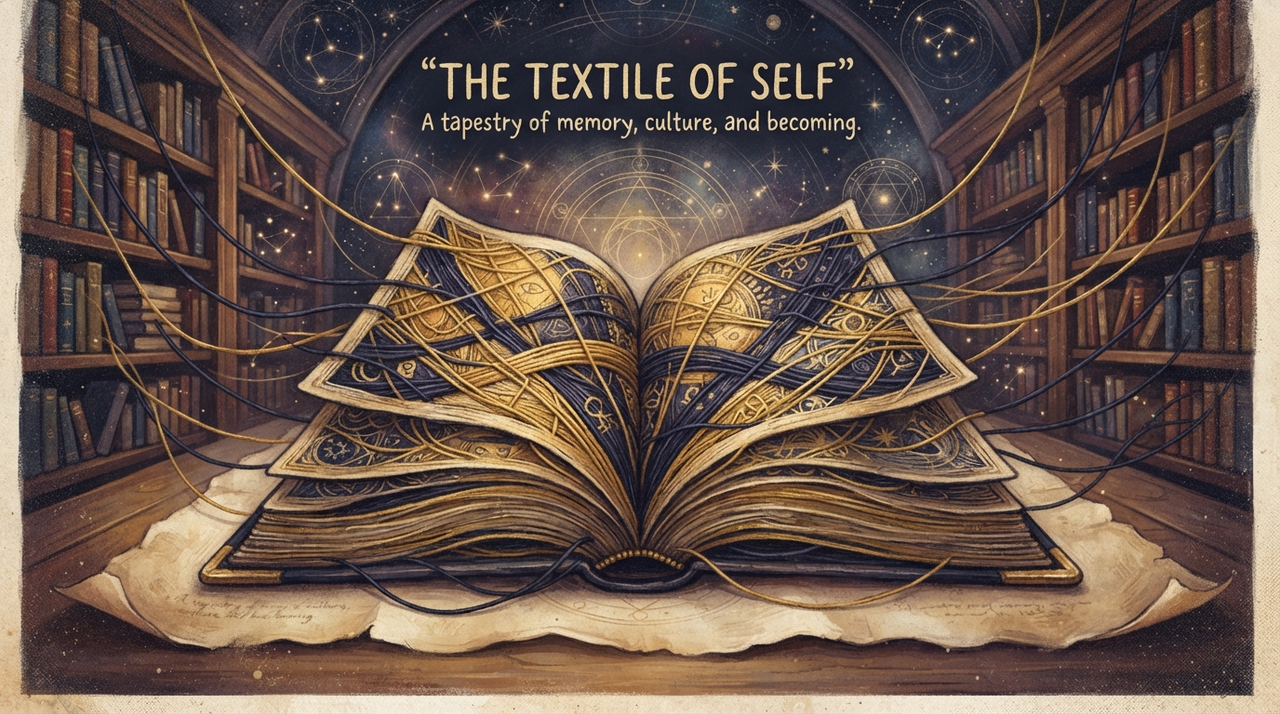
Narrative Identity: Life Story Psychology, Memory, Self, and Cultural Tales of Personal Growth
Imagine a wanderer pausing at a crossroads under a vast, star-strewn sky. The paths ahead blur into shadow, but the tales carried in their heart—stories of triumphs, stumbles, and quiet revelations—light the way. This is narrative identity in motion, not as a tidy self-help checklist, but as the living weave of memory and self that students of existence have pondered across epochs and continents. In Aetheria's Knowledge Library, we approach narrative identity as a profound, culturally inflected practice, inviting thoughtful readers to explore life story psychology, the interplay of memory and self, and the diverse arcs of personal growth.
Far from a modern invention, this sense of self as story spans ancient oral traditions to contemporary psychological inquiry. It's the elder by the fire recounting clan histories, the philosopher musing on life's plot, the individual quietly reshaping yesterday's events into tomorrow's purpose. Here, we distinguish rigorous research on narrative identity—pioneered by scholars like Dan McAdams—from philosophical reflections on selfhood, time-honored cultural storytelling practices, and the intimate craft of personal meaning-making. No universal formula awaits; instead, a cosmic library of possibilities shaped by place, era, community, and circumstance.
The Foundations of Narrative Identity in Life Story Psychology
Psychologist Dan McAdams has illuminated narrative identity as the internalized, evolving story individuals construct about their lives—a dynamic autobiography that integrates the past, present, and anticipated future into a coherent sense of who we are. This life story psychology views the self not as a static essence but as a narrative achievement, forged through selective recall and interpretive framing.
Consider how people organize experiences into chapters: a "low point" redeemed by resilience, a "turning point" sparked by unforeseen encounter. McAdams' research highlights nuclear episodes—high points, low points, turning points—that anchor this internal saga. Yet this is descriptive science, mapping patterns across lives, not prescriptive therapy. It reveals how adults, more than children, rely on such storied coherence for psychological well-being, without claiming causation or cure.
Distinguishing Research from Application
In the realm of life story psychology, empirical studies examine thematic content—like agency, communion, or redemption sequences—prevalent in Western samples. Yet Aetheria urges caution: these findings emerge from specific cultural contexts, not as blueprints for all. Cross-cultural work underscores variations; what signifies growth in one society may echo stagnation in another. This research invites curiosity about our own stories, bridging to deeper philosophical inquiries.
Memory and Self: The Fluid Architecture of Personal Narrative
Memory and self entwine like roots beneath ancient oaks. Memories aren't passive recordings but active reconstructions, tinted by current needs and future aspirations. Philosopher Paul Ricoeur described the self as narrated, emerging through emplotment—arranging disparate events into meaningful sequence. Alasdair MacIntyre echoed this, arguing that human life gains intelligibility only within tradition-shaped narratives.
Every retelling reshapes the tale. A youthful failure, once a scar, might later gleam as the forge of wisdom. This fluidity underscores personal growth not as linear ascent but as iterative revision. Yet memory's selectivity imposes limits; forgotten threads, suppressed chapters, and cultural blind spots persist. Students of existence recognize this imperfection as part of the human symphony, not a flaw to fixate upon.
Protect the journey: narrative identity thrives not in flawless recall, but in honest engagement with the stories we inhabit.
Cultural Tales: How Place, Period, and Community Shape Our Stories
Diverse Arcs Beyond the Hero's Monomyth
Stories of personal growth vary wildly across the human tapestry. Joseph Campbell's hero's journey—call to adventure, trials, return—dominates Western pop culture, yet indigenous Australian Dreamtime narratives emphasize cyclical harmony with land over individual conquest. In Confucian traditions, self-cultivation unfolds through relational duties, not solitary quests. African ubuntu philosophy frames identity communally: "I am because we are."
Place imprints indelibly: a mountain village might valorize endurance, an urban diaspora adaptability. Periods shift emphases—postwar eras favor redemption arcs, affluent times exploration. Community norms dictate availability; patriarchal settings may curtail women's epics, while access to education or technology expands narrative repertoires. Anthropology reveals these contours, reminding us that no single arc suits every soul.
- In Japanese mono no aware, growth embraces impermanence, a poignant acceptance absent in triumph-obsessed tales.
- Sufi parables circle divine union through surrender, subverting ego-driven plots.
- Contemporary migrant stories hybridize origins and arrivals, forging resilient mosaics.
Aetheria's cosmic library spans these traditions, with cross-door paths to Books on mythic structures, Psychology of cognition, and Anthropology of kinship lore.
The Limits of Universal Growth Formulas in Narrative Identity
Beware the siren call of one-size-fits-all narratives. Redemption sequels—low to high—resonate in individualistic cultures but falter where contamination (high to low) models realism or moral complexity. Imposing foreign arcs risks alienation; a linear "success story" may chafe against cyclical or collective rhythms. Personal growth emerges uniquely, respecting these variances.
Moreover, privilege gates story access: literacy, leisure, supportive listeners. Marginalized voices often adapt dominant templates or craft subversive counter-narratives. Life story psychology acknowledges such disparities without pathologizing them, urging humane attunement over hasty overhaul.
Weaving Narrative Identity with the Aetheria Seeker's Code
In Aetheria's Aetheria Seeker's Code, narrative identity becomes a tool for wonder, not weapon for self-improvement. Seekers cultivate awareness of their unfolding tale, drawing from memory and self to navigate existence's mysteries. This code—curious inquiry, compassionate reflection, courageous revision—honors cultural multiplicity, fostering growth emergent from authenticity, not imposition.
Picture a seeker revisiting a faded journal entry: what once read as defeat now whispers of uncharted strength. Such moments, unforced, ripple outward.
A Reflective Next Step: Journaling Without Prescription
To protect the journey, pause with this open prompt: Recall a memory that lingers—a scene, a face, a sensation. Without judging its 'lesson,' trace how it echoes in your present. What threads connect it to distant horizons? Let the words flow, unattached to arc or outcome. In this gentle inquiry, narrative identity reveals itself, a quiet companion on the path of personal growth.
Students of existence, may your stories unfold with grace amid the cosmic library's boundless shelves.