
Navigating Moral Disagreement: Cross-Cultural Ethics via Pluralism, Not Relativism – Aetheria Seeker's Code
Imagine standing at the edge of a Mesopotamian ziggurat, watching mourners pour libations over a body laid bare to the elements, while across the sea, Levantine kin wrap their dead in linen shrouds, eyes fixed on resurrection promises. Or picture a Greek temenos, that sacred grove ringed by stones, where oaths sworn to Hermes bind with unyielding force—yet in Babylonian courts, vows twist through cuneiform clauses, laced with caveats for kings. These flashes from ancient texts ignite moral disagreement: not petty quarrels, but profound clashes in how humans honor the dead or pledge their word. For the intellectually curious delving into comparative ancient texts, such tensions demand more than dismissal or dominance. They call for cross-cultural ethics that honors difference without surrender.
Yet tools to navigate this without erecting a moral ladder—ranking one tradition superior—are scarce. Enter the Aetheria Seeker's Code, a beacon for cultural comparison that sidesteps the pitfalls of judgment, fostering pluralistic inquiry instead.
The Sting of Moral Disagreement: Why Comparison Feels Perilous
Moral disagreement arises not from malice but from the very texture of human experience. In ancient Levantine texts, oaths to Yahweh brook no evasion, etched as divine imperatives. Contrast Mesopotamian epics, where Enkidu's funeral rites blend sky-exposure with ritual feasts, unbound by afterlife certainties. Greek temenos practices enclose oaths in spatial sanctity, a bounded holiness alien to sprawling Babylonian legalism.
Without frameworks, readers falter: Do we relativize all as "cultural" and lose grip? Or impose one ethic atop others, breeding bias? This pain point—lack of neutral tools for moral relativism vs pluralism—plagues comparative study. The Aetheria Seeker's Code steps in, offering neutrality that distinguishes moral philosophy's reasoned dialogue from religious authority, legal enforcement, or mere historical recounting.
Pluralism Over Relativism: A Nuanced Path in Cross-Cultural Ethics
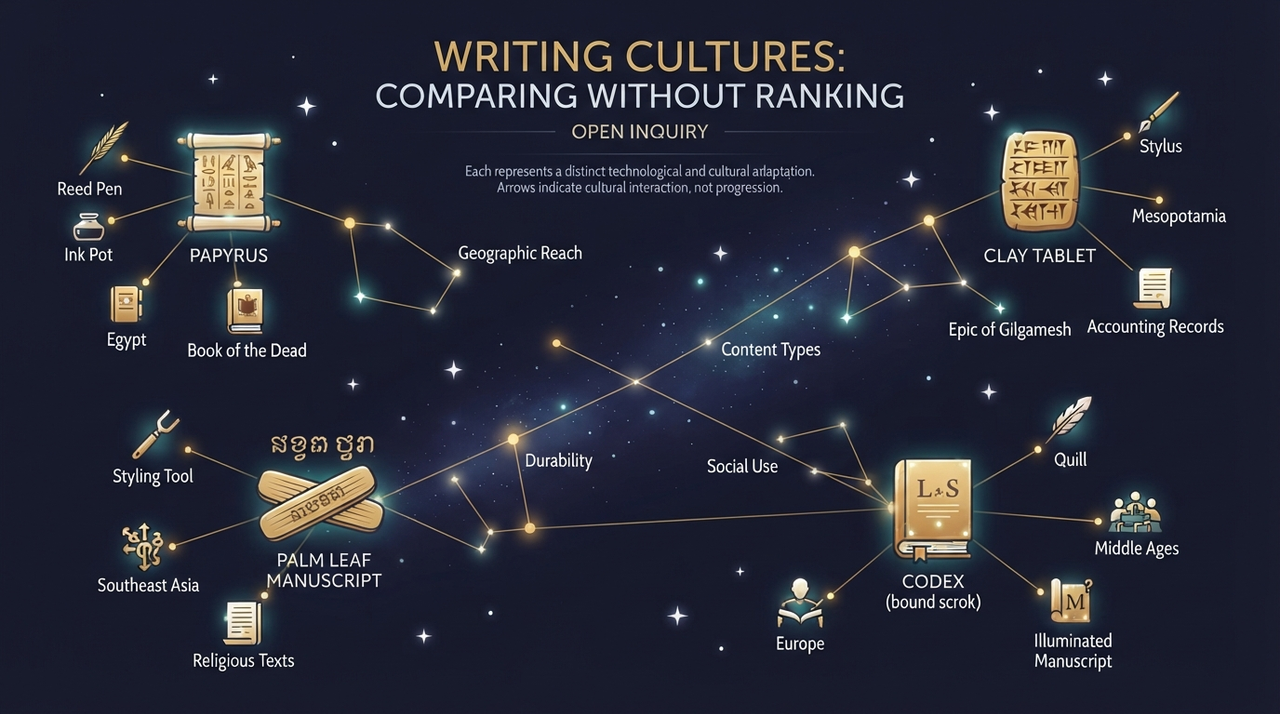
Moral relativism whispers that all ethics are equal, context-bound echoes with no resonance across voids. It dissolves tension into indifference. Pluralism, however, thrives in discord: multiple valid perspectives coexist, interconnected yet unranked. Picture not a flat plane, but a constellation—stars of insight linked by lines of inquiry, no brightest orb.
The Seeker's Code embodies this. It mandates neutrality: observe funeral ethics varying from Levantine entombment (guarding the body for bodily resurrection) to Mesopotamian exposure (releasing the spirit skyward), or Greek oaths in temenos versus Babylonian contracts laced with sovereign escape clauses. No verdict on "rightness"—only mapping.
Distinguishing Domains: Philosophy, Not Dogma or Decree
Moral philosophy probes why these practices endure: Levantine shrouds symbolize hope amid exile; Mesopotamian exposure, harmony with cosmic cycles. Religious authority might enforce one; laws codify for society; history describes. Pluralism frees us to inquire across, building bridges without conquest.
The Aetheria Seeker's Code: Crafting Constellation Maps
At its core, the Code guides pluralistic inquiry: catalog tensions, trace echoes. Funeral rites? Levantine texts emphasize purity and continuity; Mesopotamian, communal release; Greek, propitiation within sacred bounds. Oaths? Levantine absolutism meets Greek spatial fidelity and Babylonian pragmatism.
Construct constellation maps: nodes for practices, lines for shared motifs like communal witness or cosmic orientation. No hierarchy—just relations. This addresses the tool gap, empowering readers to hold moral disagreement without resolution.
Private journaling becomes sanctuary. Jot the pull of Levantine fidelity against Babylonian flexibility; let tensions breathe. Here, pluralism lives—not as theory, but practice.
Cross-Doors: From Anthropology to Religion and Beyond
These maps open doors. Anthropology reveals ritual functions; religion, symbolic depths; constellation mapping, ethical constellations anew. No field dominates—each illuminates.
- Cultural comparison of funerals unveils adaptive wisdoms.
- Oath variations highlight trust's fragile architectures.
- Seeker's Code neutrality sustains inquiry's fire.
Next-Step Inquiry: What Constellation Awaits?
Pluralism doesn't deliver moral certainty; it ignites questions. In your journal, map one thread—say, oath echoes from temenos to ziggurat. What new lines emerge? The universe of ancient texts unfolds not in answers, but in ever-richer patterns.