
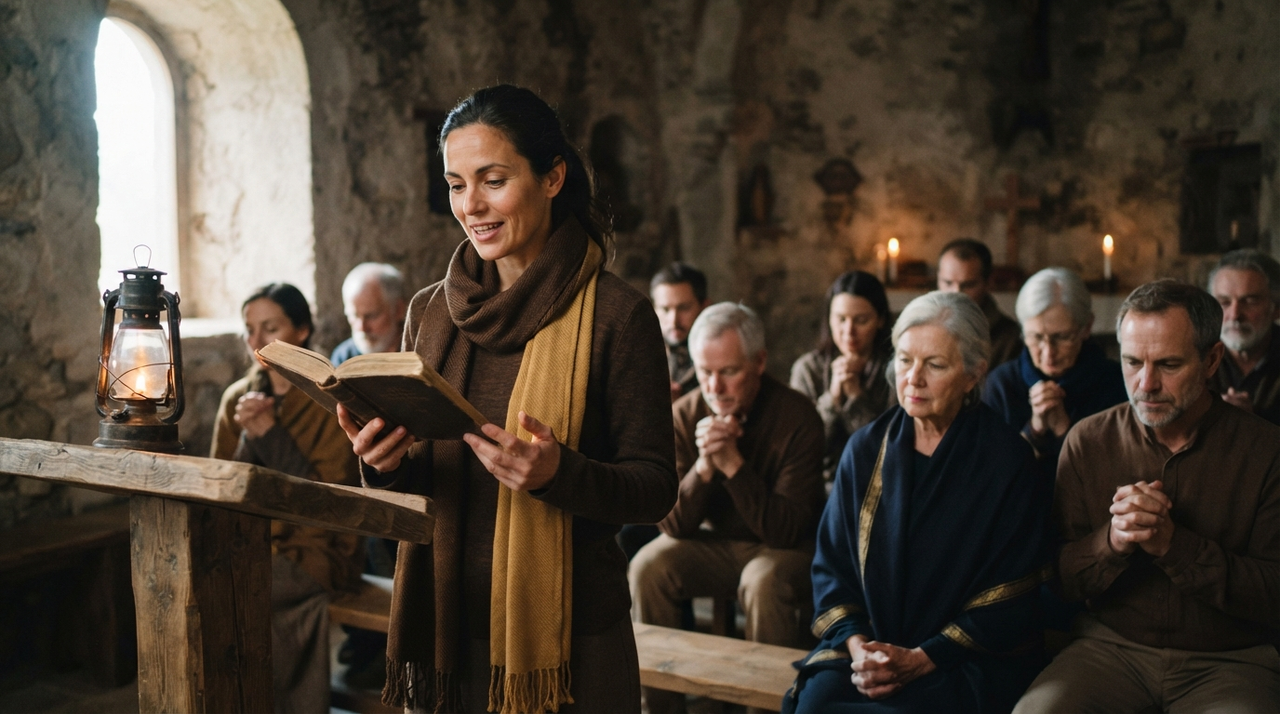
Oral and Written Coexistence: Qur'an Recitation, Torah Reading, and Liturgical Living Texts
Picture a vast mosque at dusk, the air thick with anticipation. A reciter steps forward, voice rising in melodic waves that pull every listener into the rhythm of ancient Arabic. This is Qur'an recitation, not mere reading, but a sonic architecture where words breathe, curve, and command the soul. Far from silent pages turned in solitude, such moments reveal books as living scripts for communal voice. In the Aetheria Books Door, we explore this oral and written coexistence, inviting readers to reclaim texts as sounded practices woven into daily life.
Silent private reading dominates modern habits, yet sacred traditions resist this endpoint. Texts like the Qur'an and Torah demand to be heard, their forms shaped by communities that guard vocal delivery as fiercely as the ink on parchment. Here, liturgical reading bridges eras, proving the written word thrives when voiced together.
The Sonic Majesty of Qur'an Recitation
In Islamic practice, Qur'an recitation—known as tajwid—transforms scripture into performance. Rules dictate elongation of vowels, subtle pauses, and nasal echoes, all memorized through oral chains tracing back to the Prophet. A single surah unfolds over minutes, its cadence evoking the divine breath that first revealed it.
Communities gather weekly for taraweeh prayers during Ramadan, where reciters compete in beauty contests of piety. The written mushaf serves as prompt, not prison; eyes scan lines while memory and discipline shape the sound. This is no relic. Today, global competitions stream online, drawing millions to witness verses leap from page to ear.
The Qur'an descends anew each recitation, its melody a bridge between heaven and the gathered faithful.
Torah Reading: Communal Rhythm in the Synagogue
A Cycle of Voices
Sabbath mornings in a synagogue pulse with Torah reading. The scroll unrolls on a raised bimah, its Hebrew letters unpointed, reliant on cantillation marks—tropes that signal melody and syntax. Seven congregants rise in turn, each chanting a portion from the weekly parsha.
This liturgical reading follows precise cycles: Genesis in autumn, Exodus through spring. Blessings frame each aliyah, binding reader and listeners in covenant. The Baal Koreh, the principal reader, models intonation, but all share the burden. Children memorize tropes young, ensuring the chain endures.
- Tifha rises like a question.
- Merkha falls gently, resolving tension.
- Shalshelet coils in suspense, rare and riveting.
Printed siddurim aid preparation, yet the scroll's bareness demands communal memory. Here, writing cues the voice, not supplants it.
Liturgical Living Texts Across Traditions
Beyond Islam and Judaism, oral and written coexistence pulses in Christian lectionaries, where epistles and gospels resound in pews, and Vedic pathsya demands pitch-perfect Sanskrit recitation under guru oversight. These are bounded disciplines: living authorities—imams, rabbis, priests—certify delivery, preventing drift.
Oral traditions stand equal to writing, not as precursors. Manuscripts preserve voice notations; printed books become scores for choirs. In education and linguistics, scholars note how sound embeds meaning—prosody clarifying ambiguity that eyes alone miss.
Aetheria Books Door: Reclaiming Sounded Books
At the Aetheria Books Door, we honor this gap between lived practice and private gaze. Sacred texts invite hearing as much as seeing. A classic novel or philosophical treatise might whisper the same: Is it meant for solitary eyes, or shared voices in circle?
Communities authorize these voicings; outsiders listen first. Yet any printed book can script the voice—try chanting poetry aloud, and watch syntax awaken.
Next time a text beckons, pause. Does it yearn to be heard? In Qur'an recitation, Torah reading, and liturgical reading, books live fully sounded, communal, eternal. Step through the Aetheria Books Door. Let the words sing.