
Pages Built for Conversation: Talmud, Tafsir, Scholia, and Layered Commentary Traditions
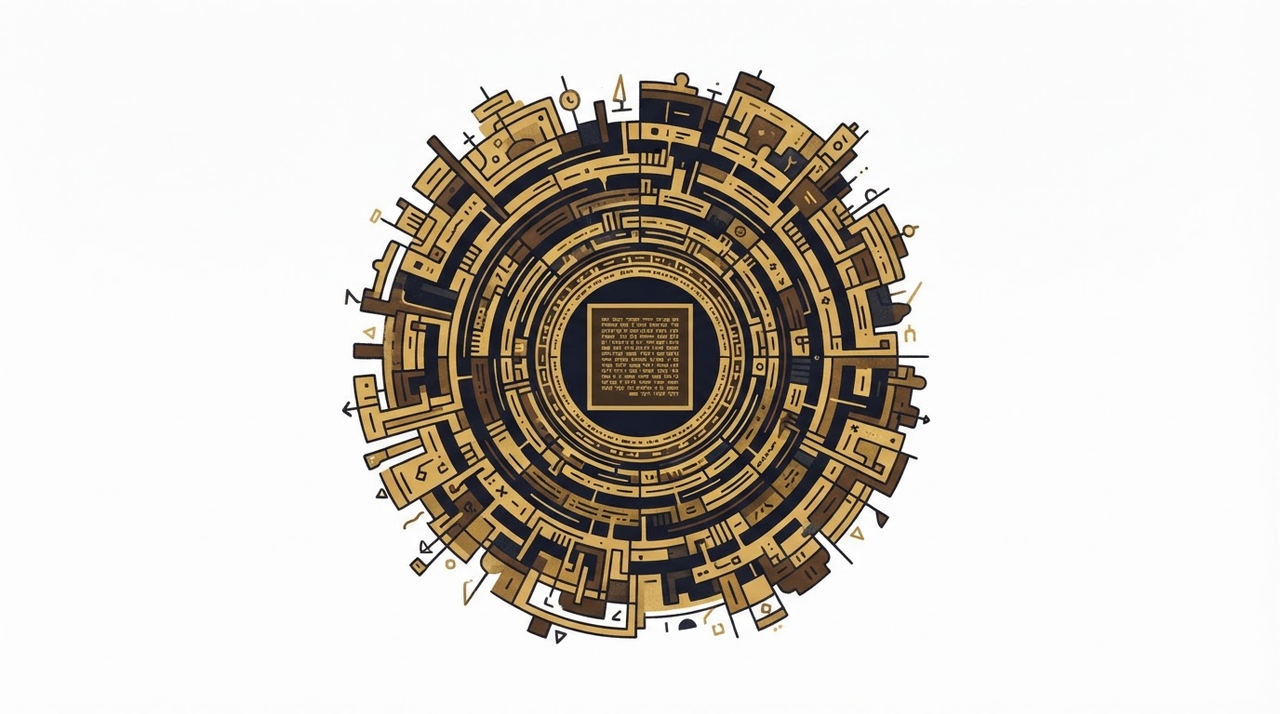
Open a page of the Babylonian Talmud, and witness a miracle of print design. A narrow core of ancient text sits ringed by concentric squares of commentary. The central Mishnah, terse rabbinic law from late antiquity, yields to the Gemara's probing discussions. Then Rashi's 11th-century glosses fill the inner margin, his Hebrew explanations leaning close like a trusted teacher. Opposite, the Tosafot pile on, generations of scholars debating Rashi in tight superscript. Outer edges hold later additions: references, emendations, maps of disagreement. This is no solitary reading. It is a page built for conversation, where voices from centuries clash and harmonize.
Such commentary traditions transform books into communal arenas. Unlike casual marginalia scratched by a lone reader, these systems embed interpretation into the page's architecture from the start. Texts arrive surrounded, designed for perpetual dialogue. On the Aetheria Books Door, we explore these patterns not as relics, but as living methods of teaching through encirclement. Here, religion meets education and linguistics in forms that surround a core without supplanting it.
The Talmud Page: Generations in Dialogue
The Talmud page stands as the archetype. Printed editions from the 16th century onward standardized this layout, but the practice spans millennia. The Vilna edition, still authoritative in yeshivas worldwide, layers eight or more distinct commentaries around each daf, the double-sided folio. Rashi clarifies ambiguities with crisp paraphrase. Tosafot, compiled by his students and grandsons, raise objections: "But this contradicts what we learned earlier." Their resolutions spark further layers, like the Maharsha's 17th-century pilpul, sharp dialectical analysis.
This structure enforces a curriculum. Study partners leap between center and surround, voicing disputes aloud. Living authority persists: contemporary rabbis reference these glosses in rulings, extending the chain. The page teaches not by replacing the Mishnah, but by orbiting it, preserving the base text's opacity as invitation to engage.
Tafsir: Illuminating the Quran Verse by Verse
Turn to Islamic tafsir, the science of Quranic exegesis. Manuscripts and prints place the Arabic Quran in large script at top or center. Below sprawl commentaries: linguistic breakdowns, historical occasions of revelation, legal derivations. Al-Tabari's 9th-century compendium, vast as an encyclopedia, gathers early reports verse by verse. Later masters like al-Razi weave philosophy into the frame, while al-Qurtubi extracts jurisprudence.
Printed tafsir editions multiply voices. Ibn Kathir's popular work interweaves prophetic traditions with scholarly chains of transmission. The page becomes a mosque of interpretation, where ulama across schools converse. Sunni, Shi'a distinctions hold firm; no single gloss claims finality. Readers navigate by dipping into layers, much as Talmudists parse a sugya. Authority lives in the umma's ongoing ijtihad, scholarly effort that circles the divine word.
Scholia: Shadows of Ancient Critics
Further back, scholia haunt the margins of Homer and Aristophanes. Hellenistic scholars in Alexandria compiled these notes: explanations of rare words, identifications of allusions, variant readings. Byzantine manuscripts preserved them, printed editions from the Renaissance onward integrating scholia as footnotes or side columns.
A page of Aristophanes might center the comedy, with scholia unpacking Attic slang or mythic references. Aristarchus's signs mark preferred readings; Didymus piles hypotheticals. Unlike Talmud or tafsir, scholia lean philological, less disputatious. Yet they form a chorus, enabling access to texts remote in time and tongue. Medieval copyists treated them as essential scaffolding.
Glosses and the Layered West
In medieval Christian Europe, glosses adorned Bibles and canon law. The Glossa Ordinaria on Scripture layered patristic excerpts around Jerome's Vulgate: interlinear words for grammar, marginal excerpts for theology. Gratian's Decretum sprouted a gloss apparatus, Lombard glossing Peter Lombard's Sentences. Pages swelled with color-coded bands: red for distinctions, blue for authorities.
These commentary traditions shaped universities. Scholastics disputed in quaestiones, echoing Tosafot's pilpul. The page invited scholastic method: resolve seeming contradictions by layering authorities.
Surrounding to Teach: A Pattern Across Traditions
Talmud page, tafsir, scholia, glosses: each designs the codex for encirclement. Canon endures at core; commentaries orbit without erasure. Schools form around navigation of these layers, curriculum emerging from the layout. Linguistics sharpens: rare terms yield to glossarial precision. Religion breathes through collective reasoning, authority distributed yet chained to sources.
On the Aetheria Books Door, notice this invitation. When a tradition teaches by surrounding rather than replacing, communities converse indefinitely. Flip to Religion for sacred cores, Education for curricular genius, Linguistics for lexical depths. These pages remind us: true understanding multiplies voices, never silences them.