
Participant Observation Uncovered: Ethnography's Immersive Method, Positionality & Ethics
Diving Deep: The Heart of Participant Observation
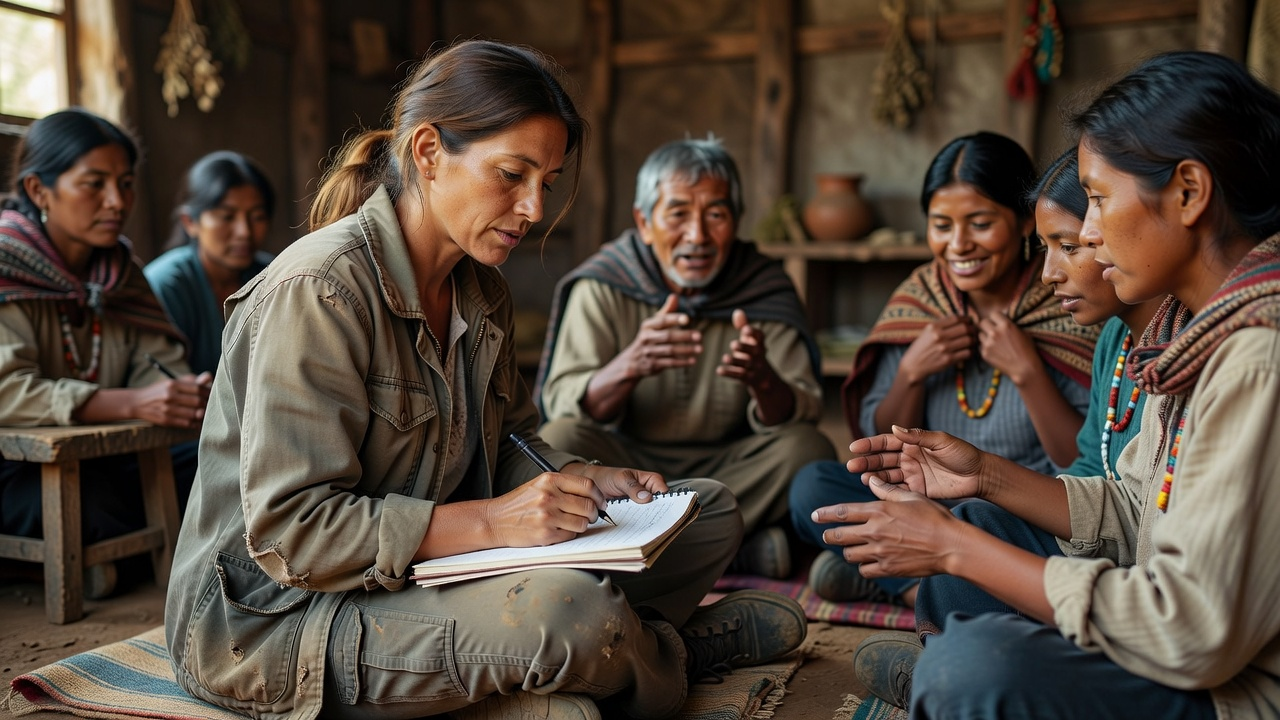
Picture this: a researcher slips into the rhythm of a tight-knit community, notebook in hand, not as a tourist with a camera but as a quiet participant in daily rituals—from dawn market haggling to evening storytelling circles. This isn't armchair theorizing. It's participant observation, the pulsing core of the ethnography method, where anthropologists immerse themselves to grasp the texture of human lives.
Forget fly-by-night visits. True anthropology fieldwork demands months, often years, of presence. Researchers learn local languages not from apps, but through endless conversations, fumbling syntax until fluency reveals nuances lost in translation. Daily work? It's mundane magic: tending gardens alongside villagers, joining festivals, enduring hardships like power outages or illnesses, all while jotting fieldnotes in the dim glow of a lantern.
The Marathon of Fieldwork: Building Trust Brick by Brick
Anthropology fieldwork isn't glamorous. It starts with ethical review boards scrutinizing plans for informed consent, cultural sensitivity, and harm prevention. Once approved, the researcher arrives as an outsider, position marked by accent, skin, or customs. Trust builds slowly—sharing meals, helping with chores, respecting taboos.
Language immersion is non-negotiable. Without it, chit-chat stays surface-level; with it, proverbs unlock worldviews. Days blur into note-taking marathons: scribbling dialogues, sketching interactions, reflecting on emotions. Evenings? Transcribing by hand, wrestling with what was seen versus assumed.
- Long-term embedding fosters reciprocity—researchers contribute skills, like teaching literacy.
- Daily routines mirror locals': wake with the sun, eat what's offered, navigate conflicts.
- Fieldnotes capture the sensorial—smells of cooking fires, cadence of laughter.
Researcher Positionality: The Lens You Can't Escape
Researcher positionality names it outright: your identity—gender, class, nationality, beliefs—colors every observation. A Western academic in a rural Asian village brings biases, privileges, blind spots. Honest ethnographers declare this upfront, turning positionality into a strength by triangulating with multiple viewpoints.
It's not confession; it's method. Positionality demands reflexivity: constant self-questioning. How does my hunger alter my mood during a hunt? Does my feminism reshape interpretations of gender roles? This humility yields richer insights.
Ethics: The Invisible Thread in Every Interaction
Ethics permeates participant observation. Beyond IRBs, it's navigating power imbalances—avoiding exploitation, ensuring anonymity, pondering if knowledge gained justifies intrusion. Reciprocity rules: share findings, support communities. When tensions arise, like community splits over revelations, ethical wits sharpen.
Connect this to our Ethics Door: anthropology's moral tightrope mirrors life's dilemmas, demanding nuanced judgment over rigid rules.
Thick Description: Gifts and Limits of the Ethnography Method
What does it produce? Thick description—Clifford Geertz's term for layered accounts where behaviors gain context, rituals reveal cosmologies. Not universals, but specifics: how grief unfolds in one group's mourning dances.
Limits? It's partial, positioned—not an objective total view. One researcher's lens misses shadows; communities aren't labs for grand theories. Ethnography stays grounded, resisting extraction for external models.
"I participate, then observe; I observe, then participate." The method's dance yields depth, not breadth.
Unlike travel writing's snapshots—exotic vignettes for outsiders—ethnography critiques power, centers locals' voices, endures the ordinary.
Beyond Anthropology: Echoes in Psychology and Ethics
Participant observation bridges to Psychology Door, where immersion unveils subconscious patterns akin to phenomenological studies. Ethically, it probes consent in vulnerable settings, enriching broader human understanding.
Your Turn: A Journal Exercise in Mindful Observation
Observe your own habit—coffee ritual, commute scroll—without assuming meaning. Note sensations, sequences, interruptions. What emerges? A taste of participant observation's power: seeing anew through patient eyes.
In a world of quick judgments, this method invites slowness. What worlds hide in your daily blur?