
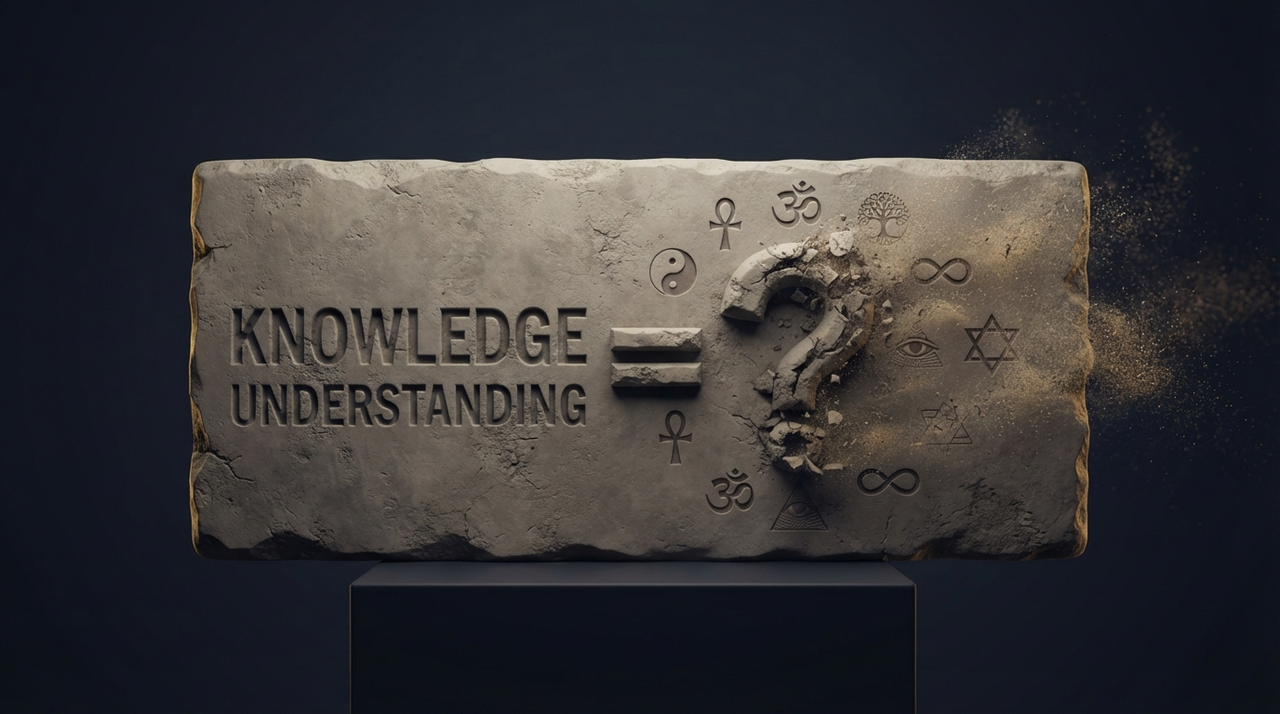
Physics Meets Philosophy: Realism vs. Instrumentalism, Science's Limits, and Einstein-Bohr Debates
Picture this: a solitary physicist, chalk in hand, scrawls an equation on a blackboard that predicts the dance of subatomic particles with eerie precision. Yet, as the dust settles, a deeper question lingers—does this formula reveal the hidden machinery of reality, or is it merely a clever map for navigating the unknown? This tension lies at the heart of physics philosophy, where the cold logic of equations collides with the warm inquiry of human meaning.
For seekers probing the limits of scientific models, the debate between realism and instrumentalism isn't just academic sparring. It's a gateway to understanding what physics truly delivers: unparalleled predictive power, but silence on the profound "whys" of existence. Here, we bridge the physics door to philosophy's vast halls, exploring interpretation of physics through historic clashes like Einstein versus Bohr.
Realism vs. Instrumentalism: What Do Our Equations Really Say?
Realism asserts that scientific theories, especially in physics, offer a true depiction of an objective reality existing independently of our minds. Electrons aren't just labels; they're real entities buzzing through fields, much as Einstein envisioned a universe governed by elegant, mind-independent laws.
Instrumentalism, by contrast, treats theories as instruments—powerful tools for prediction and control, without committing to the "reality" of unobservable entities. Wave functions in quantum mechanics? Handy calculators for probabilities, but don't ask if they "exist" out there. This view sidesteps metaphysics, focusing on what works.
The Stakes in Physics Philosophy
Why does this matter? In the interpretation of physics, realism promises a coherent picture of the cosmos, fueling our intuition that science peels back nature's veil. Yet instrumentalism guards against overreach, reminding us of science's limits: equations excel at "how," not "what it all means." Consider quantum field theory's triumphs in particle accelerators—predictions match experiments to 10 decimal places. But do these fields exist, or are they pragmatic fictions?
The Epic Clash: Einstein and Bohr's Quantum Showdown
No saga captures this better than the Einstein-Bohr debates, spanning the 1920s to 1950s. Albert Einstein, the realist titan, recoiled at quantum mechanics' probabilistic heart. He famously quipped that its randomness seemed incomplete, demanding a deeper, deterministic reality beneath.
Niels Bohr, championing the Copenhagen interpretation, embraced instrumentalism's pragmatism. Measurements collapse the quantum wave function; reality emerges only through observation. Their Solvay Conferences were intellectual gladiatorial arenas—Einstein devising thought experiments like EPR to expose "spooky action at a distance," only for Bohr to parry with complementary principles.
Echoes in Modern Limits of Science
Decades later, Bell's theorem and experiments confirmed quantum weirdness, vindicating Bohr's predictions but leaving realism wounded. Yet Einstein's unease persists: does physics' authority in forecasting eclipse its claims on ultimate truth? This marks the limits of science—reduction to equations breaks down at consciousness's edge, where the observer isn't passive.
Beyond Equations: Observer, Reduction, and the Human Element
Quantum mechanics spotlights the observer's role, blurring subject-object lines. Is collapse "real," or a update in our knowledge? Here, physics philosophy interrogates reductionism's hubris: atoms explain chemistry, neurons biology, but values and meaning evade formulas.
Science reigns in prediction—from GPS satellites reliant on relativity to mRNA vaccines born of molecular models. But overreach happens when physicists pontificate on life's purpose or morality. Distinguish the physicist's badge of predictive success from philosopher's quest for wisdom.
Physics hands us the keys to the machine room, yet leaves the architect's intent unspoken.
Gateways to Consciousness and Ethics
This opens doors to consciousness—does the observer's mind birth reality?—and ethics, where values defy quantification. In an AI era, as models mimic physics' prowess, we must ask: can algorithms grasp qualia or moral nuance?
Holding the Tension: A Call to Integrated Inquiry
The limits of science aren't flaws but invitations. Realism inspires awe at a knowable universe; instrumentalism tempers hubris. Einstein and Bohr's legacy? A reminder that physics philosophy thrives in dialogue.
Protect your journey through these doors—physics, consciousness, ethics—by wedding empirical rigor to humane wonder. Science charts the stars; philosophy asks why we gaze. Together, they illuminate the human cosmos.