
Royal Succession History: Co-Regency, Adoption, Contested Thrones & Priesthood Transitions
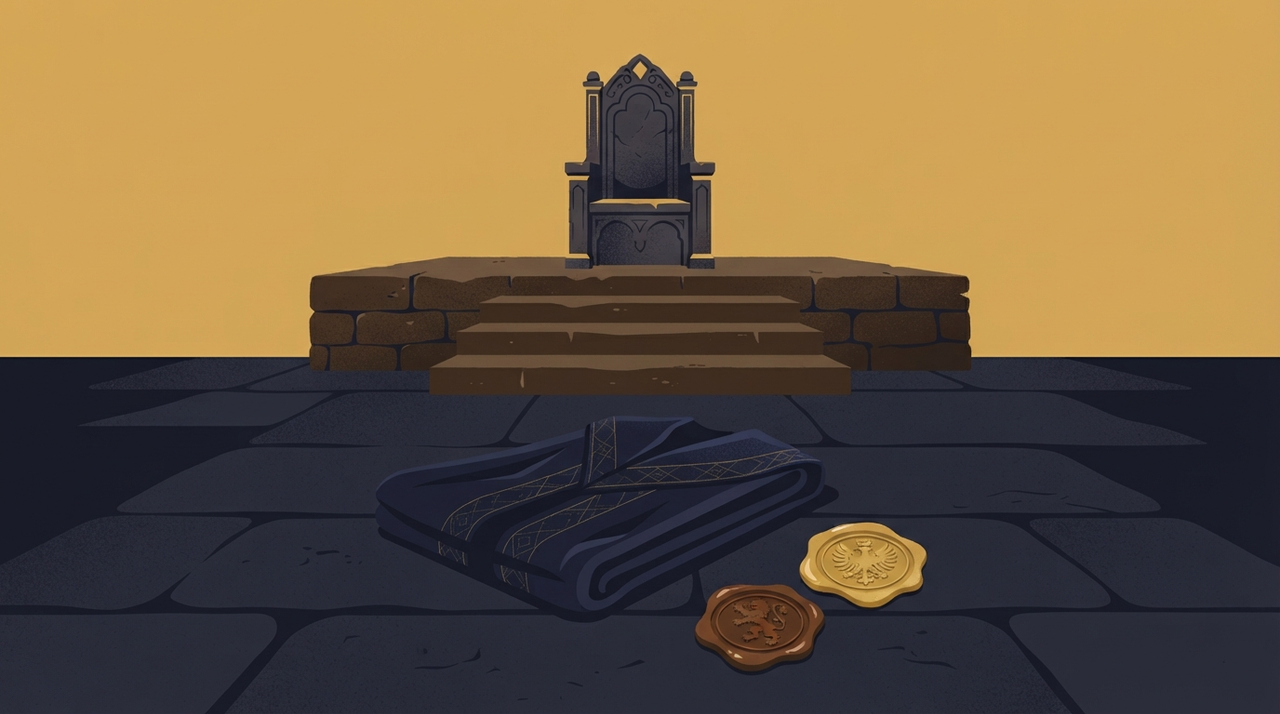
Imagine two clay seals unearthed from the dust of ancient Mesopotamia. One bears the name of a king named Enlil-bani, proclaiming him shepherd of the people. The other, found nearby, claims the very same throne for a rival, Ishbi-Erra, in the same year. No battle scars mark the artifacts. No decree annuls the first. These small objects capture the raw tension at the heart of royal succession history: when one body fails, who grasps the scepter? The seals do not whisper of glory or divine right. They shout of fracture, of authority splintering like dry earth under drought.
Or picture a child king, barely past his seventh year, thrust onto a throne amid howling factions. In ninth-century Byzantium, Michael III ascends while his mother, Theodora, rules as regent. Courtiers bow to the boy. Yet real power pools in the shadows of the palace, where eunuchs and generals maneuver. Such scenes repeat across eras and empires. They reveal succession not as a smooth relay, but as a precarious pivot where the office outlives the occupant, often through grit, guile, or sheer accident.
This essay traces royal succession history through its thorniest paths: co-regency, adoption and office, contested succession, and priesthood succession. We examine how authority transfers when a ruler dies, falls, or fades, without draping crowns in moral halos or boardroom analogies. Here, history serves open inquiry. What endures when flesh yields to time?
Modes of Transfer: Inheritance, Election, and the Shadows Between
Authority rarely passes cleanly. Royal succession history unfolds in distinct yet overlapping modes. Inheritance favors blood, yet twists through primogeniture or equal shares among sons. A father names his heir, or custom dictates the eldest. But death intrudes early, leaving infants or barren lines.
Election emerges in assemblies or councils, as in early Germanic kingdoms where warriors acclaimed a leader. Acclamation blends both: crowds roar approval for a prince, masking elite deals. Coups slice through pretense; a general marches on the capital, soldiers defect, and the old seal shatters.
Divine appointment claims hover above, from pharaohs as Horus incarnate to emperors anointed by heaven. Bureaucratic continuity hums beneath: scribes, priests, and tax collectors keep the machine grinding, indifferent to the throne's occupant. These modes clash. A divine king dies childless; electors crown a cousin while bureaucrats file taxes under the orphan's name. Contested succession ignites when seals multiply, each stamping legitimacy.
The Spectrum in Practice
Consider the blend. In medieval Japan, emperors inherited the Chrysanthemum Throne, but shoguns wielded swords through appointment. The office persisted; the power shifted. No mode stands pure. Inheritance crumbles without acclamation. Coups cloak in divine rhetoric. Royal succession history teaches this: transfer hinges on what sticks after the dust settles.
Mesopotamian King Lists: Ideology Forged in Clay
From Sumer's floodplains rise the earliest king lists, etched on prisms around 2100 BCE. The Sumerian King List chronicles rulers from divine origins to historical figures, assigning reigns of thousands of years to antediluvian kings before compressing into mortal spans. This is no ledger of facts. It is ideology, welding disparate city-states into a narrative of unbroken rule.
Enmebaragesi of Kish claims the first dated reign around 2600 BCE. Successors follow, but overlaps abound. When Lagash falls to Umma, lists adjust. Adoption and office play subtle roles; kings claim mantles from gods or predecessors without blood ties. Contested succession lurks: rival dynasties inscribe parallel histories. The office endures as 'kingship descended from heaven,' a bureaucratic lifeline through conquests.
Later Assyrian lists extend this. Sargon II (722-705 BCE) inserts himself seamlessly, erasing gaps. Priesthood succession mirrors it; high priests of Enlil at Nippur outlast kings, their rosters preserving ritual continuity. Here, royal succession history serves memory, not truth. The list binds what chaos scatters.
Egyptian Co-Regency: Overlapping Crowns and Enduring Debates
Along the Nile, co-regency smooths the jagged edge of mortality. Pharaohs crowned sons or chosen heirs while alive, creating dual reigns. Amenhotep III and Akhenaten (circa 1353 BCE) exemplify this. Monuments show both as full kings, cartouches side by side. Did Akhenaten rule alone after his father's death, or overlap for years? Egyptologists debate wine dockets and tomb inscriptions.
Co-regency ensured continuity, especially with child heirs. Ramesses II crowned his son Khaemwaset late in a 66-year reign. The device wove inheritance with divine filiation; the living Horus trained the next. Yet contests erupted. Horemheb, a general, usurped Tutankhamun's successors, grinding their names from stone. Adoption and office filled voids: non-royals ascended via marriage or fiat.
Priesthood Succession in the Temples
Pharaohs doubled as high priests, but temple hierarchies persisted independently. The high priest of Amun at Karnak inherited office through blood or appointment, their power rivaling kings during weak dynasties. In the Third Intermediate Period (1070-664 BCE), priests like Pinedjem I claimed pharaonic titles. Priesthood succession thus modeled royal forms: co-regency with kings, contested thrones via god's oracles. Authority flowed through ritual, not just crowns.
Israelite and Judean Narratives: Literary Contests of the Throne
Biblical texts preserve Judean succession as vivid literature, laced with intrigue. David's throne passes to Solomon amid rivalry; Adonijah declares himself king, backed by Joab and Abiathar, only for Bathsheba and Nathan to sway the dying monarch. 1 Kings 1 unfolds like a palace drama: the prophet anoints, the brother falls.
Dynastic continuity falters. Athaliah seizes Judah's throne post-coup (2 Kings 11), massacring heirs save infant Joash. The high priest Jehoiada orchestrates restoration, blending priesthood succession with royal. Yahweh's promise to David undergirds claims, yet coups and prophets intervene. Assyrian records confirm some: Jehu's bloody ascent (841 BCE) ends one line, starts another.
Election via prophetic voice contests inheritance. Jeroboam rises on Ahijah's tear (1 Kings 11). These narratives highlight contested succession as narrative tool, justifying victors while exposing fragility. The office persists through sacred texts, outliving kingdoms.
Roman Adoption and the Imperial Crisis
Rome elevated adoption and office above blood. Augustus (r. 27 BCE-14 CE) adopted Tiberius, bypassing biological kin. Trajan, Hadrian, Antoninus Pius, and Marcus Aurelius chained adoptions, crafting the Five Good Emperors. Legal fiction made strangers heirs, ensuring competence over consanguinity.
The Crisis of the Third Century (235-284 CE) shattered this. Fifty emperors in fifty years, most murdered. Maximinus Thrax, a soldier-emperor, claimed via legions' acclamation. Gallienus faced dozens of usurpers; coins proclaim rival imperiums. Bureaucratic continuity saved Rome: prefects and governors administered amid chaos.
Co-Regency Attempts and Failures
Diocletian tried co-regency with tetrarchy, dividing rule among two Augusti and Caesars. It collapsed into civil war. Adoption revived under Constantine's heirs, but blood reasserted. Roman succession exposed adoption's promise and peril: a rational path crumbling under ambition.
Papal Conclaves: Priesthood Succession as Living Institution
The papacy offers priesthood succession in motion. Bishops elected successors since Peter, but Rome centralized amid schisms. Conclaves locked cardinals from 1274, birthing white smoke rituals. Yet contested succession scarred it: antipopes like Novatian (251 CE) or the Great Schism's three claimants (1378-1417).
Election trumps inheritance; cardinals, not sons, choose. Community authority endures: laity acclaimed early popes. Gregory VII's reforms (1075) curbed imperial sway. Bureaucratic continuity shines in the Curia, archiving bulls through vacancies.
Women and outsiders intrude indirectly; noble families influenced elections. Priesthood succession here is communal, resilient against single failures.
Unofficial Holders: Women, Eunuchs, and Shadow Rulers
Thrones sat empty or occupied by puppets; real sway lay elsewhere. Women regented capably. Hatshepsut (1479-1458 BCE) co-ruled then solo as pharaoh, erecting obelisks. In Byzantium, Irene blinded her son Constantine VI (797 CE) to rule. England's Isabella allied with Mortimer against Edward II (1327).
Queens consort wielded soft power: Wu Zetian (690-705 CE) transitioned from consort to emperor in Tang China, founding her Zhou dynasty. Eleanor of Aquitaine regented for sons while crusading husbands faltered.
Eunuchs and Ministers in the Machinery
- Byzantine eunuchs like Narses commanded armies under Justinian.
- Ottoman grand viziers, often slaves, governed while sultans secluded.
- Chinese eunuchs dominated Ming courts, deposing emperors.
These figures highlight office over person. Regents bridged gaps; ministers sustained functions. Royal succession history reveals power's diffusion.
Cross-Doors: Echoes Across Realms
Succession threads connect rooms. In Sacred Kingship, pharaohs and emperors merge godhead with office, co-regency as divine overlap. Politics frames contests as factional chess. History archives the lists and seals. Relationships probe household tensions: brother slays brother for thrones. Ethics questions if continuity justifies blood.
What rite or rite-breaker claims the eternal now?
What Persists Beyond the Person?
Royal succession history lays bare the question: when the crowned one departs, what lingers? Seals multiply, children ascend, priests convene. Authority transfers through ideology, ritual, force, or inertia. Not virtue in bloodlines, nor lessons for ledgers. Simply the human struggle to anchor the office amid flux.
Carry this to the Leadership Door. Seekers, ponder: in your pursuits, what endures when you yield the seal? Inquire further in Aetheria's halls.