
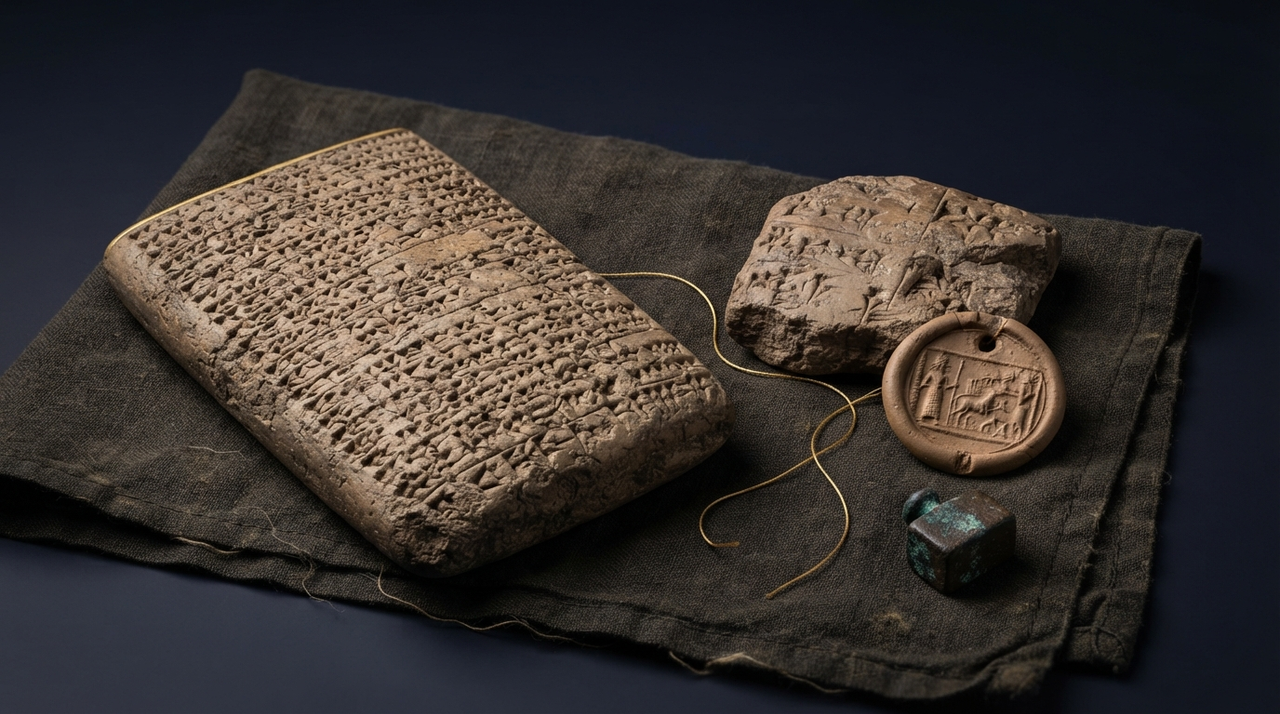
Sealed Tablets and Royal Gifts: Amarna Letters, Hittite Treaties, and Late Bronze Age Diplomacy
A weary messenger crests the dusty horizon, his donkey laden with clay tablets wrapped in fine linen. Seals of lapis lazuli and gold press into the soft clay, bearing the emblems of distant kings. He approaches the towering gates of an Egyptian palace in the 14th century BCE. Inside, scribes unroll the parcels, their eyes scanning cuneiform script in Akkadian, the lingua franca of courts from the Nile to the Euphrates. This is ancient diplomacy in motion: not a ministry of foreign affairs, but a web of letters, gifts, oaths, marriages, hostages, and hospitality binding Late Bronze Age powers.
Diplomacy here unfolds as courtly practice, shaped by local kingships, assemblies, and empires. Kings styled themselves brothers or fathers and sons, yet power flowed unevenly. Assemblies advised, local lords resisted, and coercion backed words. These exchanges reveal political correspondence tuned to persuasion, not treaties as legal blueprints.
The Amarna Letters: Echoes from Akhetaten
Discovered in the ruins of Akhetaten, Akhenaten's short-lived capital, the Amarna letters offer over 350 clay tablets from around 1350 BCE. Rulers from Mitanni, Babylon, Hatti, and Levantine city-states wrote to the pharaoh in Akkadian, complaining of scant gold that gleamed like silver, delayed messengers kept waiting months, and pleas for brotherly aid against raiders. These motifs paint a vivid picture of ancient diplomacy: claims of equality masked stark asymmetries, with Egypt's wealth drawing constant demands.
The archive, abandoned when Akhenaten's experiment ended, captures a slice of Late Bronze Age court life. Mitanni kings sought brides for pharaohs, sealing alliances through marriage. Levantine mayors begged troops, highlighting how letters bridged empires and vassals without erasing local resistance or unwritten pacts.
Hittite Treaties: Sworn Bonds on Tablet
Northward in Anatolia, Hittite kings forged Hittite treaties in two forms: parity pacts between equals, invoking shared gods as witnesses, and vassal oaths binding lesser rulers. Scribes etched duplicates, one for each party, stored in archives like Bogazkoy. These clay vows outlined mutual defense, tribute, and fidelity, yet hinged on rituals beyond the text: oaths sworn before deities, with curses for breach.
Unlike later ironclad contracts, these differed from daily administration. Kings enforced them through armies or hostages, but local assemblies and cults shaped compliance. A treaty's power lay in its divine gaze, not abstract law.
Court Hospitality: The Unspoken Language of Power
Letters demanded escorts for envoys and feasts upon arrival. Who dined first signaled status; delayed messengers conveyed insult. Court hospitality wove politics into daily acts. A king hosting a rival's man traded gifts of ivory, horses, or lapis, each item a silent negotiation. Refusal to feast or stripping an envoy's gifts sparked feuds, as seen in Amarna letters gripes over shabby treatment.
Insult and Escort as Weapons
Escorts protected and displayed might. A lone traveler risked bandits; a caravan with chariots boasted strength. These practices underscore international relations history: diplomacy as embodied exchange, not paper alone.
What Archives Conceal
Tablets preserve elite voices, silent on oral haggling in throne rooms, women's counsel behind veils, or villagers crushed under marching feet. Political correspondence hints at coercion and resistance, yet misses communities enduring empire's shadow. Assemblies debated war; citizens navigated law locally. Letters claim brotherhood, but reveal power's edge.
Debating the "International System"
Scholars debate if these formed a cohesive Late Bronze Age system akin to modern states. Some see shared norms in Akkadian and rituals; others stress fractures, like Assyrian outsiders or collapsing trade. Evidence shows situated practices, not timeless tradition. No single invention, but courts adapting amid empires, economics, and ethics.
Links ripple to ancient civilizations' leadership, where hospitality tested virtue, and economics fueled gift cycles. Ethics pondered oaths' weight before gods.
Pick up an Amarna letter today. Note its pleas, boasts, silences. What does it need the reader-king to believe? In that gap lies the art of ancient courts. Explore further in Aetheria Journal's History, Leadership, and Ethics Doors for deeper trails through these sealed worlds.