
Unearthing Excavation History: Secrets of Archaeological Archives and Re-Excavation
Imagine sifting through yellowed notebooks in a dimly lit archive, where faded ink whispers of trenches dug over a century ago. A single overlooked sketch could rewrite what we know about an ancient city's layout. This is the quiet thrill of excavation history—the story of how we unearth the past, only to realize much was buried again in haste or bias. For those drawn to how knowledge evolves, archaeological archives offer a treasure trove of revisions waiting to be uncovered.
In the history of archaeology, early digs shaped our understanding unevenly. Sites like Nineveh in Mesopotamia, Egypt's pyramids, and Mesopotamian tells were excavated amid 19th-century fervor, often under colonial frameworks that prioritized spectacle over precision. Workers hauled away tons of earth, but records were patchy—sketches hasty, measurements approximate. What was discarded? Layers of soil deemed 'sterile,' pottery sherds too fragmented, even human remains cataloged cursorily. These choices echo imperial priorities: artifacts for museums back home, context left in the dust.
Delving into Archaeological Archives: Re-Reading the Past
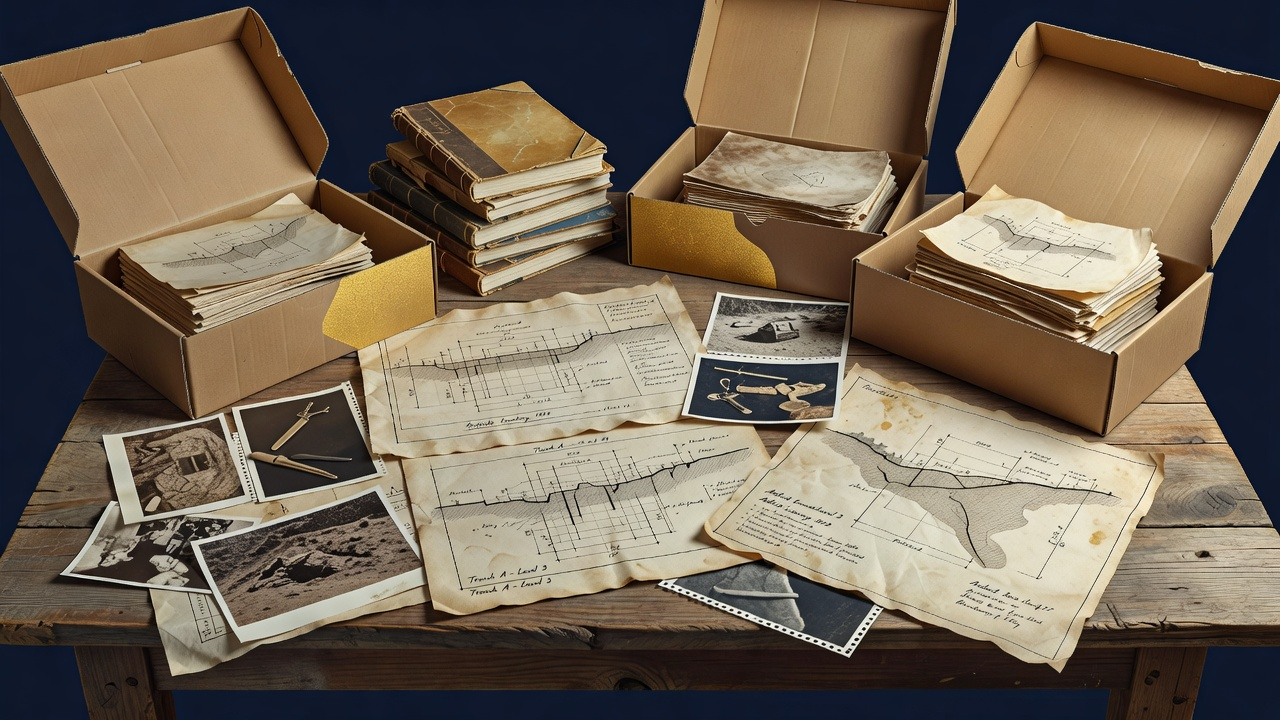
Archival work transforms excavation history from static fact to living dialogue. Researchers pore over field notebooks, glass-plate photographs, and finds registers—primary sources that reveal context lost in transit. A 1920s dig report might trumpet a 'royal tomb,' but the notebook betrays hurried clearance before monsoon rains, stranding small finds in mud. Photos, once dismissed as mere illustrations, now yield digital enhancements showing tool marks invisible to the naked eye.
Colonial Echoes and Discarded Evidence
Early excavation history at places like Nineveh under Austen Henry Layard or Egypt's Valley of the Kings carried colonial lenses. Local knowledge was sidelined; laborers' insights on soil types ignored. Discards were routine: 'rubbish pits' bulldozed for access roads, organic materials rotting undocumented. Re-excavation today cross-checks these gaps, blending modern stratigraphy with archival clues to reconstruct what rushed timelines erased.
Re-Excavation: Bridging Primary Evidence and Interpretation
Re-excavation breathes new life into old sites, distinguishing raw primary evidence—strata, artifacts in situ—from era-bound interpretations. A 1920s layer labeled 'Hittite' might prove, via re-reading notebooks, to overlay earlier Bronze Age deposits. This process underscores archaeology's iterative nature: no dig is final. Modern teams at Mesopotamian sites like Ur use ground-penetrating radar to probe archives-guided spots, recovering what early excavators bypassed.
- Field notebooks capture daily chaos: weather delays, worker strikes, overlooked features.
- Finds registers list provenience, but cross-referencing photos reveals mishandled contexts.
- Discarded soil samples, revisited via micromorphology, yield pollen traces of ancient crops.
Heritage documentation remains ongoing, a chain linking past hands to future inquiries. It's not about flawless records but honest revision, honoring the layered build of knowledge.
Echoes in Memory and History
This excavation history mirrors broader quests in writing memory and history. Like archaeological archives, personal diaries or oral traditions demand re-excavation to peel away interpretive veneers. Colonial frameworks once framed narratives selectively; today, we revise inclusively, amplifying marginalized voices from the digs themselves.
Archaeology teaches that the past is not fixed—it's a site perpetually under revision, inviting us to dig deeper.
An Invitation to Compare and Explore
Consider a primary field note: terse, stained, noting 'layer 7: charcoal flecks, pot base at 1.2m.' Contrast it with a later summary: 'Evidence of Iron Age hearth, suggesting settled village.' The gap sparks questions—what nuances evaporated? Dive into Aetheria AI's Writing Memory Door or History Door to trace similar evolutions. Your turn: unearth an archive, re-excavate a story, and watch the past reshape itself.