
Unlocking Old Babylonian Larsa: Cuneiform Archives, Akkadian Letters & Hammurabi-Era Economic Secrets (1932-1763 BCE)
A Clay Tablet Whispers from the Dust of Southern Iraq
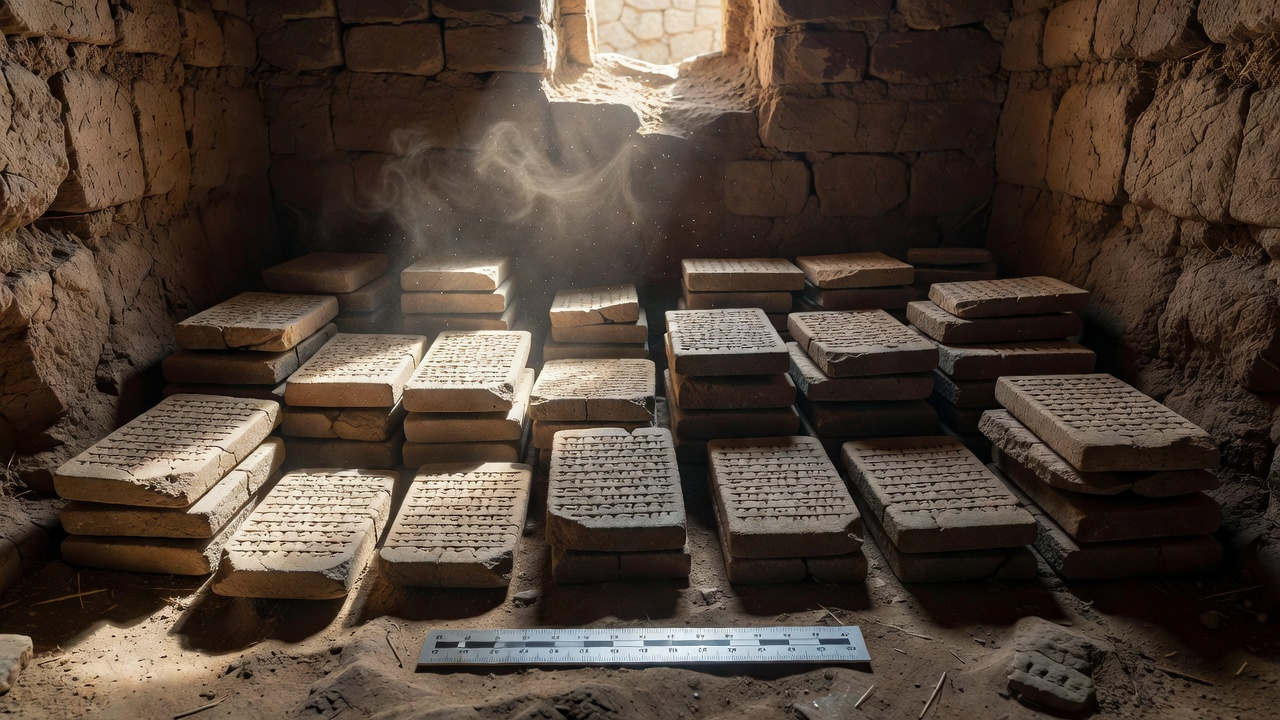
Picture this: beneath the relentless sun of southern Iraq, a French archaeologist in the 1930s brushes away millennia of sand from a cluster of unassuming clay lumps. These are no mere rocks—they're the cuneiform archives of Old Babylonian Larsa, etched in Akkadian script with the mundane dramas of daily life. A loan of barley here, a plea for repayment there, all dated to the Hammurabi period (1932-1763 BCE). These tablets don't reveal glittering palaces or epic battles alone; they unlock the gritty economic pulse of a city-state that rivaled Babylon itself.
Larsa, ancient Šuruppak reborn in the shadow of ziggurats, stood as a powerhouse in Mesopotamia's fertile crescent. Wedged between the Euphrates and its canals, this southern hub thrived on agriculture, trade, and temple-driven commerce. But why do these Akkadian letters and ledgers matter to students of ancient Near East history? Because they pierce the veil of kings' inscriptions, offering raw data on how ordinary people—scribes, merchants, farmers—navigated prosperity and peril in the lead-up to Hammurabi's conquest.
No lost Atlantis lurks here. These are fragmentary survivors, biased toward temple vaults, yet they paint a vivid portrait of economic resilience. As we delve into Old Babylonian Larsa's cuneiform archives, we'll trace the threads of debt, devotion, and deal-making that bound society together.
Larsa's Golden Age: From Gungunum to Rim-Sin I
Old Babylonian Larsa wasn't born in isolation. By 1932 BCE, under King Gungunum, it eclipsed neighbors like Isin, seizing maritime trade routes and amassing wealth in silver and grain. The city's Ebabbar temple, dedicated to the sun god Shamash, became an economic colossus, its archives bulging with records. Successors like Warad-Sin and Rim-Sin I (1822-1763 BCE) fortified Larsa, digging canals and building walls, but it was their administrative machinery that truly endured—in clay.
The Hammurabi period marks Larsa's zenith and fall. Hammurabi of Babylon eyed its riches, launching campaigns that culminated in 1763 BCE. Tablets from this era capture the tension: optimistic contracts amid encroaching threats. Archaeology at Tell Senkereh (Larsa's mound) since the 1930s has yielded thousands of these documents, mostly from temple and private archives excavated by teams like André Parrot's.
The Language of Power: Akkadian Cuneiform in Action
Wedge-shaped impressions on wet clay, dried or baked for posterity—that's cuneiform, the world's oldest writing system, here in its Akkadian dialect. Unlike Sumerian, Akkadian was Semitic, fluid for letters and contracts. A typical Akkadian letter might read: 'Speak to my lord: may Shamash keep you well. Deliver the 10 shekels of silver as agreed.' These weren't poetry; they were business, urgent and precise.
Students of archival history appreciate the stylus's efficiency: a tablet could record a loan in minutes, sealed with a cylinder seal's unique fingerprint. This script's survival in Larsa's cuneiform archives lets us quantify the economy—barley yields, sheep herds, labor rates—grounding myths in metrics.
Deciphering the Cuneiform Archives: Temples, Loans, and Trade
Fragmentary Finds and Survival Bias
Not all of Larsa's records survived the floods, fires, and conquests. What remains—some 2,000 tablets from sites like the Ebabbar and private houses—shows a stark bias. Temple archives dominate because priests archived meticulously, using them as legal vaults. Private collections, often from merchants' homes, are patchier, discarded or lost. This skews our view: we see the gods' economy more than the streets' hustle.
- Temple tablets: Rentals, offerings, endowments—Ebabbar managed vast estates.
- Private archives: Loans, marriages, disputes—intimate glimpses into family firms.
- Administrative letters: Orders from kings or governors, coordinating grain distribution.
Excavations reveal clusters: a 1932 dig unearthed 400 tablets in one room, likely a scribe's office. Yet, for every preserved ledger, thousands crumbled. Archaeologists caution against overgeneralizing; these are snapshots, not panoramas.
Economic Secrets Unveiled: Loans and Daily Dealings
Here's where the Hammurabi-era tablets shine. Loan tablets proliferate: 'PN1 has borrowed 1 kor of barley from PN2 at 33% interest, repayable at harvest.' Interest rates hovered at 20-50% for grain, lower for silver, reflecting risk in flood-prone fields. Merchants traded lapis lazuli from afar, wool to Dilmun (Bahrain), copper ingots logged meticulously.
Akkadian letters add color. One from Rim-Sin I's reign urges a subordinate: 'Hasten the barley; the temple awaits.' Another laments drought: 'The fields yield nothing—extend the loan?' These reveal adaptive strategies—prepaid contracts (anticipation), partnerships (tappūtu), even insurance-like pledges. Women appear as lenders too, owning property under proto-legal codes echoing Hammurabi's later laws.
In Larsa's economy, clay was currency's shadow—every transaction etched, every debt a potential dispute settled by witnesses and seals.
Quantify it: Annual temple revenues hit 100,000 kor of barley (about 18,000 cubic meters), feeding thousands. Trade networks spanned Iran to the Gulf, with Larsa as pivot. No mystery cults or hidden tech—just shrewd accounting fueling urban life.
Interpreting the Evidence: Scholarly Debts and Debates
Unlocking Old Babylonian Larsa demands nuance. Early 20th-century scholars like Georges Jean saw temples as proto-banks, centralizing wealth. Modern views, from Marc Van De Mieroop, highlight hybrid economies: state-temple-private blends, with markets buzzing beyond ledgers. Survival bias amplifies temples, but stray letters hint at vibrant bazaars.
Hammurabi's shadow looms. Pre-conquest tablets show fiscal strain—tax hikes, forced labor—foreshadowing collapse. Was Larsa overstretched? Or did Babylonian propaganda exaggerate? Philologists parse colophons (scribal notes) for clues, dating precisely via regnal years.
From Archives to Algorithms: AI in Cuneiform Revival
Enter Aetheria AI's niche: machine learning now collates cuneiform archives, pattern-matching loan terms across 500,000 global tablets. Predictive models reconstruct missing fragments, distinguishing Larsa's dialect quirks. This bridges archaeology and data science, making Hammurabi-period economics accessible.
Yet interpretation remains human. Was a 40% interest usury or fair in volatile times? Context—crop failures, wars—decides. Students must weigh primary sources against syntheses like Dominique Charpin's works.
The Writing Memory Door: Larsa as Eternal Ledger
These cuneiform archives open the Writing Memory Door—a portal where ancient scribes externalized memory, turning ephemeral deals into enduring records. In Old Babylonian Larsa, writing wasn't elite luxury; it was economic oxygen. Tablets as time capsules preserve not just facts, but mindsets: trust via seals, foresight in clauses.
Connect this to broader Near East history: Larsa's ledgers prefigure Assyrian trade epics, Persian satrapies. They remind us writing's power—amplifying human agency against oblivion. In an AI era, as algorithms 'read' clay, we ponder: does digital memory echo cuneiform's fidelity?
- Temples as archivists: Ensuring divine and fiscal continuity.
- Private letters: Personal stakes in communal webs.
- Legacy: Hammurabi's code crystallized Larsa-style contracts.
What Secrets Lie in Your Next Tablet?
Old Babylonian Larsa's story, etched in Akkadian letters and loan tablets, demystifies a pivotal era. No enigmas unsolved by evidence, just layers awaiting scrutiny. From temple vaults to Hammurabi's triumph, these cuneiform archives reveal economics as society's spine—flexible, fraught, foundational.
As you study the ancient Near East, probe deeper: How might Larsa's loan patterns predict modern debt cycles? Dive into digitized collections at the Cuneiform Digital Library Initiative—what Akkadian letter will rewrite your understanding? The clay awaits your inquiry.