
Wari Empire Secrets: Colca Storehouses and Andean Archaeology in Ayacucho, Peru
Whispers from the Highlands: A Forgotten Empire Awakens
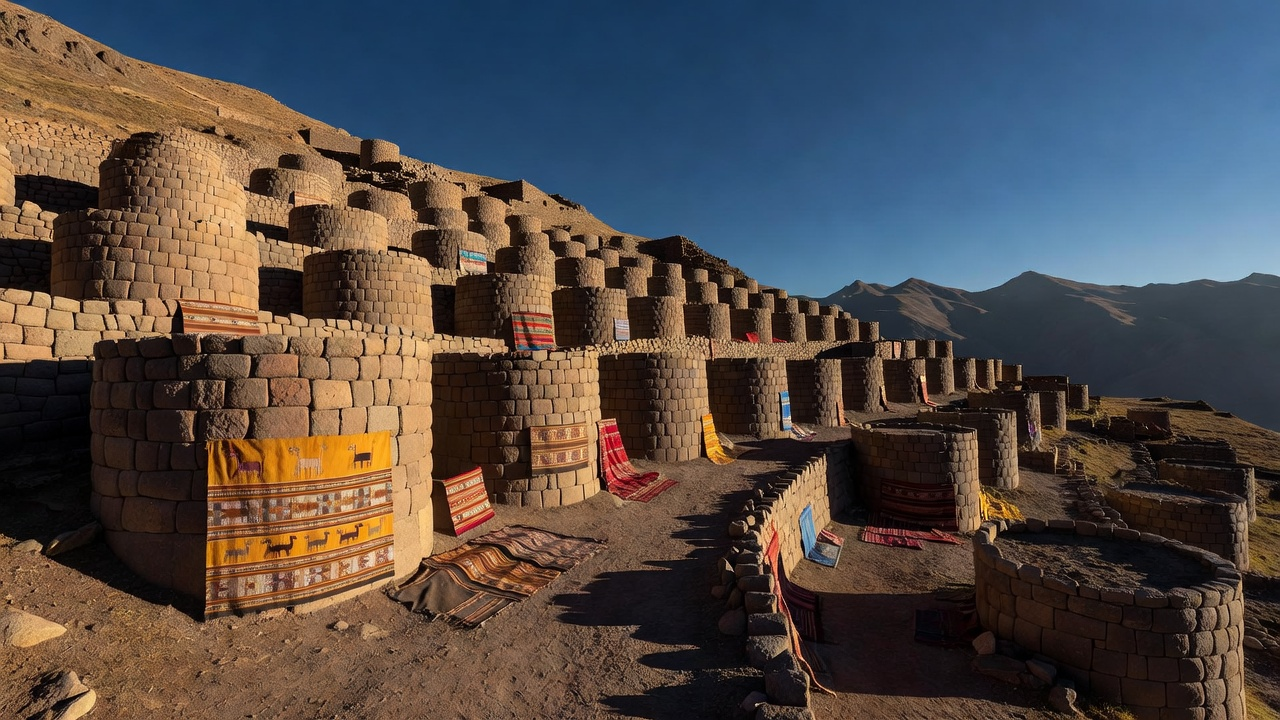
Picture this: high in the rugged Ayacucho Basin of Peru's southern Andes, where thin air bites and ancient winds carve the earth, archaeologists unearth clusters of stone chambers etched into cliffsides. These are the colca storehouses of the Wari Empire, silent sentinels from 600 to 800 CE that guarded surplus maize, quinoa, and textiles against famine and foe. Not mere warehouses, they pulse with the ingenuity of a civilization that knit together the Central Andes without a single written word—only knotted strings and masterful stonework to tell their tale.
For Andean history explorers and students of comparative civilizations, the Wari Empire offers a tantalizing puzzle. Predating the Inca by centuries, this powerhouse radiated from its heartland in Ayacucho, Peru, influencing vast territories through roads, rituals, and redistribution. Andean archaeology here reveals not a linear march of progress, but a sophisticated worldview enduring in today's Quechua communities—a living thread woven through time.
The Ayacucho Basin: Cradle of Wari Power
Nestled at over 3,000 meters, the Ayacucho Basin was the Wari Empire's nerve center. Huari, the sprawling capital, sprawled across 15 square kilometers, its ushnu platforms and D-shaped temples echoing imperial might. From here, Wari administrators dispatched emissaries along a 30,000-kilometer road network—Qhapaq Ñan precursors—that bound provinces from modern Ecuador to central Chile.
No alphabetic script marked their decrees; instead, early khipu prototypes—those cryptic bundles of knotted cords—likely tallied tributes and tracked calendars. Imagine officials unraveling these at colca doorways, auditing harvests under Andean skies. This oral-numerical tradition, refined by later Inca, underscores the Wari's intellectual depth, a continuity cherished by Quechua speakers who still employ khipus in rituals.
Colca Storehouses: Pillars of Wari Economy and Control
Strategic Silos in the Landscape
Scattered across ravines and hilltops near Ayacucho, colca storehouses like those at Jargampata and Honcopampa exemplify Wari genius. Circular or rectangular, often multi-chambered, these structures perched on sheer drops, ventilated by slits to thwart pests and moisture. Holding up to 200,000 liters of grain per complex, they centralized redistribution, feeding armies, elites, and laborers on state projects.
Archaeologists map hundreds via LiDAR and surveys, revealing a web of control. In Andean archaeology, these colcas aren't just storage—they symbolize reciprocity, the ayllu social glue binding kin and cosmos.
Beyond Grain: Textiles and Tools
Excavations yield camelid wool bundles, chicha brewing vats, and Spondylus shell beads—tokens of elite trade. Colcas thus mirror Wari's vertical economy, harvesting diverse microclimbs from coast to jungle.
Unveiling Evidence: Andean Archaeology's Toolkit
The highland climate—dry, cool, oxygen-poor—preserves organics that tropical soils devour. Textiles shimmer with geometric motifs, roads endure as causeways, and osteological remains paint lives of robust health amid periodic stresses.
- Textiles: Fine camelid weaves, some painted, rival Inca finery, hinting at craft specialization.
- Roads: Paved paths with chakanas (rest stops) facilitated rapid communication.
- Khipu precursors: Cord fragments suggest administrative innovation.
- Osteology: Skeletal analyses from sites like Conchopata show cranial modification, treponemal disease, yet strong builds from quinoa-rich diets.
These artifacts, studied through ceramics, architecture, and bioarchaeology, dispel myths of Wari as Inca prologue. They stand as a peer system, rich in its own right.
A Living Tradition: From Wari to Quechua Heartlands
Walk Ayacucho's markets today, and Quechua weavers echo Wari patterns in their ponchos. Colcas inspire modern silos; khipu lore persists in oral histories. This isn't relic admiration—it's continuity. Andean intellectual traditions thrive, from pachakuti cycles to huaca reverence.
Link this to Aetheria's Sacred Places Door: Wari huacas like those at Wari Kayan foreshadow Inca shrines, sacred nodes in landscapes alive with ancestors.
Echoes That Endure
The Wari Empire's colca storehouses in Ayacucho, Peru, guard more than grain—they hold secrets of resilience, reciprocity, and a cosmos in balance. As Andean archaeology peels back layers, we glimpse not a fallen past, but a vibrant ancestor shaping the Andes' soul. Venture there; let the highlands whisper their truths.