
What Is Mythology? Defining Myths as Social Practice, Genre, and Community Stories
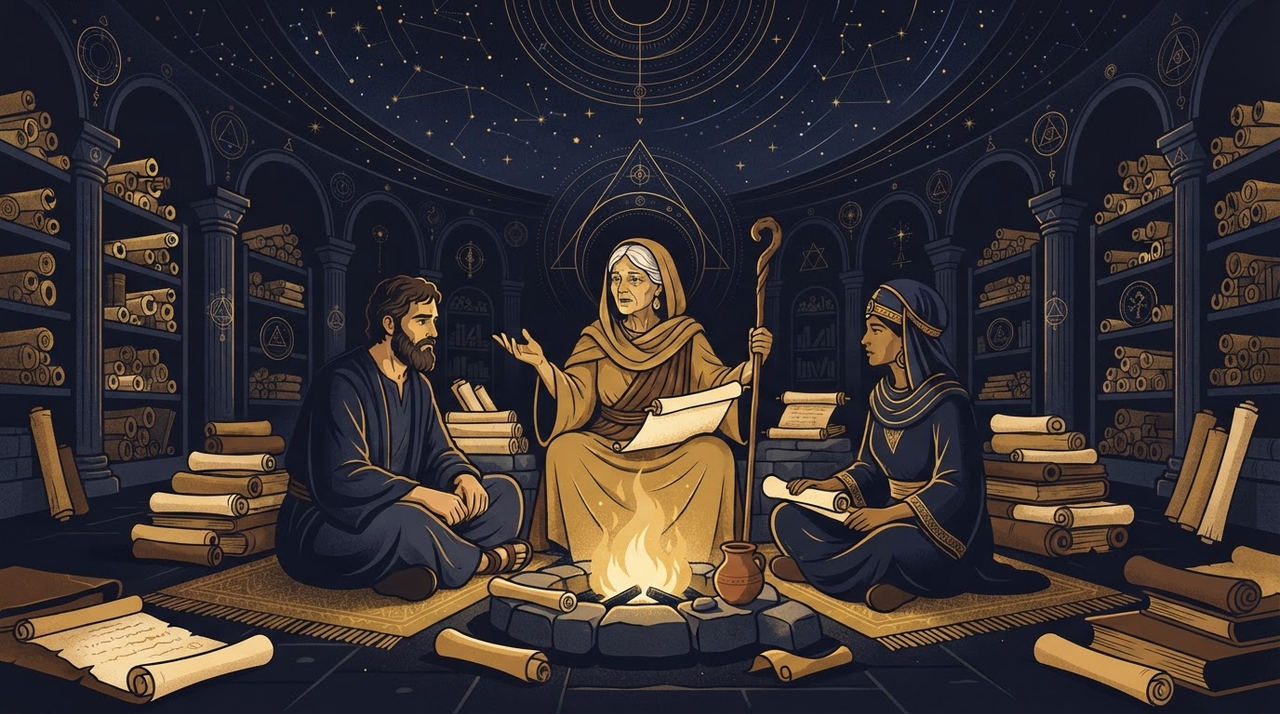
Imagine a firelit circle in ancient Mesopotamia, voices rising in rhythmic cadence as elders recount the exploits of Enki, the cunning god who shapes rivers from chaos. These aren't mere tales to pass the time—they bind a people, explain the unexplainable, and orient lives toward shared purpose. For students of existence like you, exploring mythology through Aetheria’s Knowledge Library invites a profound shift: myths are not relics of primitive fancy, but dynamic forces of human meaning-making. This mythology definition genre frames them as scholarly categories describing stories that do essential social work.
Far from dismissing myths as falsehoods, scholars view them through lenses of anthropology, literature, and history. They emerge not as isolated fictions but as embedded practices—oral performances in Polynesian voyaging canoes, inscribed texts on Egyptian tombs, or evolving narratives in Greek city-states. Here, we unpack what is myth as social practice, its genre markers, and its role as myth as community story, revealing the ancient myth function that echoes into our inquiry today.
Mythology Definition Genre: Beyond Fairy Tales
Mythology, as a term, entered Western lexicon via the Greek mythos—not "lie," but "word, speech, story." In modern scholarship, mythology definition genre captures narratives distinguished by their cultural authority. Unlike folktales or legends, myths often feature divine or heroic agents operating in a sacred past, their events rippling into the present.
Key genre markers include:
- Narrative time: A primordial era, like the Norse world's forging from Ymir's body, setting patterns for cosmic order.
- Named agents: Specific gods or ancestors—Odin, not "a wise wanderer"—with personalities tied to local landscapes.
- Place-language: Anchored in geography and tongue, such as Australian Aboriginal Dreamtime songs mapping songlines across deserts.
- Etiology: Explanations for origins, from why bats fly at night in Mayan lore to seasonal cycles in Greek Demeter myths.
These elements defy universal codes; no single hero's journey flattens the Aztec Five Suns or Yoruba orisha pantheons. Instead, myths honor their locales—time, place, period intact.
What Is Myth as Social Practice?
Distinguishing Forms and Contexts
What is myth social practice? It's the lived enactment: an oral recitation during Inuit hunts invoking Sedna for seals, or Vedic hymns chanted at Hindu fire rituals. Contrast this with ancient texts like the Babylonian Enuma Elish, preserved on clay tablets for scribal training. Myths live in performance, community rituals, and scholarly reconstruction—not static pages.
Religious reception varies too: for devout Hindus, the Ramayana is scripture; for historians, a heroic epic reflecting kingship ideals. Anthropology highlights myths' adaptive role—shaping identity amid migration, as in the Navajo emergence stories post-colonial trauma.
Myths do not so much explain the world as make it habitable through shared imagination.
Myth as Community Story: Binding the Collective
At heart, myth as community story forges belonging. In Sumerian epics, Gilgamesh's quest mirrors communal fears of mortality, urging fertile riverbank life. African griots weave clan genealogies into spider Anansi tales, preserving law and lore orally for generations.
Ancient Myth Function in Daily Life
The ancient myth function was multifaceted: etiological (why rivers flood), normative (Maori creation affirming chiefly lineages), mnemonic (Homer's Iliad as pre-literate history). Cross-door to Aetheria’s doors on Religion, these stories sacralize ethics; in Anthropology, they reveal worldview; via Writing & Memory, they bridge oral to inscribed legacies.
From Ancient Fires to Modern Inquiry
Myths endure because they invite us, students of existence, to question: How do these stories shape your community's unspoken rules? Protect the journey by resisting reductive labels—myths aren't "just stories," but vital threads in humanity's tapestry.
Embrace the Seeker's Code: Journal one myth from your heritage. What social work does it perform today? Dive deeper in Aetheria’s Knowledge Library, where curiosity fuels understanding.