
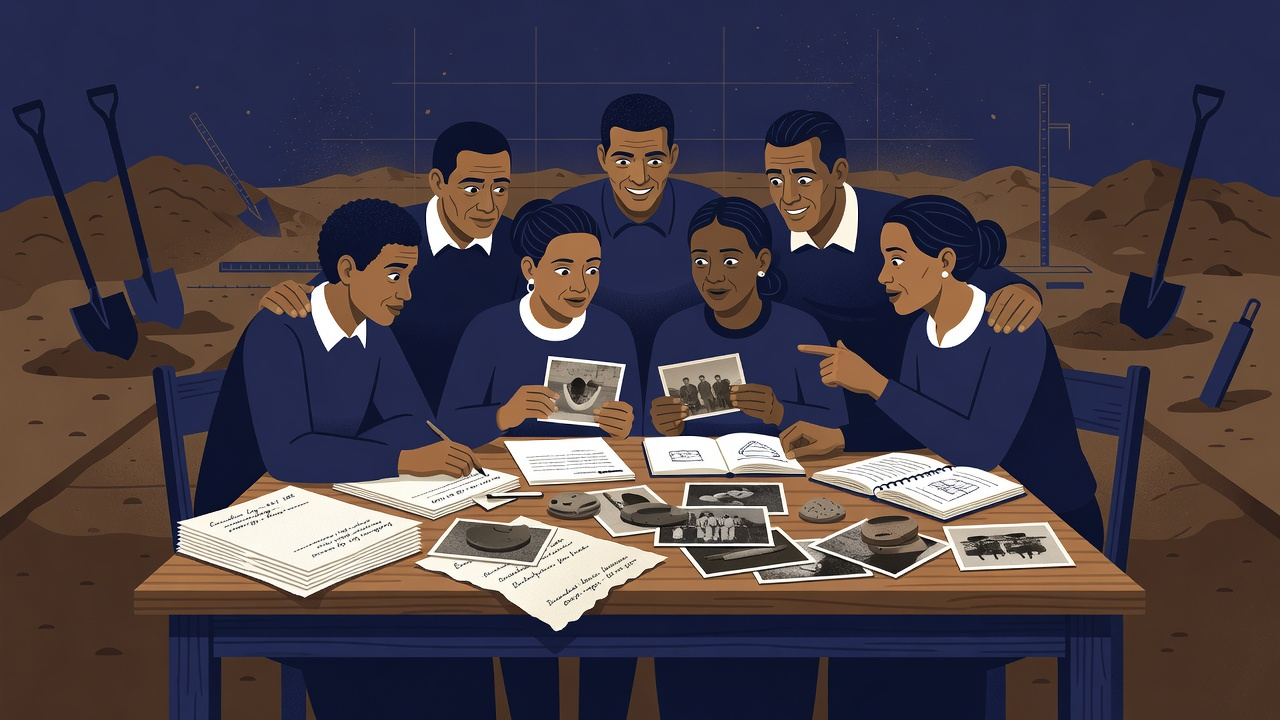
Who Dug, Who Decided, Who Remembers? Uncovering Colonial Power in Archaeology's Excavation History
Picture a sun-baked ridge in 19th-century Egypt, where a team of local fellahin—farmers turned diggers—uncover a limestone sarcophagus under the watchful eye of a European gentleman in a pith helmet. He sketches the find, notes its grandeur, and ships it across the sea to a London museum. Who toils in the dust? Who claims the discovery? Who ensures the story endures? These questions pierce the heart of the history of archaeology, revealing not just buried treasures, but layers of colonial power etched into every shovelful of earth.
This excavation history is no neutral chronicle. It traces a path from gentlemanly antiquarianism to the professionalized digs of empires, where colonial administration dictated what was unearthed, who benefited, and how the past was preserved—or erased.
From Antiquarian Curiosity to Colonial Enterprise
The history of archaeology begins in the leisurely pursuits of 19th-century antiquarians—wealthy travelers and scholars who collected pottery shards and inscriptions as souvenirs of exotic lands. Figures like Giovanni Battista Belzoni in Egypt or Austen Henry Layard in Mesopotamia treated sites as personal playgrounds, their journals blending awe with ownership.
Professionalization arrived hand-in-hand with empire. By the late 1800s, archaeology became institutionalized, fueled by national museums and universities hungry for prestige. Colonial powers—Britain, France, Germany—poured resources into digs, framing them as civilizing missions. The French in Algeria, the British in India: excavations weren't mere scholarship; they mapped territory, legitimized rule, and amassed collections that filled imperial halls.
Who Dug? Labor, Local Knowledge, and Unseen Hands
The Backbone of Excavation History
European archaeologists rarely wielded picks themselves. Local laborers—indigenous workers, often conscripted or lowly paid—did the grueling work. In Peru, hacienda peons unearthed Inca gold; in Iraq, Bedouin guides navigated tells. Their knowledge of landscapes, oral histories, and subtle soil shifts guided discoveries, yet expedition reports rarely credited them beyond "native assistants."
This erasure defines colonial archaeology. Local insights, passed down through generations, informed choices of where to dig, but the narrative spotlight stayed on the foreign director. Today, ethical inquiries demand recognition: descendant communities seek acknowledgment of these contributions, urging a respectful reckoning with uncredited voices.
Who Decided? Extraction, Archives, and Heritage Colonialism
Decisions flowed from colonial capitals. Administrators granted permits, prioritizing sites that glorified empire—pyramids over villages, temples over everyday settlements. Objects flowed outward in a one-way tide: the Elgin Marbles from Greece, Benin Bronzes from Nigeria, shipped to the British Museum without consent from source communities.
Power in the Archaeological Archives
Here, paper became prosthesis for power. Early records—field notes, ledgers, photographs—differ starkly from modern standards. Scribbled in haste, biased by Eurocentric lenses, they omit labor details, exaggerate drama, and ignore local objections. Reading these archaeological archives critically, as explored in our History Door on Archives and Power, unveils hidden dynamics. Anthropology Door echoes this: material culture wasn't just dug up; it was weaponized in narratives of superiority.
Archaeology Ethics: Re-Reading for Reparations
Contemporary archaeology confronts this legacy head-on. Projects now prioritize community consent, collaborative digs, and digital repatriation. In Australia, Indigenous custodians co-lead excavations; in Mexico, Maya descendants shape interpretations. Archives are digitized, cross-referenced with oral traditions, exposing gaps where local knowledge was sidelined.
Yet challenges persist. Heritage colonialism lingers in contested artifacts and uneven funding. Ethical frameworks—from UNESCO guidelines to national laws—insist on inclusivity, but implementation varies. Respectfully engaging descendant communities means listening first: their consent isn't a formality, but a foundation for shared stewardship.
Who Remembers? The Ongoing Excavation of Memory
Re-reading archives isn't nostalgia; it's archaeology's new frontier. Scholars sift ledgers for forgotten names, trace object provenances, and amplify silenced stories. This humane pursuit—curious, truthful—transforms colonial archaeology from a relic into a living dialogue. In doing so, it asks us all: whose past do we unearth, and for whom do we preserve it?
The dirt still speaks, if we learn to listen beyond the official tale.