
Why Humans Classify Everything: The Epic History of Taxonomy from Aristotle to DNA
Picture a child on a windswept beach, knees deep in the surf, meticulously sorting shells into piles: spirals here, ridges there, smooth ovals aside. This primal act—sifting chaos into order—is the heartbeat of scientific classification. From ancient philosophers to genome sequencers, humans have obsessed over taxonomy, that grand endeavor to map the universe's bewildering diversity. Why? Because in classification lies power: to predict, to understand, to belong. Dive into the taxonomy history with us at Science Door Aetheria, where we unravel natural philosophy systems that shaped our world.
Aristotle's Ancient Blueprint: The Father of Biology
In the sun-baked groves of ancient Athens, Aristotle wandered, net in hand, pondering the Lyceum's wildlife. His Historia Animalium launched scientific classification as we know it. No mere lists—Aristotle grouped creatures by essence: those with blood versus without, viviparous versus oviparous, land-dwellers scaling cliffs or burrowing deep. He saw patterns in teeth, feet, habits—a ladder of nature ascending from simple sponges to noble humans.
This wasn't dry cataloging; it was philosophy alive. Aristotle believed classification revealed the universe's logic, a divine order echoing through flesh and fin. His system, rooted in observation, endured for two millennia, influencing natural philosophy systems from medieval monasteries to Renaissance labs.
Linnaeus and the Naming Revolution
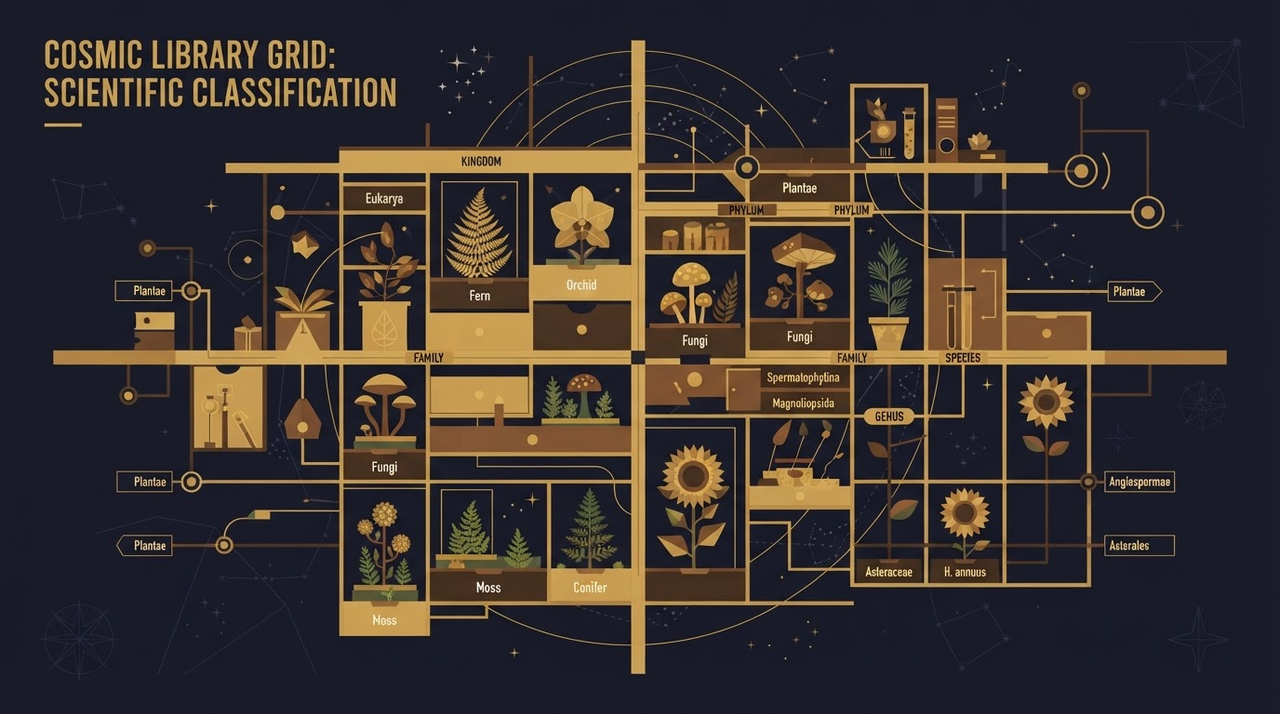
Fast-forward to 18th-century Sweden, where Carl Linnaeus tamed botanical anarchy. Amid Uppsala's herbariums, he devised binomial nomenclature—genus species, like Homo sapiens—replacing verbose Latin descriptions. Kingdoms, phyla, classes, orders, families, genera, species: his hierarchy became the scaffold of modern taxonomy.
Linnaeus's Systema Naturae was a revelation, evidence-based consensus drawn from specimens shipped from distant colonies. Yet it fixed fluid life into rigid bins, a tension persisting in taxonomy history. His work bridged Aristotle's qualities with emerging empiricism, turning classification into a global language.
Elements in Order: The Periodic Table's Triumph
From Alchemy to Atomic Precision
Classification leaped beyond biology in 1869 when Dmitri Mendeleev arranged elements by atomic weight and properties. Hydrogen, oxygen, gold—suddenly patterned in rows and columns, predicting undiscovered peers like gallium. The periodic table, an established scientific classification system, showcased taxonomy's predictive might, blending chemistry's chaos into harmony.
Unlike interpretive frameworks of old alchemists, this was consensus forged in labs, a cornerstone of natural philosophy systems.
DNA and Cladistics: The Evolutionary Tree Unfurls
Today, cladistics redraws family trees via shared ancestry, not superficial traits. Willow and oak? Sisters in angiosperm clades. DNA barcoding—sequenced genes like COI—confirms these bonds, revolutionizing taxonomy history. No more guesswork; molecular evidence builds branching phylogenies, distinguishing rock-solid systems from speculative proposals.
Cultural Constellations: Diverse Lenses on the Same Stars
Classification isn't universal. Ancient Chinese ordered elements as wood, fire, earth, metal, water—a cycle of transformation. Mayan skywatchers mapped stars into cosmic ballgames, while Indigenous Australians classified plants by Dreamtime stories and uses. European periodic tables? Just one path. Each scientific classification honors local wisdom, no hierarchy imposed—interpretive frameworks as valid as evidence-based ones in their contexts.
The Shadows of Sorting: What Classification Conceals
Yet bins blind as they illuminate. Hybrids defy categories; quantum quirks mock neat rows. Classification shapes perception—Darwin noted it biases toward types, hiding variation. In philosophy, it echoes Philosophy Door's categories, The First Laws' ordering, and Sacred Places' spatial maps at Aetheria.
To classify is to humanize the cosmos, but also to fence the infinite.
Your Turn: Journal the Classifier Within
Next time you sort laundry or playlists, pause. What patterns emerge? What slips through? Journal: "My classifications of friends, books, or dreams reveal..." In this mirror, glimpse why we classify everything—and what wildness remains.
Explore more at Science Door Aetheria.