
Why Obey Power? Unraveling Political Legitimacy, Divine Kingship, and Civic Consent Through History
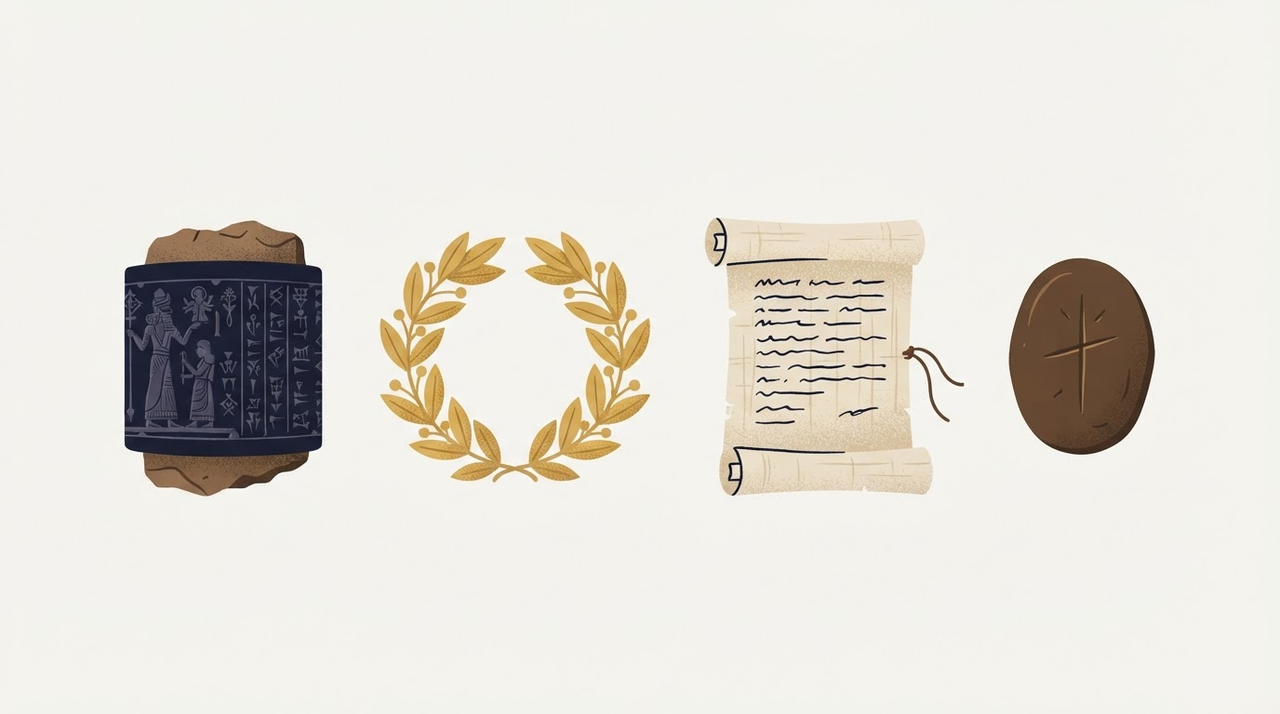
Imagine a dusty Mesopotamian throne room, circa 2500 BCE, where a lugal—Sumerian king—grips a scepter symbolizing the me, the divine powers that decree his claim to rule. Why did subjects kneel? Not mere fear, but a woven tapestry of belief: gods had spoken. Fast-forward to Athens' agora, 5th century BCE, where citizens in the demos debated who wields kratos—power born of collective voices, not celestial mandate. This tension—why obey power?—lies at the heart of politics.
Politics, in Aetheria's Knowledge Library, probes how groups answer that primal query: Why should this authority hold sway? It's no abstract seminar. Political legitimacy—the justified claim to rule—spans political theory's abstractions, institutional history's records, law's codices, public rhetoric's orations, lived experience's daily obeisance or revolt, scholarly interpretation's debates, and modern projections onto fragile democracies or autocracies. Here, we unravel divine kingship's sacred aura against civic consent's negotiated bonds, tracing authority and power through eras without crowning victors or ladder-climbing civilizations.
Explore the Sacred Kingship Door for divine origins or the First Laws Door for codified claims. Join thoughtful readers and students of existence in questioning: Whose obedience sustains a regime, and what happens when it frays?
The Dawn of Political Legitimacy: Divine Kingship in Sumer and Egypt
In the cradle of civilization, around 3000–2000 BCE, political legitimacy flowed from the divine. Sumerian city-states like Uruk institutionalized the lugal as shepherd-king, bearer of the me—decrees of fate encompassing kingship, temple-building, and warfare, as detailed in the temple hymns attributed to Enheduanna, daughter of Sargon of Akkad (c. 2334–2279 BCE). The audience? Free citizens, priests, and slaves in ziggurat-shadowed Ur. Authority rested on Inanna or Enlil's favor; the lugal mediated cosmic order. Excluded: nomadic outsiders, women from public rites, though priestesses like Enheduanna wielded cultural sway.
Across the Nile, Egyptian pharaohs as nswt (king of Upper Egypt) embodied Maat—truth, justice, cosmic balance—from the Old Kingdom (c. 2686–2181 BCE). Pyramid Texts inscribed in Fifth Dynasty tombs (c. 2494–2345 BCE) proclaim the pharaoh's divine ascent, sustaining the inundation for farmers and scribes alike. Institution: The royal court at Memphis; rhetoric in stelae like the Palermo Stone chronicling Nile floods as pharaonic gifts. Yet legitimacy faltered—First Intermediate Period (c. 2181–2055 BCE) saw nomarchs (provincial lords) defy weak pharaohs, sparking civil strife among affected Delta communities.
Counterexamples: When Gods Withdrew Favor
Divine kingship wasn't ironclad. Sumer's Ur III dynasty (c. 2112–2004 BCE) collapsed under Elamite invasions, as Gutian 'barbarians' exploited famine-hit legitimacy. Egypt's Hyksos interlopers (c. 1650–1550 BCE) ruled the north, their Semitic chariot warriors outside the Maat circle, forcing native Thebans into rebellion. These fractures reveal political legitimacy's fragility: when lived experience—crop failure, foreign boots—clashed with rhetoric, authority and power crumbled.
Civic Consent Emerges: Greek Demos and Roman Imperium
By the Archaic and Classical periods (c. 800–323 BCE), Greece pivoted from Mycenaean wanax-kings to participatory models. Athens' democracy (post-508 BCE Cleisthenes reforms) rooted demos-kratos—people-power—in citizen assemblies. Thucydides' History of the Peloponnesian War (5th century BCE) recounts Pericles' Funeral Oration: legitimacy from voluntary service, not divine blood. Audience: Adult male citizens (about 30,000 of 300,000 residents); excluded: women, slaves (like those in Laurion mines), metics. Rhetoric persuaded via ostracism votes; law via Solon's codes (c. 594 BCE).
Rome evolved differently. Republican imperium (c. 509–27 BCE)—command authority—stemmed from Senate and People's assemblies, as Livy's Ab Urbe Condita narrates. Consuls wielded it yearly; audience: patricians, plebeians post-Secession of the Plebs (494 BCE). Yet civil wars (e.g., Sulla 88–82 BCE) exposed flaws: populares like Marius rallied excluded equites and veterans, fracturing consent.
Pathways Compared: Divine to Deliberative
Chronology marks the shift: Sumer/Egypt (pre-2000 BCE, top-down divine pathway via oracles/temples) versus Greece/Rome (post-800 BCE, bottom-up civic function via votes/oaths). Differences: gods' unchallengeable me/Maat versus contestable demos/imperium. Counterevidence: Sparta's dual kings retained divine echoes into Hellenistic times. Present-day echoes persist in constitutional monarchies (e.g., UK's symbolic crown) and referenda (Switzerland's direct democracy).
- Sumer lugal: Cosmic intermediary, fails on famine.
- Athenian strategos: Elected general, fails on demagogue sway (Alcibiades' Sicilian Expedition, 415 BCE).
- Roman emperor (post-Augustus, 27 BCE): Blends imperium with divine cult, fails in Year of Four Emperors (69 CE).
Medieval and Islamic Threads: Bay'a and Feudal Oaths
Islamic political legitimacy, from the 7th century CE Rashidun Caliphate, hinged on bay'a—public pledge of allegiance. The Prophet Muhammad's Medina Constitution (622 CE) formalized it; Abu Bakr's election (632 CE) by companions set precedent, per Ibn Ishaq's biography (d. 767 CE). Audience: Muslim ummah (community); institution: Shura council. Excluded initially: non-Muslims (protected dhimmis paid jizya), women from direct pledge (though Aisha influenced). Rhetoric in Friday sermons; law via fiqh jurists.
In medieval Europe, feudalism (c. 9th–15th centuries) mirrored with oaths: vassals swore to lords under Carolingian capitularies (Charlemagne, 800 CE). Magna Carta (1215) coerced King John by barons, blending consent with coercion. Affected outsiders: serfs bound to manors, Jews via expulsions (England 1290). Legitimacy failed spectacularly—Peasants' Revolt (England 1381) rejected poll taxes, as chronicled by Froissart.
Authority and Power in Tension
Bay'a demanded renewal, unlike static divine kingship, fostering accountability yet inviting fitna (civil strife), as in Umayyad overthrow (750 CE).
Comparisons highlight flux: Bay'a's contractual pathway (elective, revocable) differs from Roman imperium's accumulative expansion. Function: both sustained order amid conquests. Counterevidence: Abbasid caliphs (750–1258 CE) lost temporal power to sultans like Buyids (10th century), retaining spiritual claim. Today, elective presidencies invoke bay'a-like oaths.
Modern Echoes and Failures: Legitimacy's Living Debate
Enlightenment thinkers like Locke (Two Treatises, 1689) theorized consent of the governed, influencing U.S. Declaration (1776). Yet exclusions persist—women's suffrage delayed to 1920, Indigenous dispossession. Institutional history shows Weimar Germany's collapse (1933) when economic despair eroded republican legitimacy, paving Hitler's chancellorship.
Public rhetoric today blends: populist appeals mimic demos, while technocratic claims echo Maat's order. Lived experience in protests—from Arab Spring (2011) bay'a rejections to Hong Kong (2019)—tests authority and power. Scholarly lenses, like Weber's types (traditional, charismatic, rational-legal, 1922), interpret without endpoint.
No Universal Triumph
Divine kingship endures in Ethiopia's Solomonic line (until 1974); civic consent fractures in coups. Each model—its chronology, exclusions—illuminates without supremacy.
Reflecting on Your World: A Journal Prompt
Political legitimacy isn't history's dust. Where do you see claims to rule today—in elections, social media mandates, or cultural icons? Journal: Pick a current authority. What blend of divine kingship aura, civic consent, or other threads justifies obedience? Who is excluded, and what counterexamples loom? Step through Aetheria's doors; the universe awaits your inquiry.