
Beyond Charisma: Unpacking Leadership Legitimacy, Consent, and Accountability from Ancient Sumer to Aetheria
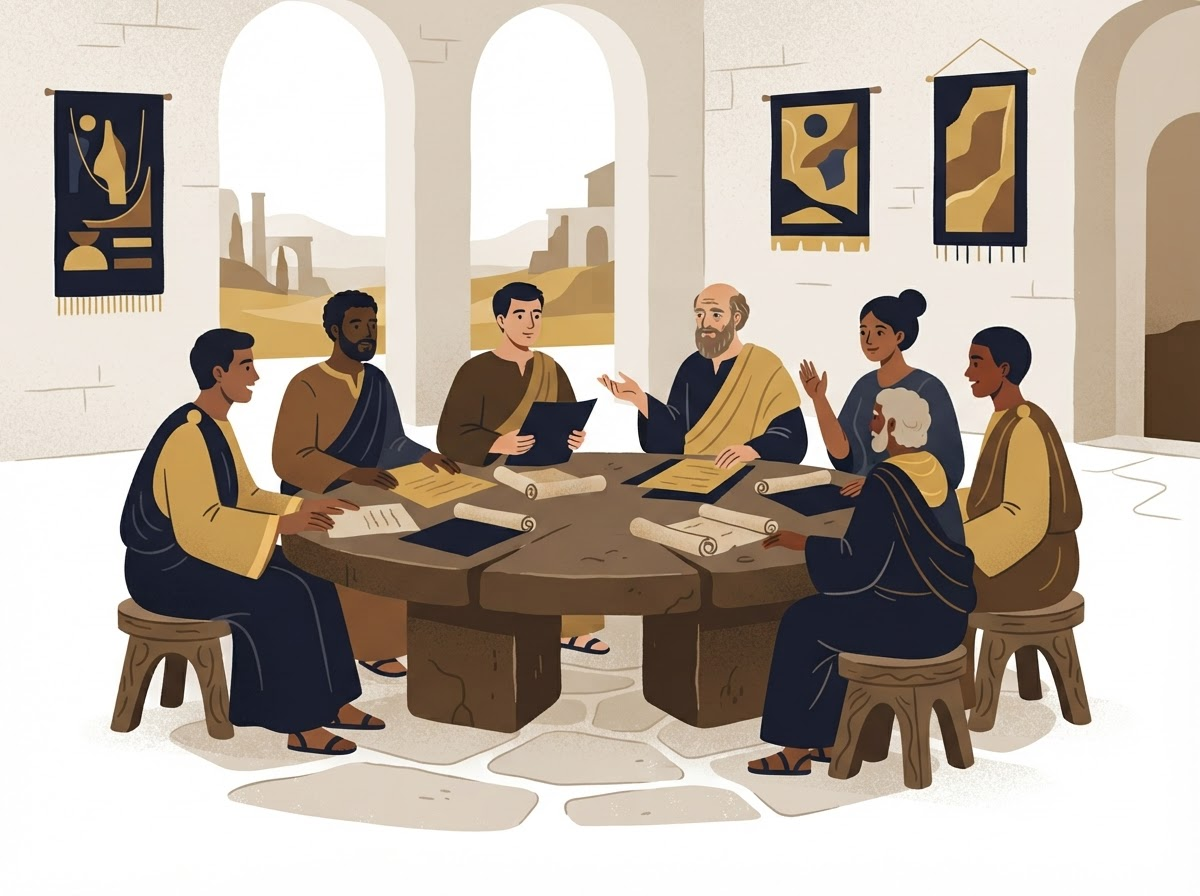
Picture a dusty Mesopotamian marketplace in 2500 BCE, where a crowd gathers not to hail a conquering warlord, but to voice grievances to a council of elders beside their chosen lugal—a king whose throne rests on collective nod, not just a sharpened spear. This scene challenges our modern fixation on charismatic leaders striding solo stages. True leadership legitimacy emerges not from personal magnetism alone, but from a delicate triad: the role, the institution, and the consent of those it touches. In Aetheria's Knowledge Library, we peel back these layers, tracing threads from ancient Sumer to contemporary questions of Aetheria leadership.
Here, leadership isn't a solo hero's journey. It's a relationship, sustained by consent and authority, tested through accountability in leadership. Charisma might ignite a spark, but legitimacy forges the fire that endures.
Leadership Legitimacy: Consent Over Coercion
Raw power seizes the moment; legitimacy claims the future. Power compels obedience through fear or force—a tyrant's whip or an invader's army. Legitimacy, however, invites it. It's the shared belief that a leader's authority aligns with the group's values, rules, or needs. Think of it as a contract, often unspoken: followers grant consent because the institution feels right, accessible, and reciprocal.
In ancient terms, this echoes across eras, from tribal elders to digital collectives. Leadership legitimacy demands mechanisms for voice and reckoning—councils that deliberate, rituals that bind, outcomes that justify. Without them, power erodes into resentment. Our exploration in Aetheria's library reveals this not as abstract theory, but lived architecture, varying by place and time.
Ancient Leadership Institutions: Sumer's Council-Bound Kingship
The Lugal and Assemblies of Early Sumer
Turn to the 3rd millennium BCE city-states of Sumer—Uruk, Lagash, Umma—where ancient leadership institutions blended monarchy with communal checks. The lugal, meaning "big man" or king, wasn't an absolute ruler. Clay tablets from Lagash, like those of Urukagina around 2350 BCE, describe a system where the lugal consulted ensi (governors) and a civic assembly of free men, landowners, and elders.
Consent shone in selection: assemblies acclaimed or rejected leaders during crises, as hinted in the Sumerian King List, a later compilation echoing oral traditions. Access flowed through open gates for petitions; accountability via depositions when famines or defeats mounted. Urukagina's reforms curbed elite abuses, framing his rule as restorative justice ordained by gods but ratified by people. Evidence is partial—tablets survive unevenly, interpretations debated—yet patterns emerge: legitimacy thrived where institutions balanced the lugal's role with collective input.
These weren't modern democracies, but precursors where power's legitimacy hinged on visible reciprocity, not divine fiat alone.
Rhetoric of Legitimation—and Its Fractures
Leaders wove legitimacy through rhetoric: invoking gods, ancestors, or crises. Sumerian inscriptions boast divine mandates—Inanna choosing the lugal—yet counterexamples abound. When Lugalzagesi of Umma overreached, conquering without broad consent, Sargon of Akkad toppled him, claiming superior heavenly favor. Failures exposed the gap: a Lugalbanda epic glorifies heroism, but real depositions, like in Kish, followed assembly revolt over neglect.
Rhetoric binds only if matched by deeds. Where it rang hollow—taxes uncollected, irrigation ignored—consent and authority crumbled, revealing legitimacy's fragility.
Through the Follower's Eyes: Lived Consent and Its Bounds
For the potter in Uruk or farmer in Lagash, legitimacy wasn't scrolls but daily texture: Did the lugal hear flood pleas? Share war spoils fairly? Assemblies offered rare but real access, fostering a sense of stake. Yet limits shadowed: women, slaves, outsiders often excluded; accountability selective, favoring elites.
This follower lens humanizes accountability in leadership—not top-down metrics, but felt fairness amid scarcity. Institutions varied wildly; Sumer's model hints at resilient patterns, partial though our view remains.
Analysis, Not Prescription: Echoes in Aetheria Leadership
We've dissected, not prescribed. This analytical frame connects to Aetheria's Politics Door, probing modern consent and authority in democracies and autocracies, and Sacred Kingship, where divine rhetoric meets earthly checks. In today's Aetheria leadership explorations, these ancient echoes invite curiosity: How do AI-augmented institutions foster legitimacy?
Pause for reflection: In your community—a workplace, neighborhood, or online forum—where do you witness leadership legitimacy at work? Note signs of consent (voluntary buy-in), access (open channels), and accountability (consequences for failure). What Sumerian echoes do you hear, and where do they falter?
Journal that prompt. It bridges antiquity to now, fueling humane inquiry in Aetheria's library.