
Judging in Public: Ancient Political Courts, Assemblies, and the Ethics of Allocating Consequence
Picture a sun-baked plaza in ancient Mesopotamia. A dispute over stolen grain brings accuser and accused before a panel of judges. Witnesses speak. Scribes etch words into clay. The air thickens with tension as the bench weighs evidence. This is no private quarrel. Judgment unfolds in public, where a verdict binds lives and reputations.
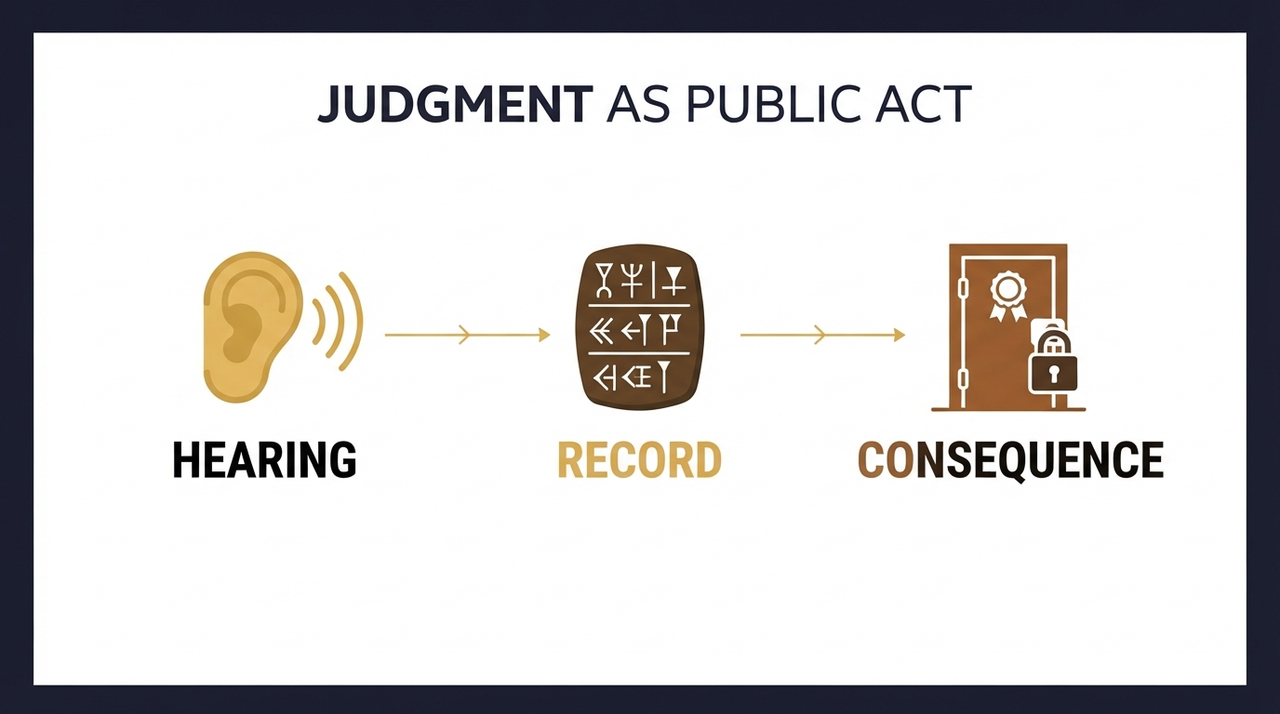
To judge means to allocate consequence with authority. A court, assembly, king, or priest performs this act. Even cloaked in legal or sacred terms, it remains political. Power designates the decider. Others endure the outcome. Ancient judgment reveals this core: public hearings where judicial power meets assemblies and law, shaping societies through ethics of deciding.
Mesopotamian Political Courts and River Ordeals
In cities like Babylon and Ur, political courts operated as local institutions. Kings issued codes, such as Hammurabi's stele, proclaiming standards for judgment. Yet daily cases filled temple or palace halls. Plaintiffs presented claims. Defendants responded. Judges, often elders or officials, deliberated.
River ordeals marked one procedure. Suspected sorcerers or adulterers plunged into sacred waters. Survival cleared them; drowning condemned. This was no random cruelty but a historically specific rite, invoking divine will when human proof faltered. Tablets record outcomes: fines, restitution, or execution. Coercion followed verdicts through bailiffs or royal agents. Resistance met swift suppression.
These scenes highlight ancient judgment as embedded in kingship and administration. Citizenship played little role; free men, slaves, and women appeared under stratified rules.
Egyptian Maat: Claimed Order Amid Local Realities
Across the Nile, pharaohs invoked maat, cosmic right order. Royal inscriptions and tomb texts depict kings as judges restoring balance. Disputes over land or theft ideally bent to this standard. Viziers heard cases in royal courts, promising equity.
Village life tells another story. Papyri from Deir el-Medina reveal informal settlements: neighbors mediating quarrels, oaths sealing pacts. Formal courts loomed for graver matters, but evidence gaps persist. Scribes favored elite narratives. What did peasant hearings sound like? The record silences them.
Here, judicial power intertwined with empire. Pharaoh authorized the bench, yet local customs filled voids. Maat shone as ideal; practice adapted to coercion and resistance on the ground.
Greek Civic Courts and Assemblies: A Practice with Exclusions
In Athens, assemblies and law fused. Citizens gathered in the Pnyx or courts like the Heliaia. Jurors, drawn by lot from male citizens, heard speeches. No lawyers; litigants swayed crowds directly. Verdicts on contracts, homicide, or politics carried fines, exile, death.
This family of practices excluded slaves, women, metics. Public hearing amplified citizen voices while muting others. Assemblies debated war or ostracism, blending legislative and judicial power. Outcomes rippled: winners celebrated, losers fled or faced enforcers.
Greek models spread, yet Rome's praetors and juries evolved separately, tied to republican offices.
Limits of Verdicts and the Ethics of Deciding
What a Verdict Does Not Settle
No ancient judgment silenced all echoes. Rumors lingered. Families plotted revenge outside official gaze. Appeals revisited old wounds. The silenced —women, outsiders—haunted records.
Evidence posed challenges. Oral testimony clashed. Seals and copies, precursors to First Laws procedures, aimed for fidelity. Yet scribes shaped narratives. Scholarly debate probes biases: did elites dominate archives?
Crossroads of Ethics, First Laws, and Politics
Ethics of deciding turns on just hearings: who speaks? Fair procedure? First Laws emphasize copy, seal, witness for enduring records. Politics asks: who authorizes? Assemblies empowered crowds; kings centralized power.
Context matters. Interpretation varies. Living authority—kings, priests—breathed immediacy into texts.
Ancient political courts and assemblies teach that judgment allocates consequence publicly. Winners emerge. Losers adapt. Missing voices persist. Who spoke in those halls? Who etched the clay? Who departed transformed? These questions invite us deeper into the human drama of deciding.