
Apocrypha vs Pseudepigrapha: Key Differences, Deuterocanon Explained & Biblical Canon Terms Demystified
Imagine unrolling a dusty scroll from the Second Temple era, only to find it labeled with terms that blur like desert mirages: apocrypha and pseudepigrapha. Students poring over biblical studies notes and seekers piecing together ancient literature layers often trip here. Why? These words guard gateways to texts that shaped Judaism and Christianity yet sit outside familiar canons. Let's cut through the haze.
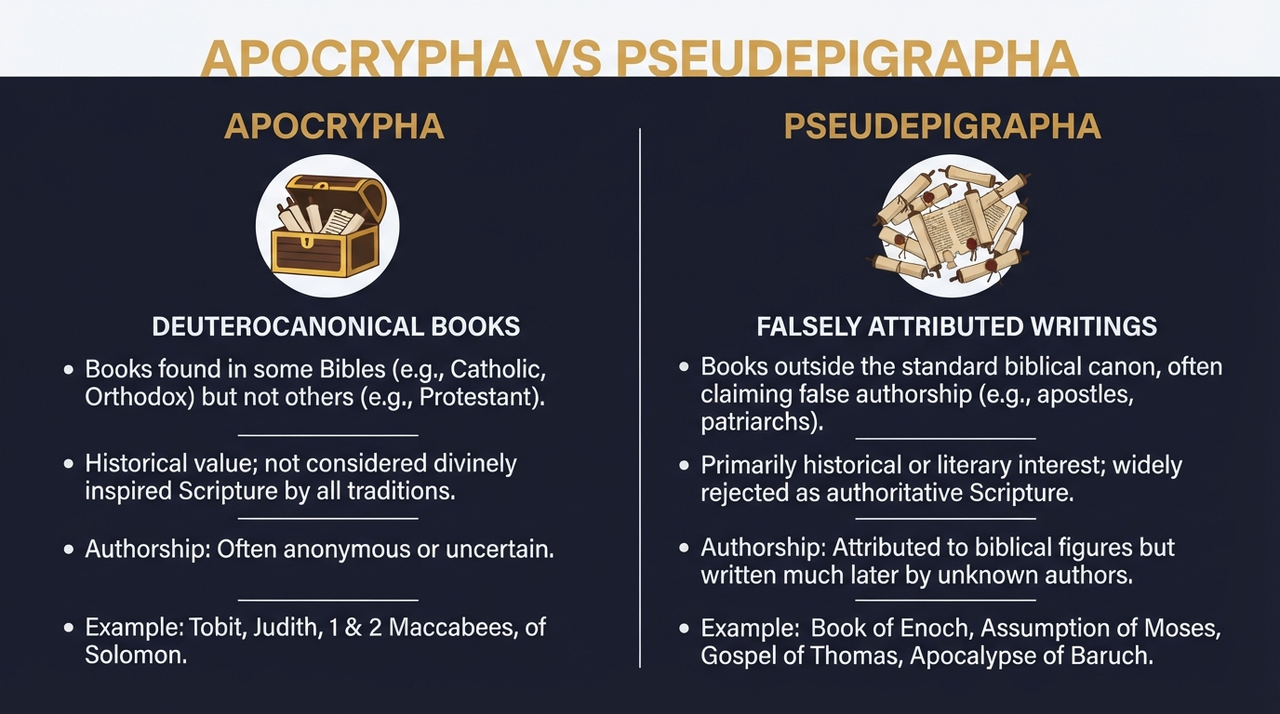
Quick answer for clarity: Apocrypha generally means books included in some Christian Bibles (Catholic, Orthodox) but not the Jewish Tanakh or Protestant Old Testament canon. Pseudepigrapha refers to Second Temple Jewish writings attributed to ancient figures like Enoch or Moses that never entered main biblical canons, except in the Ethiopian Orthodox Bible.
Quick Definition Box: Apocrypha vs Pseudepigrapha
- Apocrypha (Old Testament Apocrypha/Deuterocanon): 2nd century BCE–1st century CE texts in Greek Septuagint, deuterocanonical in Catholic tradition.
- Pseudepigrapha (Second Temple Pseudepigrapha): Diverse Jewish works (300 BCE–100 CE), pseudonymously attributed, non-canonical broadly.
Apocrypha: A Term Born in Controversy
The word "apocrypha" derives from Greek for "hidden" or "secret." Early Church Father Jerome coined its biblical use around 400 CE while translating the Latin Vulgate. He distinguished Hebrew canon books from those in the Greek Septuagint—translations Protestants later dubbed the Old Testament Apocrypha.
Catholics call these the deuterocanon ("second canon"), affirmed at the Council of Trent (1546). They include wisdom literature and histories bridging Testaments. Think of them as revered witnesses, present in early codices like Vaticanus and Sinaiticus, yet sidelined by Jewish rabbis post-70 CE for lacking Hebrew originals.
Pseudepigrapha: A Modern Scholarly Label
Pseudepigrapha means "falsely inscribed." Unlike apocrypha's ancient roots, this emerged in 19th-century scholarship to catalog Second Temple Jewish writings (c. 516 BCE–70 CE). These texts claim authorship by patriarchs like Adam or Noah to lend authority, reflecting apocalyptic visions and ethical expansions.
Compiled in collections like Charles' 1913 edition, they survived via fragments in Qumran caves or Ethiopian Ge'ez translations. No major canon embraced them wholesale—except Ethiopia's broader Bible, preserving gems like 1 Enoch.
Explore the Book of Enoch Explained in our companion piece.
Apocrypha vs Pseudepigrapha: Key Differences at a Glance
| Aspect | Apocrypha / Deuterocanon | Pseudepigrapha |
|---|---|---|
| Origin Date | Mostly 200 BCE–50 CE | 300 BCE–100 CE |
| Attribution | Anonymous or historical authors | Pseudonymous (e.g., Enoch, Jubilees) |
| Canonical Status | Catholic/Orthodox yes; Jewish/Protestant no | None broadly (Ethiopian exceptions) |
| Language Witnesses | Greek, Hebrew fragments, Latin | Greek, Aramaic, Ethiopic, Slavonic |
These biblical canon terms clarify scholarly boundaries without judgment.
Real-World Examples: Spotting the Divide
Apocrypha Stars
- Tobit: Angelic family saga.
- 1–2 Maccabees: Hanukkah heroism.
- Wisdom of Solomon: Poetic philosophy.
Pseudepigrapha Highlights
- 1 Enoch: Watchers' fall, end-times visions. See Book of Jubilees next.
- Jubilees: Rewritten Genesis chronology.
- Testaments of the Twelve Patriarchs: Deathbed ethics.
For Ethiopian preservation, check our Why Ethiopian Preserved More Books article.
Why the Confusion? Untangling Apocrypha vs Pseudepigrapha
Overlaps fuel mix-ups: Both hail from Second Temple Judaism, quoted by NT authors, and lurk in "hidden" status. Protestants lump some pseudepigrapha into "apocrypha" broadly; traditions clash on canonicity. Yet scholars draw firm lines—apocrypha for Septuagint staples, pseudepigrapha for attributed outliers.
We at Aetheria wield these neutrally as biblical canon terms, tools for seekers, not debates on inspiration. Dive into How Biblical Canon Was Formed.
FAQs: Demystifying Deuterocanon and More
What is the deuterocanon?
Catholic term for Old Testament Apocrypha books with secondary canonical status.
Are pseudepigrapha "fake"?
No—their attribution reflects ancient convention, offering historical insight.
Why Ethiopian Bibles include more?
Early isolation preserved Second Temple texts like Enoch.
These texts aren't footnotes—they're vibrant voices from antiquity, inviting you to expand your canon conversation.
Ready to organize your ancient library? Apply our Guide's Context Keeper lens today. Explore more in the blog.