
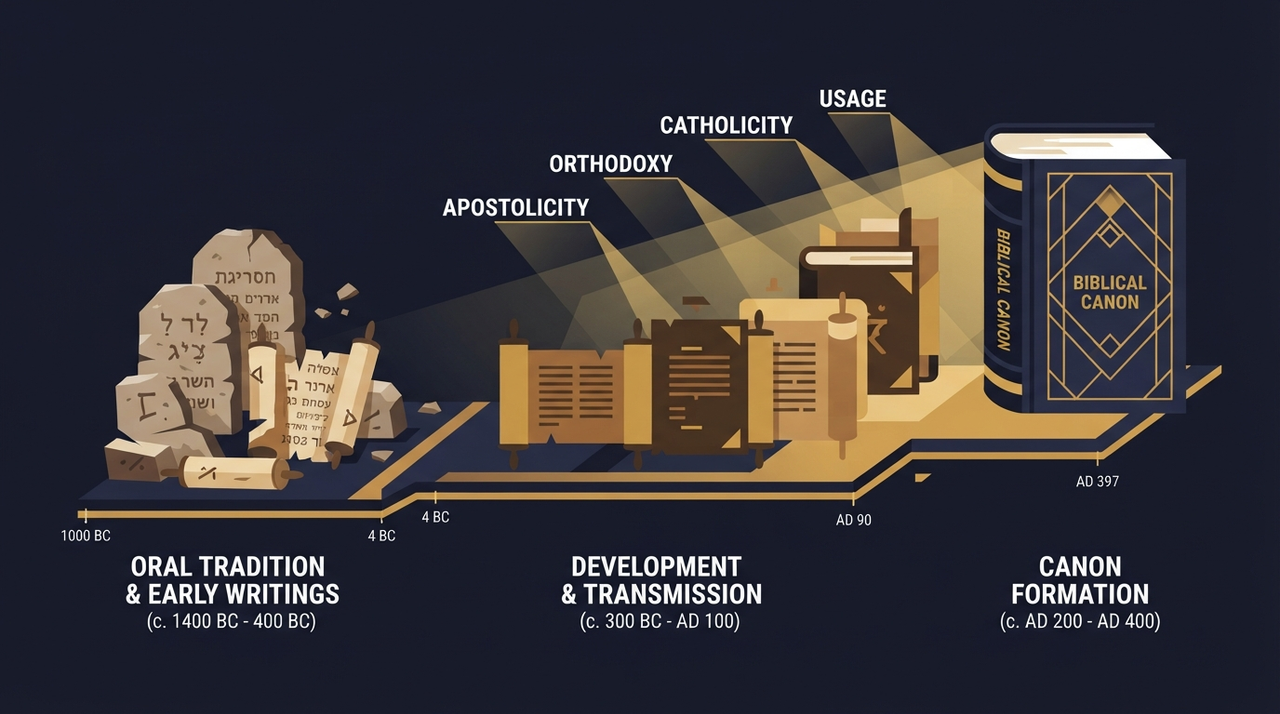
How the Biblical Canon Formed: Myths, History & Today's Variations
Picture dusty scrolls unrolling in a Jerusalem synagogue, voices rising in debate over which words carried divine weight. The biblical canon—the collection of books deemed authoritative scripture—didn't arrive fully formed like a thunderbolt from heaven. Instead, it developed over centuries through communal use in worship, rigorous criteria discussions, and pivotal councils. This organic process yielded different recognized collections today, reflecting diverse traditions. Understanding biblical canon formation reveals not a conspiracy of exclusions, but a story of faithful communities discerning sacred texts amid cultural shifts.
What Does "Canon" Even Mean?
The word "canon" derives from a Greek term for a measuring rod, evoking the idea of a rule or standard. In biblical terms, it refers to the list of books accepted as inspired and authoritative for doctrine and worship. But here's the nuance: canonization blends three layers—manuscript evidence, widespread community use, and formal lists affirmed by leaders. It wasn't a single event but a gradual consensus, shaped by how texts were read, copied, and revered.
The Hebrew Bible Canon: From Torah to Tripartite Shape
The Hebrew Bible canon, or Tanakh, emerged in stages. By the second century BCE, the Torah (first five books of Moses) stood undisputed, recited in synagogues and central to Jewish identity. Next came the Nevi'im (Prophets), like Joshua, Isaiah, and the Twelve Minor Prophets, valued for their historical and oracular power.
The Ketuvim (Writings)—poetry, wisdom, and tales like Psalms, Proverbs, and Daniel—crystallized later, around the first centuries CE. Dead Sea Scrolls from Qumran reveal diversity: some sects treasured extras like Jubilees or Enoch, hinting at fluid boundaries before consensus solidified into 24 books (equivalent to Protestant Old Testament's 39).
The Septuagint's Expansive Influence
Enter the Septuagint (LXX), a Greek translation of Hebrew scriptures from the third to second centuries BCE, crafted for diaspora Jews in Alexandria. It ballooned to include books like Tobit, Judith, and Maccabees—deuterocanonical texts for Catholics. Early Christians, speaking Greek, adopted the LXX wholesale, bridging Jewish roots with emerging faith. This set the stage for New Testament canon debates, as apostles quoted its broader palette.
For deeper dives into these extras, explore our Book of Enoch Explained, Book of Jubilees, or Why the Ethiopian Bible Preserved More Books.
New Testament Formation: Criteria, Lists, and Councils
Paul's Letters and Gospel Circulation
By the late first century, Paul's epistles circulated as a set, while Gospels like Mark (c. 70 CE) gained traction. Texts proved their mettle through daily lectionary readings in house churches.
The Key Tests: Apostolicity, Orthodoxy, Catholicity
Communities sifted pretenders using criteria: apostolic origin (linked to apostles or associates), orthodoxy (alignment with "rule of faith"), and catholicity (widespread, enduring use). Gnostic gospels like Thomas faded; the four Gospels endured.
Athanasius of Alexandria nailed a milestone in his 367 CE Easter letter, listing the exact 27 New Testament canon books we know today. Councils at Hippo (393 CE) and Carthage (397 CE) echoed this for North African churches, influencing the West.
Why Different Canons Exist Today
Divergent histories explain variations. Jewish tradition finalized 24 books post-70 CE Temple fall. Protestants, via Luther's 16th-century reform, matched this Old Testament (66 total books), sidelining deuterocanonicals as useful but non-inspired.
Catholics affirmed 73 books at Trent (1546), honoring Septuagint legacies. Eastern Orthodox add a few more, like 3 Maccabees. The Ethiopian Orthodox Tewahedo Church boasts 81, preserving Enoch and Jubilees—check our Apocrypha vs Pseudepigrapha guide. These reflect reception histories, not suppression.
Myths to Set Aside: No Dramatic Votes Here
Dispel the Council of Jamnia myth: no late-first-century rabbis "closed" the Hebrew canon in a single vote; it describes ongoing Pharisaic discussions. Nor did Nicaea (325 CE) decide the Bible—emperor Constantine hosted creedal talks, not book lists. These tales oversimplify a nuanced how canon formed process.
How Scholars Discuss Canon Today
Modern biblical studies emphasize "canon within canon"—core texts like Torah or Paul's letters stabilizing first. Fluidity reigned pre-fourth century; post-Constantine, lists rigidified. Debates persist on boundaries, but most agree: canon reflects belief in guided discernment, not human invention alone. See our blog or Guide for more.
Frequently Asked Questions
Did the Council of Jamnia finalize the Hebrew Bible?
No, it was no formal council but scholarly gatherings; the Hebrew Bible canon coalesced earlier through use.
Why trust Athanasius' list?
It mirrored existing consensus, later ratified by councils—not a solo decree.
Are extra books in Ethiopian Bibles "lost" scripture?
They're preserved traditions, valued differently across churches. Dive into our creation series for context.
The canon's story invites us to trace ancient paths, questioning yet honoring the texts that shaped civilizations.
Protect your journey through these depths—bring your next question to the Guide, and continue mapping revelations in the Journal. What scroll calls to you?