
Unlocking the Spirituality Door: Contemplative Practices, Inner Mysticism, and Your Seeker Journal Journey
Stepping into the Cosmic Library's Starlit Alcove
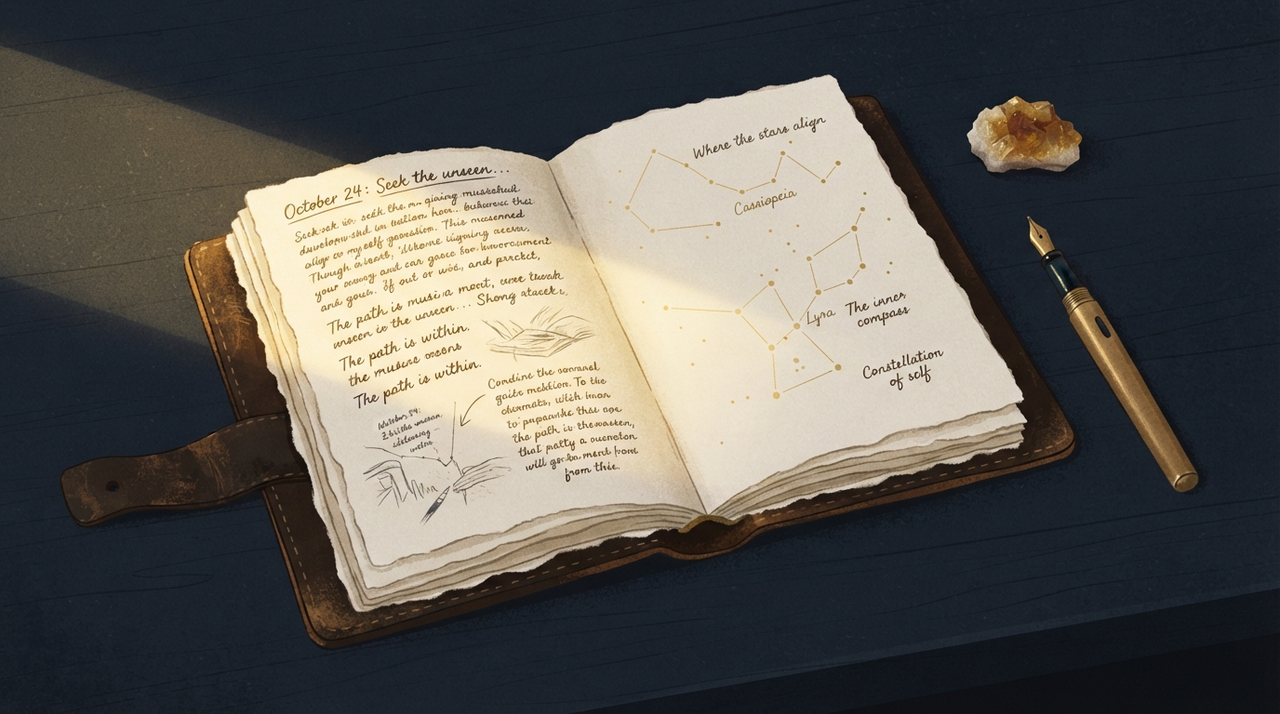
Picture a boundless cosmic library, shelves groaning under tomes of ancient wisdom and flickering starlight piercing the vaulted dome. In its quiet heart lies an inner alcove, a sanctuary carved for the seeker. Here, beneath a sliver of night sky, your seeker journal rests open, pages aglow with possibility. This is the threshold of the spirituality door—not a grand portal, but a subtle invitation to contemplative depths. As you settle into this space, the hum of the universe quiets, urging you toward inner experience through disciplined attention.
In Aetheria’s reflective embrace, this alcove becomes your personal practice ground. No dogma dictates entry; only curiosity and a willingness to record what unfolds within.
What the Spirituality Door Holds: A Spectrum of Seeking
Beyond this spirituality door stretches no single path, but a rich spectrum: from rigorous contemplative practices like breath-focused vigils to moments of raw awe at a sunset’s edge. Spirituality here means disciplined seeking—cultivating inner experience, navigating transformation, and honing the art of attention. It spans structured monastic routines and solitary wanderings, lineage-rooted rituals alongside unstructured wonder.
This isn’t vague universalism, a feel-good haze. It’s the grit of practice: sitting through distraction, tracing fleeting insights, discerning signal from mental noise. Whether through mysticism’s silent union or mindfulness’s anchored presence, the door opens to personal transformation, one breath, one noted sensation at a time.
A Brief Lineage: Threads of Contemplative Tradition
Contemplative strands weave through history, factually traceable in early records. In desert regions around 3,000 years ago, hermits in arid wastes practiced solitude and recitation—historical practices from Egyptian and Judean traditions. Monastic communities in Asia, from 5th-century China to medieval Europe, formalized these into daily hours of meditation and prayer, as chronicled in surviving texts.
From Mystics to Modern Adaptations
Medieval mystics, like those in the Rhineland or Sufi orders, described interpretive visions born of prolonged contemplative practice—private experiences framed by their cultural lenses. Today, mindfulness draws from these, secularized through programs like MBSR, emphasizing observable shifts in attention without metaphysical claims.
Distinguish the historical facts—communities existed, practices endured—from interpretive layers or unverifiable personal encounters. Your seeker journal captures the latter, grounding them in your reality.
How Seekers Approach the Inner Experience
Seekers enter prioritizing personal practice over proclamations. An inner experience—a profound stillness, a flash of unity—remains subjective, not an empirical claim testable in labs. Journal it raw: what arose, how the body responded, what lingered.
- Practice trumps theory: Sit daily, observe without forcing outcomes.
- Journal rigorously: Timestamp entries, note preconditions like fatigue or posture.
- Seek community reflection: Share patterns with trusted circles, not for validation, but perspective.
This method honors the spirituality door’s nuance: your mysticism unfolds uniquely, yet echoes universal human capacities.
Clearing Misconceptions from the Threshold
Missteps litter the path. Spirituality doesn’t demand rejecting religion; many thrive within traditions. Nor does an inner experience “prove” scientific facts—it’s personal data, not universal law. Intensity isn’t authenticity’s measure; a quiet breath can pierce deeper than ecstatic visions. And guidance, vital as it is, never supplants your discernment—test every insight against lived reality.
In your seeker journal, note these pitfalls descriptively, fostering clear-eyed contemplative practice.
Interwoven Threads: Spirituality's Broader Connections
To Religion, Myth, Ethics, and Science
- Religion: Provides communal containers for solitary depths.
- Mythology: Narratives encode insights, priming the mind for mysticism.
- Ethics: Practice ripens into compassionate action, not abstract rules.
- Psychology & Neuroscience: Track attention’s fruits—reduced reactivity, heightened wellbeing—without reductive materialism.
These links enrich, never confine, your journey through the spirituality door.
Concrete Ways to Begin Your Personal Practice
- 3-Day Attention Log: Note hourly where your mind wanders—people, worries, sensations. Patterns emerge, priming mindfulness.
- Compare Practices: Try Zen’s shikantaza (just sitting) and Christian centering prayer (resting in divine presence). Describe bodily feel, mental flow, without judgment.
- Journey Marker: Recall an awe moment—a mountain vista, child’s gaze. Write its sensory details, what shifted inwardly.
- Questions for Your Guide: What blocks my stillness? How to sustain practice amid chaos? Bring these to Aetheria’s reflections.
These anchor your seeker journal, turning intention into habit.
An Invitation to Journal Under the Stars
Return to the alcove. Pen poised, starlight steady. The spirituality door swings wider with each entry. What inner experience awaits? Step through—practice, record, transform. Your journey in Aetheria beckons.