
Article
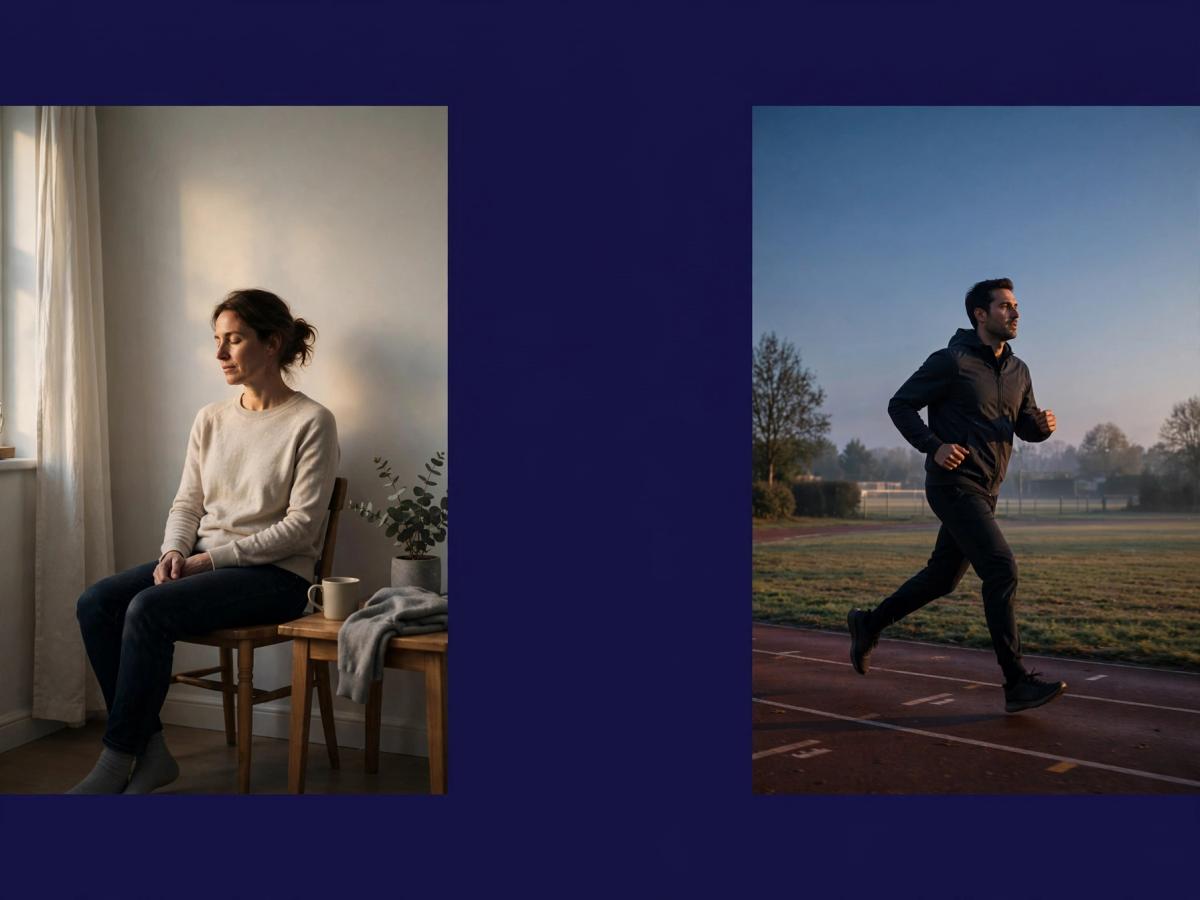
A quiet sitting practice, deep absorption in a task, and intense athletic focus can all be called altered states. That label describes a perceived difference from ordinary awareness; it does not identify one shared cause. Meditation and flow have different research histories, measures, and limits, even when people use similar words for how they feel.
Meditation research covers varied states and traits
Meditation includes practices that differ in aim, form, training, and setting. Cahn and Polich’s review distinguishes states during meditation from traits associated with longer-term practice and surveys EEG, event-related potential, and imaging studies. Those distinctions help keep a momentary measure from being treated as a stable personal characteristic, or one practice from standing for all the others.[1]
A later meta-analysis reviewed 78 functional neuroimaging investigations and included 31 experiments with 527 participants in its coordinate-based analysis. Its authors found varied patterns, with convergence exceptional rather than universal. The result describes a heterogeneous research literature, not a single signature that every meditative state must produce.[2]
Flow is a different construct
Flow often refers to deep involvement in an activity, and its measures were developed in particular contexts. Jackson and Eklund’s Flow State Scale-2 and Dispositional Flow Scale-2 concern physical activity. Their scope should not be silently expanded into a general measure of every absorbed, contemplative, or spiritually significant experience.[4]
A 2022 systematic review examined 25 flow studies with 471 participants and described the neural evidence as sparse and inconclusive. The authors discuss the limits of the research base rather than establishing a universal flow circuit. A feeling of absorption can be clearly reported even when a shared neural explanation remains uncertain.[3]
A scale belongs to the setting it was tested in
The Altered States of Consciousness Rating Scale was evaluated in drug-induced altered-state studies. That validation does not automatically make it a sound measure for meditation or physical-activity flow. A scale gives researchers a structured way to record certain dimensions; its meaning depends on the population, context, and experience for which it was tested.[5]
This is why “altered state” works best as a descriptive umbrella. It does not tell us that meditation, flow, and drug-induced states share one mechanism, carry the same spiritual meaning, or produce the same outcomes. The studies reviewed here do not establish one universal brain pattern or a general clinical benefit.[1][2][3][5]
Description is not a verdict
Research can examine reports, tasks, traits, and neural measures without deciding what a person may find meaningful in an experience. At the same time, personal significance does not turn a sparse or context-specific finding into proof of a spiritual claim. Keeping those questions separate protects both careful interpretation and the value of first-person description.
When two activities feel similarly absorbing, what evidence would show that they share a mechanism rather than only a description?