
Article
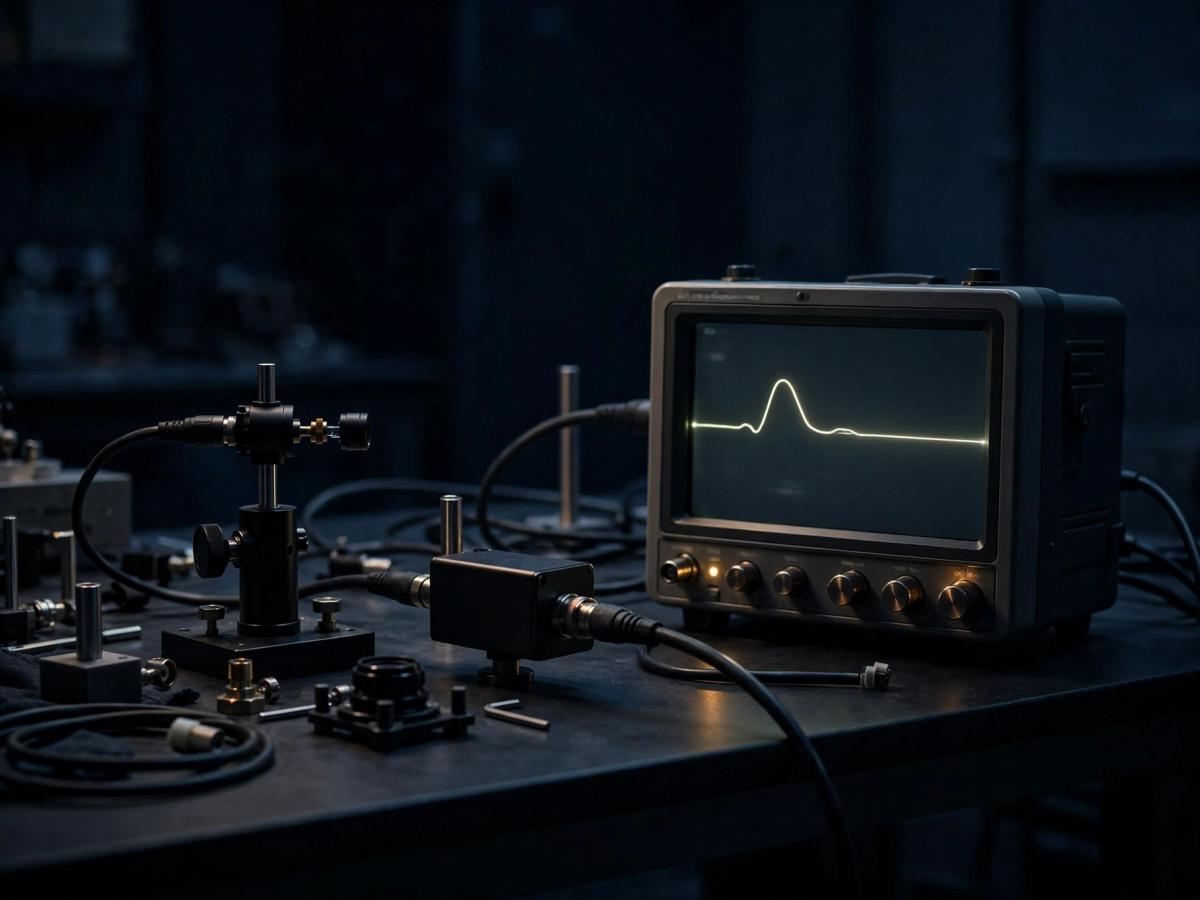
In an ordinary detector experiment, who must be present for a measurement to count? In standard operational physics, the apparatus can interact with a system and leave a record even when no person watches the event. The difficult question is how quantum theory relates those records to one outcome, not whether a human mind must witness them.
Measurement and decoherence
The measurement problem names questions about how quantum states relate to definite outcomes. Decoherence describes how interactions with the environment suppress observable interference between alternatives and help stable records form. Those interactions involve physical systems, not conscious awareness. Decoherence clarifies important dynamics but, by itself, does not settle every interpretation or explain why one outcome is experienced.[1][2]
In physics, an observer can mean a detector, apparatus, or other physical system. Tomaz and colleagues review recent work on decoherence, preferred basis, and the unresolved single-outcome question. Interpretations differ on what quantum states mean, but ordinary apparatus measurement does not wait for a person to look at a screen.[1]
Quantum probability is not quantum brain evidence
Quantum cognition uses mathematical structures from quantum probability to model context-sensitive judgments, order effects, or decisions. Huang and colleagues describe this program as using quantum probability “without the physics.” A successful cognitive model does not show that neurons run physically quantum computations or that a brain depends on large-scale quantum coherence. Researchers can compare these models with alternatives against choices observed in defined tasks. A model that fits better may describe those decisions well without identifying the brain mechanism that produced them.[3]
Quantum consciousness theories make a different claim. Orch OR is a speculative theory proposed by Hameroff and Penrose, linking processes in microtubules to a form of objective reduction. Their article is a review by proponents of the theory, not independent confirmation. Technical critiques and responses about decoherence and biological feasibility depend on their model assumptions; they do not amount to direct evidence that Orch OR occurs in a living human brain.[4][5][6]
Keep the evidence attached to the claim
A detector record, a mathematical model of a decision, a speculative account of consciousness, and a person’s report of experience answer different questions. Moving between them requires an argument and evidence for each step. The word quantum cannot supply that bridge on its own.[1][3][4][5][6]
Quantum mechanics does not establish telepathy, paranormal ability, spirituality, or mind-caused collapse. It remains a powerful physical theory, while debates about interpretation and consciousness continue on their own terms. What evidence would you want before connecting a brain process to a specifically quantum explanation of experience?